Tampilkan postingan dengan label game review. Tampilkan semua postingan

On the Quest for the Hammer of War II

Yesterday we took our first look at the digital version of Warhammer Quest. Today we're going to look even deeper under the hood.

The Changing Game

Me recommend not playing on hardcore mode sounds crazy, right?

I'm going to talk about the money, because it's relevant to the design. When it was released, I paid $4.99 and bought Warhammer Quest. 

The $4.99 includes the first campaign and the 4 basic heroes. At first, this was all I purchased. I began a hard-core game. There were other heroes available at launch, and soon I paid $2.99 each to purchase the ogre and shadow strider. This was helpful because I could level 6 characters and if i lost one, I didn't have to start with a new level 1 character. This 11 dollars purchase was very enjoyable. I spent about 30 hours on the basic campaign and questing, ending with my heroes around level 5. This included more than one party wipe.

At the time the only in application purchases was the option to purchase in-game gold at ridiculous rates. $3 for 4,000 gold, up to $30 for 60,000. 60,000 gold doesn't go as far as you think, I collected over 3 times that in just a standard play-through. 60,000 gold only levels 4 characters to level 8. It is also cash spent that removes gameplay. I generally try to avoid those kinds of purchases.

In case this isn't clear, the game is a fantastic value. I recently took my wife to see a movie, 32$ and two hours later it was over. $11 for 30 hours of entertainment is an excellent value.

I then put the game down for over a year. When I picked it back up again, they had released several new heroes, two new campaigns (skaven and brutal hoard), and new undead units and tilesets. I purchased them all. The campaigns are $4.99 each, the tilesets/monster packs and characters were $2.99 each. I spent around $30 to pick them all up. This provided another 40 hours or so of gameplay to complete each of the new campaigns.

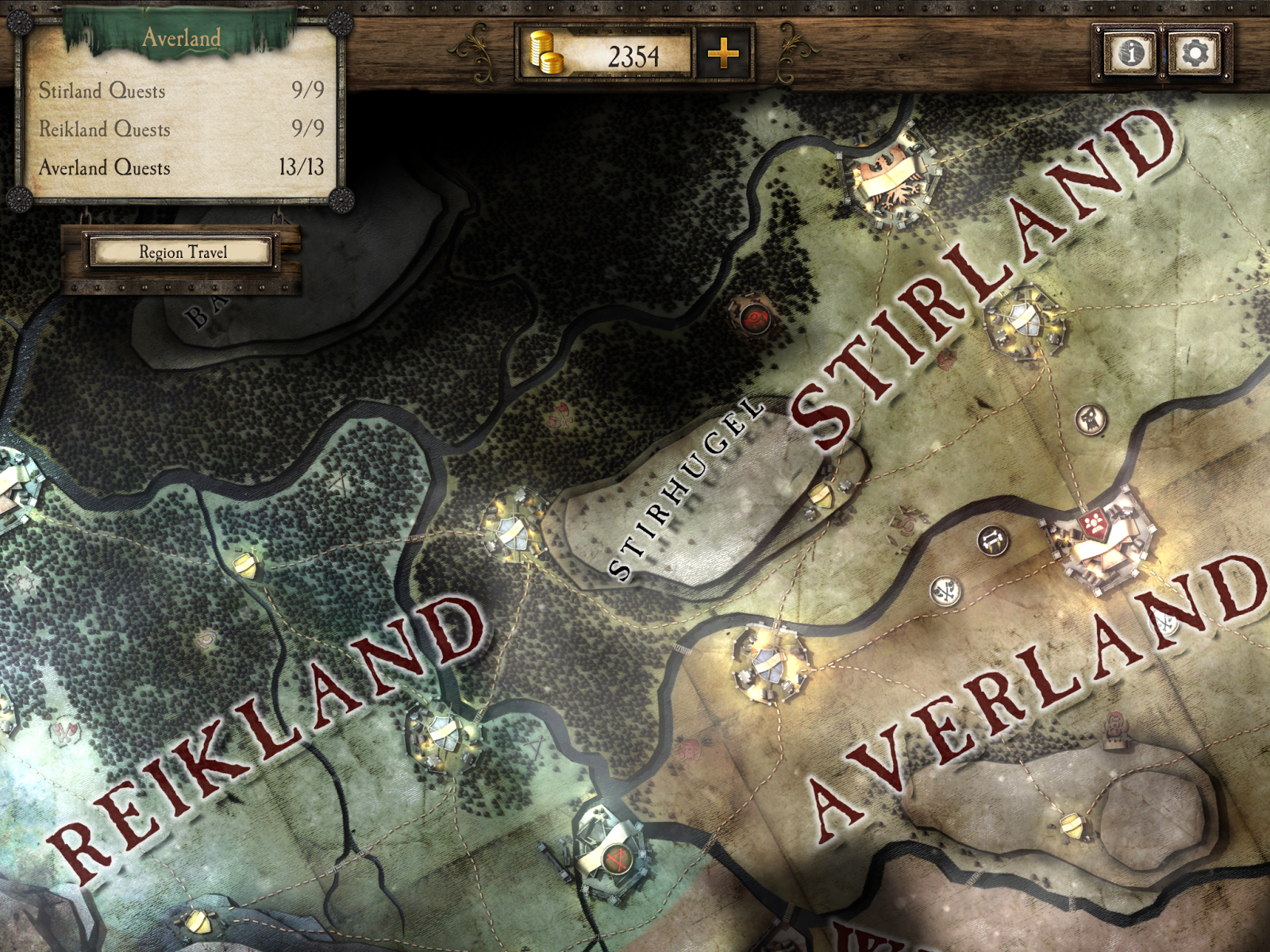
A short word on each of the purchases. The new campaigns are connected to the old one on the overworld map. You can start the new campaign by simply fast traveling or just by organically exploring the map. The Skaven campaign (Riekland) challenges players from 2nd to 6th level, and the Brutal Hoard Campaign (Averland) raises the level cap to 8 and challenges players from 4th to 8th level. 

In the year since I played, they also introduced another IAP—Lore Magic. Each point of Lore Magic allows you to kill all the enemies, or raise all your dead, or double the gold rewarded for finishing a dungeon. You get 3 points for free.

You can of course purchase them for .99 cents each, get 5 for $3.99 or 20 for $9.99.

The Rub

When I played the base game, I somewhat infrequently lost players and had to re-level them. More than once I had a complete party wipe, but there were always new characters to pick up the gauntlet, and it was fairly easy to get new characters up to speed.

However, when moving into the expanded content several things changed. First, the investment of the characters went up. Way up. Characters now might have upwards of 6 or 7 rare items, the result of multiple quests and thousands of gold. In addition a level 6 or 7 character is nearly a 20,000 gold investment in itself.

You know what? That's fine. The real shock came from the vampire/zombie and necromancer/skeleton expansion packs.
These expansion packs are what is left of the abandoned Wissenland expansion (Warhammer Quest: Never Lucky), one of the undead and gothic castles. That expansion was abandoned when Rodeo games (a small four person studio) got the contract to produce Warhammer 40K Deathwatch, another tactical squad based game of space marines versus tyranids. It is also quite good. But this caused them to abandon Warhammer Quest and release the content in progress as monster expansion packs.

So here's the thing about Vampires, Vampire Thralls, and Necromancers. Death Shriek and Crystal Maze. Death Shriek requires no LOS and attempts to stun your entire party with a high chance of success. Crystal Maze removes one of your players from the game for a turn, and if the caster is killed, the unit dies also. One of these units given a turn can wipe the part on an unlucky roll. They can appear in groups of 1-4, but usually only appear 1 or 2 at a time.

To be clear, Dungeons take about 10-20 turns to clear. Sometimes more, sometimes less. A die is rolled every turn. There is a 1 in 36 chance of two enemy spawns in a row. Unsurprisingly for a 4th-6th level party, these encounters were frequently fatal.

What's more is that the new tilesets primarily consist of long hallways with obstacles. This means the vampires and necromancers would frequently spawn up to two or three tiles away (20-40 squares, when units have a movement of 5-6) and the obstacles in the hallway would impede progress. This meant you would frequently be in situation where you couldn't melee the magic-resisting vampire because your warriors couldn't reach him because of all the trash mobs between you and the target. And since they can resist magic and ranged doesn't do enough damage, it's difficult if not impossible to kill them on the turn they appear.

Now, if I had a 6th level character die, I couldn't just restart with a new 1st levelcharacter, because the only way the characters gained levels was by being the person to kill an opponent. At that level, they would only do minor damage and would either need a lot of equipment or luck to  manage to hit an opponent of that level, much less slay one. You could of course spend some time trying to get one down to low hit points and give the new character a chance to hit them, but every extra round you are in the dungeon is quite deadly. Another option would be to reset the low level quests and spend a long time just blowing them completely out of the water with level 6's and one level 1 character every time someone died. The random quests are based on average party level, and unsuitable for leveling.

Now, having a party of 8th level characters has shown me that these encounters are quite manageable. What this indicates is that the new expansion must have been geared for a higher level cap and level range, because for a 7th or 8th level party they represent real danger, but not a panicked near wipe every time they appear. I do not fear them as I once did.

Blood for the Blood God!
A lot of this has to do with the changing nature of play, and is similar to what occurs around mid-level in most games of Dungeons and Dragons. Put quite simply, by the time you are likely to be killed in an encounter (rocket tag, 3.5 expected losses, etc.) you have access to magic that allows you to raise your companions from the dead. Why is this? The amount of investment in the character sort of demands it. Not simply because you don't want to have your character die, but because the character often becomes central to the events. Not only is a new character unsuited for the challenges, they will have little connection to the events of the campaign.

Look at the solutions various versions of Dungeons & Dragons have demanded. For adventure paths, 3.x/Pathfinder suggest creating a new character one level below the average party level. The path contains the story, so the character is replaced by one of approximately equal power to able to handle the challenges of the adventure. In a more old school sandboxy type campaign, you'll find henchmen, hirelings, and "secondary" player characters all over the place. This way, if someone dies, a new character who's already involved in events can step forward. And of course, there's always the raise dead option for when a corpse is available or resurrection or reincarnation for when you managed to get yourself disintegrated or fallen in lava.

Of course, the same is true of Warhammer Quest, for the low, low, price of 1$.

And to be clear, there are resurrection options available to the wizards in the game, while on the mission. Of course the problem is that Death Shriek stuns most of the party, and they all end up dead. Your wizard can't raise anybody if he's a corpse. 

Rodeo Games makes some of the best turn based tactical strategy games. Full period. They are a small company, writing games for a niche I happen to love, and they got there by doing hard work with the promise of nothing. They do right by their Games Workshop licenses  and have excellent customer service. So I have no problem with giving them money. And indeed, to avoid several unexpected, uncontrollable wipes, some magic points were used. 

Of course, now I won't be playing the game in Hardcore mode anymore.

This particular element of design didn't detract from my experience of the game. I think the variety provided by the monster expansion packs helps a great deal. And you've got more than one option. If you don't purchase them, you can play hardcore mode. You'll face the above challenges, but you'll be less likely to view them as "Unfair" and more likely to trace your failure to a poor decision you made. Or you can play regular mode and pick up the expansion. Or you could do what I did, and experience your failure not as a loss of your time, but one of a dollar in your pocket. I earn way more in one hour then I spent on magic points and losing those characters was an investment of dozens of hours.

It's game design that hits you where you feel. It certainly qualified as an interesting choice—one that was painful to make. That is the mark of good design, I think.

And who knows? It's early yet. We might see an expansion for Wissenland yet, along with a few more characters. I got a hope.

Sublimity

That's not all of course.

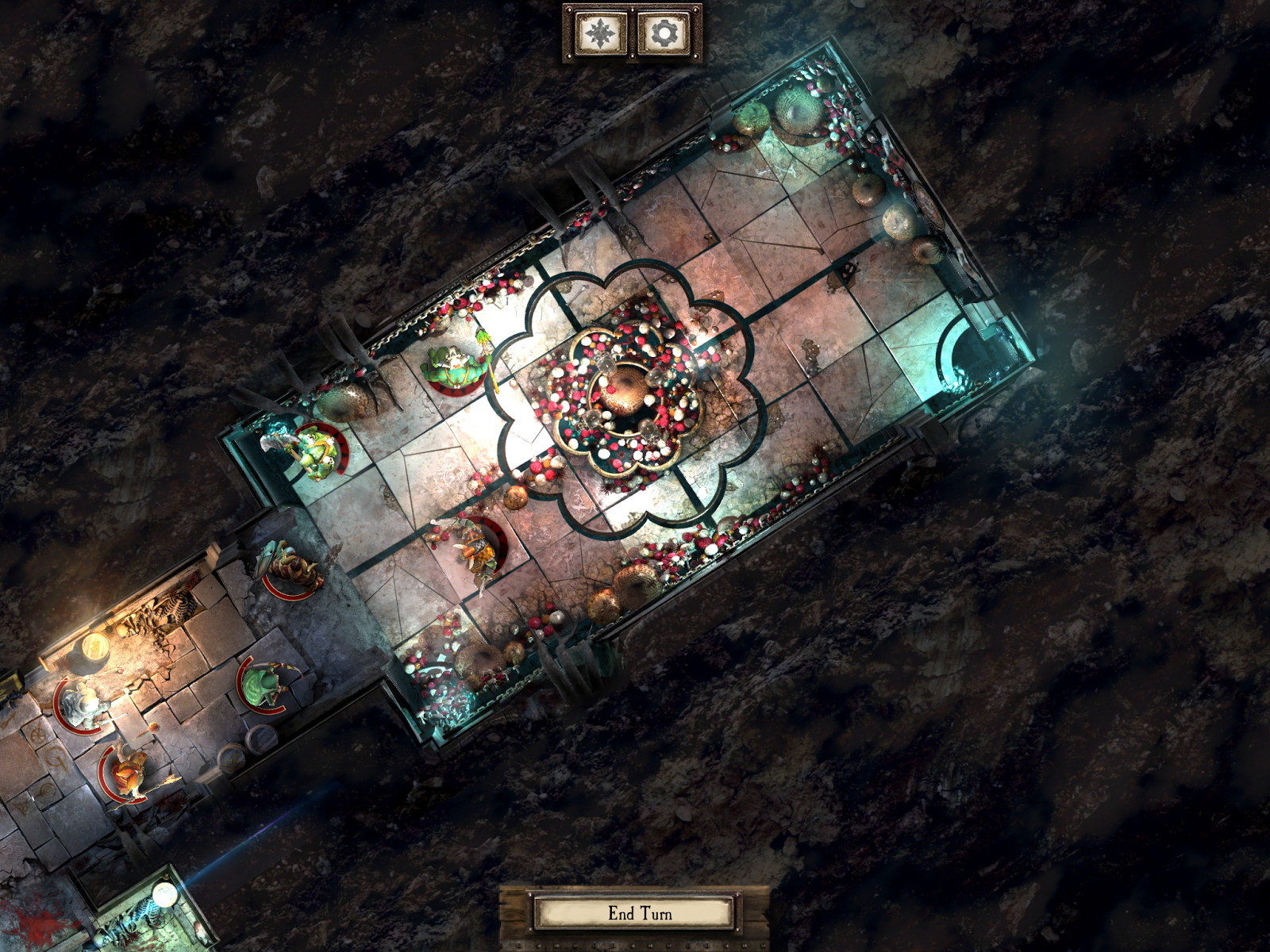
Warhammer Quest is a beautiful game. When you visit a city, a book opens and the city builds itself from the page. Weapons and armor equipped are visible on your characters. Blood splatters as you wound enemies. Lights spin on the ground. The dungeon is incredibly detailed.

And because it's on an iPad, the physicality of it adds to the experience. You tap on an enemy to attack them—you literally hit them to hit them.

You can't underestimate these factors. One of the reason Hearthstone is such a wildly popular game, is the visual design of it. When you start the app, you open a magical wooden box where you store your cards. When you open a pack, it shakes and bursts apart. A legendary card results in a brilliant golden halo burst across your screen. It is intensely satisfying. 

Warhammer quest has that attention to detail. Smoke drifts by on the opening screen. Light sources sparkle and gleam, spells glow as they streak across the battlefield. Skeletons blow apart when struck by a club. The importance of the visual appeal and the user interface can't be understated. 

That isn't to say, eventually like all games, the visuals fade into the background once you get into the flow, and for all it matters it could be colored blobs moving through the plain grey dungeon (goodness knows I played enough Wizardry). The gameplay is solid and engaging, and that's the draw. The fact that is a pleasure to watch and use only increases it's appeal.

There's also a fair bit of replayability available. Not only is there a selection of characters to choose from, their development is somewhat random, as it is in the board game. When they level up, they usually gain a skill. There are more skills available then they can acquire. This means to unlock all the journal entries, you'll have to level up characters more than once to see all their available skills.  My max level Marauder has 7 out of 10 available skills. So each group of characters, even if they are exactly the same classes will play differently. How many wounds (hit points) and power and power store each character have also varies with level.


In addition, there are several hundred items in the game. Even now, I'm finding new items at quest locations. Most of the gameplay is very similar (and very fun and rewarding), but the quests actually shake things up quite a bit. Several ask you questions about what happened earlier, others add and change things in the battlefield, many give you choices to make during the quest, and there's even one or two puzzles. 

It is, quite simply, a wonderful experience for a dungeon bash aficionado. 

The Competition

So, why can't we having nice things? 

This isn't the only fish in the sea, and it's well established why Warhammer Quest went out of print and isn't sold any longer. There are other, more modern tabletop games that emulate the Dungeon Bash style. I've given more than one a try and they are all lacking.

Descent and Descent 2 is the most popular, including a campaign, characters, artifacts and more. But it requires one person to be the overlord and to play against the players. In addition, the experience of levelling and improving your character is very flat. Once it occurs, all the other opponents increase in power by an identical amount. 

A recent kickstarted entrant is Super Dungeon Explore, a chibi style arcade type dungeon crawl bash with features such as monster generators. But in talking with people who have played it, the winner is decided pretty quickly, leaving you to play out the last two or three hours before the game actually ends. In addition, it also requires one player to be the "console" and control the other monsters.

The suite of Dungeons & Dragons board games Ravenloft and Ashadon get the basic aesthetic correct and don't require a Dungeon Master, but are balanced inconsistently, have only the option for one chance based improvement, and limited campaign play. 

Somewhat unsurprisingly, there just aren't that many options available. These games are difficult and expensive to make with hundreds or sometimes even thousands of pieces, including miniatures. And usually by that point, people just throw in the towel and start playing Dungeons and Dragons if they thirst for more. 

That said, we are lucky Warhammer Quest got made and is available. It's a classic of the genera, beloved by fans, and done lovingly by Rodeo Games. 

If you get the chance, you should go kill some orcs. 

Hack & Slash 

On the Quest for Hammer of War


There are certain games that come along on certain platforms at certain times that define a purity of gaming experience. They are perfect traps for the mind. They are so powerful that even after you stop playing, when you close your eyes you see the game, playing out on the back of your eyelids:Tetris on Gameboy, Goldeneye on Nintendo 64, Street Fighter II Arcade cabinets, Bejeweled on smartphones. I'm sure you can think of one or two more.

Warhammer Quest for iOS on ipad is one of those games.

It's helpful that Warhammer Quest itself is considered one of the best, if not the best dungeon bash game of all time. Now out of print, after an astoundingly short print run of 3 years (1995-1988) if you wanted to get the tabletop version, you'd need deep pockets and a passion for ebay. But even so, that version is inferior to the digital version brought to us by Rodeo Games.

Why is the best dungeon bash board game of all time out of print? Money. Games Workshop is interested in selling goods that have a long tail, and although the tail was quite long on Warhammer Quest, with extra classes, treasure and dungeon expansions, and more, it wasn't long enough. Games Workshop is interested in publishing miniatures and miniature accessories. Books and cardboard are costly for them, and have a lower rate of return. The game, although popular, was never very financially successful. Only one person needed to buy the game. Only one expansion was needed for each group. There may come a day for a reprint, but it won't be soon.

iOS

We are talking today about he iOS version. Luckily, it's also available on Steam, so if you're reading this, you do have an opportunity to explore the game. But the iOS version is superior. 

As fun as dungeon bash games can be, they are a little fiddly. Warhammer Quest contains over 200 pieces, almost 100 different cards, and somewhere north of 200 pages of rulebook (although only 20 or so contains the game rules, the "role-play" book is the majority of that page count). Manipulating the actual game is quite time consuming. iOS removes that difficulty.


But that's just addressing what digitizing a game does. You get many of those features on Steam. Steam brings the game to a much wider audience (instead of just those subset of people with ipads). However, the portability of the ipad, along with the display is the perfect size to both show detail and play the game at. Open the game on the computer and it's in a small window. Blow it up full-screen and it becomes fuzzy. You're either too close or too far out. The display, size, and portability of the ipad version is sublime. As well as the fact that you rotate the ipad vertically to access the inventory. Which is just one of those mind-blowing innovations that we take for granted living in the future.

How do you check your inventory? You open the bag and look inside.

But what about the game itself? Why is it so good?

A design analysis of Warhammer Quest

Warhammer Quest is a dungeon bash game. You take a party of heroes and they descend into a dungeon, usually made of tiles and fight monsters and recover treasure. As they recover treasure, they become more powerful and level up. You may be somewhat familiar with the concept.

Dungeon bash is a specific board game niche. It's a relatively large niche title; Rodeo games has sold over 250,000 copies of the digital version (at least—sales may be above 500,000), along with however many actual print sales their were, so as niche as something can be that has a quarter of a million sales. But it isn't on the scale of a mainstream title, like Dominion, Dungeons and Dragons, or Settlers of Catan with tens of millions of sales.

A dungeon bash game is different than an adventure game in that it focuses on tile-based movement, line of sight, and tactical combat; this includes games such as the Dungeons & Dragons adventure games and Descent (and Descent 2). This is in opposition to adventure games like Arkham Horror or Talisman which are adventure games, due to a lack of tactical manuvering.

Both the digital and real world version of Warhammer Quest offered expansions in the form of new quests, new monsters, new treasures and new heroes. Warhammer Quest also contained a "role-play" book containing rules for moving among an overland, buying goods from merchants and more.

The digital version is a direct implementation of the complete game. Your party travels from town to town, completing random quests to earn money and gear along with storyline quests. In the quests, they move through each tile to the arrows, when then places a new tile in the dungeon, fighting monsters as they go. Each town has a specific market, and many of the optional characters are available. The rules inside the game, though opaque, are an honest translation of the spirit of the board game rules*.

*There are some minor changes, for example, ballistic skill counts up to six. In the tabletop game, it counted down, and any roll equal or higher to your ballistic skill would hit an opponent. The odds are still identical, though the numbers are reversed. Hence, "honest".

So, that's all pretty straight-forward. What is it that makes Warhammer Quest great?

The rule of 6

The basic system in Warhammer Quest is that you roll a d6. E.g. to attack someone you compare your character's weapon skill versus your opponent's weapon skill on a matrix, and if your number is equal to or higher to the target you hit. A 1 is always a failure an a 6 is always a success.

This is the cool part: Each turn a "Winds of Magic" roll is made. In addition to determining the amount of power your wizard has, any time a 1 is rolled (indicating the casters have no magic power available) an event card is drawn. 70%+ of the time, this is an encounter with monsters. This roll is made every turn, even while in combat! Not only do 2-12 new enemies appear, however any spell-casters you have are granted no resources to do anything about them.

For a board game involving risk and reward, this is a fantastic system. There are monsters, like orcs, that just attack. There are also monsters like Vampires, Shamans, or Spiders that can cast spells or have attacks that immobilize members of your party. There is enough randomness in this system to allow the no guarantees of outcomes. A slight run of bad luck can spell doom for even the most prepared party.

What this means, is that even in safe situations, small choices matter. Every turn spent in combat increases the chances of having enemies dumped on you, some of whom mustbe killed immediately. With your warriors pinned to the monsters they are fighting and your wizards who always have 0 power when new monsters appear, it constantly creates tense situations.

Every choice matters. Will you push ahead to uncover that next tile now, or take a turn and heal. Where are you positioning your party members? If someone drops, is there anyone with healing items next to them to revive them?

The plus side of course, is that even in a terrible situation, there's always a 1 in 6 chance of survival. Even if the attack is super-powerful or you're surrounded by spiders who are webbing you, there's that 1 in 6 chance your Marauder breaks free and kills enough of them to prevent them from locking down the party. So it isn't over until it's actually over.

Although it is over frequently enough. 

Resource Depletion

Of course the characters have resources to deal with these surprise situations of course. All resources deplete during the exploration of the dungeon and do not replenish until the dungeon is exited.

Wizards may have to deal with the flow of the winds of magic, but each has a personal pool of power that they can draw from to cast spells. Most often this is used to target those dangerous enemies during a turn an encounter is drawn. As they increase in levels, this pool also increases.

The other limited resource is inventory. Potions, bandages, scrolls, and rations can all help the players heal. High-level characters may gain regenerate rings or use powerful magic to heal themselves, but these are of no use if the character is dying.

When a character is dropped, they spend one turn dying. Unless healed, at the start of the following turn, the character is dead. On casual and regular modes, this simply means he/she receives no experience for exploring the dungeon and is removed from play. In hardcore mode, this means the character and his equipment are gone forever.

This means that another character has to be able to reach them (adjacent) and have a healing item available. Then they must use that item and the use of the item must be successful. Usually they are.

But for that 1 in 6. . .

Spell are always successful at healing, assuming it wasn't your spell-caster that was dropped, assuming it wasn't an ambush round and they had enough reserve to cast it, and assuming they don't need to do something more critical with their power.  Skills that heal do not have the same guarantee of success, and in fact sometimes even do damage.

Inventory

So, of course, you just load up on cool items, right?

If only it were so simple.

Warhammer Quest has an unique inventory system. Instead of a paper doll system, each character has four common slots, four uncommon slots, and four rare slots as well as 24 slots split among all characters in the stash (which can only be accessed out of combat). In addition to items you might use, the stash must have room to contain "junk" artifacts for sale found during an adventure, as well as any replacements for healing or replacement items you wish to carry.

Of course you are constrained. You can't wear two helmets. If you have an uncommon helmet, and you put on a legendary helmet, the uncommon one is transferred to your inventory.

The whole system is filled with significant choice. You may notice that I'm not wielding a rare bow, instead opting for an uncommon one with my Marauder. It provides a strength bonus, increases his melee damage, which since he has 9 melee attacks (and only 1 ranged) is a good choice. The bow isn't available in a town or from an item quest, only as a random reward from a "rescue" quest for a fletcher or blacksmith. I also had to ditch my rare shield, needing the bonuses to armor, attacks, and chance to hit instead.

Those healing and replenishment items you want? They are expensive. It costs progressively more and more to level your characters (200->500->1,000->2,000->5,000->10,000->15,000). A common healing item costs 10. An uncommon one costs 100+. A common power store item for wizards costs 300, a rare one costs 1,000. Money is tight, often it's a choice between leveling a character or buying new equipment.

You are never outfitted as well as you wish you would be.

The Dungeon Tension

The fun of Dungeon Bash games, and in fact Old School Dungeons and Dragons (Original and Basic/Expert) comes from the tension in survival. The dungeon is dangerous, at any given moment it could violently kill you, but if you're lucky and skillful you can get away, having put one over on it.

This survival tension (and the importance of the hard-core nature of these games) means that the choices made during play matter and create for a pulse-pounding situation. After spending 6 hours and thousands of gold to outfit and level your grey wizard to 5, having him fall to the ground and be uncertain any of your teammates can reach him can put your heart in your throat.

You don't want to lose that time. Your time is important, you only have a limited amount of it before you die. It's kind of a rush.

The reason Warhammer Quest is such a good game is that it really skillfully consistently creates this tension. The original game did also, but the digital game sustains that feeling, speeding up the actual play of the game to focus on the fun parts, and is overall an excellent experience.

But for the full game, I don't recommend the hardcore play mode. . .

Find out why tomorrow in part 2 of our Warhammer Quest Analysis

Hack & Slash 


On a Useful Review of Wonder and Wickedness

Wonder and Wickedness 
A review:


  • Look at that cover! It's sweet!
  • Holy crap! Is there new art by Russ Nicholson in here!?
  • Like the whole thing is illustrated by him. 
  • What is this? Spells? Levelless spells?
  • Demons crawling out of eggs?
  • No, wait. 56 Leveless spells. 
  • Six schools: 
    • Diabolism
    • Elementalism
    • Necromancy
    • Psychomancy
    • Spiritualism
    • Translocation
    • Vivamancy
  • Yep, leveless spells. All spells are appropriate for beginning casters and scale in power with caster level. From the introduction "The most common method of presenting spells within a fantasy RPG is a ranking by level. . . However, this is not the only reasonable approach, and the notion of no hierarchy of spells is the foundation of this supplement."
  • Is this sweet? Yes, this is sweet, because holy moly do the spells feel magical!
  • Here's an example, Chariot of Air
    • A tumult of air elementals, prismatic and cacophonous, bears the sorcerer aloft and in any direction desired. Buffeted this way and that, no subtle action may be taken or communication attempted over the roar and incoherent babbling of the winds. Despite the many voices they have stolen, these creatures communicate by caresses and only madly wail in confusion if not in contact with the sorcerer.
  • I hear a cacophony of people complaining about balance. Pshaw. This is clearly a Original Dungeons and Dragons or Basic/Expert style wizard, where they remain useful after their powers are expended because your sole utility isn't tied into your class abilities. That said, playing one of these wizards seems really cool! You can turn your spell into maleficence in order to do damage, or cast it. You can only prepare 1 spell per caster level. 
  • Take Necromancy for example. There's the standard Death Ray and Lich-Craft (raise undead), but there's also Occult Consultation, where the sorcerer digs a square pit, fills it with wine, herbs, and a sacrifice to summon a throng of ghosts that you can question. You can summon a specific ghost with a true name or treasured possession, and if you wish, when the spell ends, you can follow the ghosts into the land of the dead, with no guarantee of return!
  • The back half of the book is dedicated to the terrible things that can go wrong. When do they go wrong? When sorcerers try to reach too far. Are you a non-sorcerer casting one of these spells? Are you out of spells and trying to cast another one? Are you dead? 84 catastrophes are there to add an interesting twist when something goes wrong. 
  • There's also a unique selection of 50 magic items. Like the orc mace, that turns people into orcs, or the shadow loom which weaves sorcerous garments. 
I have mine in print, because I like to use it as a version of hermetic magic in games I run. These are the types of spells on scrolls and the ones rogues can cast. It's 84 pages of creativity, art, and magical magic. I love mine. This is that level of Do It Yourself awesomeness that all too often gets overlooked in the shuffle. 


Hack & Slash 


On a Useful Review of Fire on the Velvet Horizon

I got this.

I haven't finished it yet. Is that because it's bad?

No. It's dense.

Let's unpack that for a second.

The Aeskithetes (Ay-Skith-es-ts)


  • They have strong bodies that look like twisting melting wax.
  • They have slim whiplike tentacles that cover their body that they can barely control. The more powerful the Aeskithetes, the calmer the tentacles.
  • They are hideous to look upon, and hate the reaction this engenders in others, so they wear masks.
  • Their home world, time runs much more quickly so they collect beauty and works of art to send back to their homeworld for a generation of children they will never know. 
  • They are impossibly strong and can vomit bile.
  • The reason they can stay in our world is that they constantly chant a song that allows them to stay.
  • Their home world is a humans skin.


No. It doesn't have stats. It doesn't need stats. This isn't a monster. It's an adventure wrapped up in a bizarre mind-screw. What can you do with this? So many things. There's over 100 pages in this book, and they are all like that.

There's the boa constrictor that is called "boa constructor" and has arms for teeth, eventually growing large enough to perform impossibly miraculous crafts. There are the bog elves that live under the lake a shiny mirror for a floor, darkness and shadow in the sky above; there are dark hunched ladies who hunt in mirrors.

The Aeskithetes could be traders, enigmatic and well respected. You could find masks before ever finding them. A party could be trapped in the world of their own skin or someone else's. They could be sent to make a treaty with them. It's just one monster, it's just one page.

What I want to know, is why not having an armor class listed is a problem for anyone.

I read a lot of fiction, and the creativity here is on par with some of the masters. Gene Wolfe displays this kind of creativity in his novels. Borges describes the type of hells these creatures inhabit in passing. McCarthy has the type of poetic turn that takes your mind from where it is and puts it somewhere you are not. This is what the book does. Some quotes:

"The first order clad in closely arranged bone, a chainmail of the skeletons of fish and eels. The second type wear scale woven from the overlapping beaks of storks and cranes."

"Before the process begins all would-be Brainstormers are careful to inform their lackeys and servants that the levels of Elixir must be carefully and continually adjusted to avoid disaster. Once the first dose is taken and the halo of electricity begins, the Brainstormer reacts to anyone trying to adjust or alter the syringes in any way by screaming madly, firing bolts of electricity and sometimes sucking them up in a tornado."

"The Dreamons are the shepherds of the Wings. They guard the vast and churning flocks, keeping them back from the borders of our understanding. There is no shortage of inspiration out beyond the walls of space and time; there is enough to burn the heart of the world and drive every living being insane with the hunger to create."

He's not just talking about a monster to fight. He's talking about himself. He's talking about you, and your adventurer. He's talking about sin and valor and lies and truth.

This a book filled with monsters of the classic sense—creatures that reflect the dis-ease within our own psyche, the way in which we ourselves are monsters. He then uses the damage in our own selves to confront the heroes we imagine ourselves to be.

But it's just a book of monsters, right?

Video Trailer for Fire on the Velvet Horizon
Fire on the Velvet Horizon in Paperback

Hack & Slash 
Follow, Google +, Newsletter, Support, Donate to end Cancer (5 Star Rating) (123$ donated so far!)

On a Useful Review of Dark Druids

So I got this module in the mail.

That happened, because I have art inside it. So it was free.

Let's talk about it for a second. Spoilers follow.

  • It's by Rob Kuntz, (link goes to his extensive bibliography) one of the first employees at TSR. This module is from his later design work, being written and ran during the early 1970's. 
  • It's the fourth time this module has been in print. The first was a d20 version, the second used "Creations Unlimited" stats, the third was an expanded d20 version. 
    • The version I'm reviewing has stats compatible with 1st edition Dungeons and Dragons, which ironically makes it closer to the original. 
  • It's on the upper end of mid-level adventurers or a beginning high level adventure, for 4-8 8th-12th level players. 
  • What? Is that my art on Page 10! Sweeet! Oh, and who drew that marvelous picture of the Aboleth on page 14? Who I wonder!?
  • The module allows for failure points as an option, with difficult puzzles. But if the players aren't smart enough to figure them out, their 8th-10th level characters should have other options for bypassing or solving the puzzles. It's written for that stage when it's ok to throw difficult encounters at the players, who are becoming well equipped to solve impossible situations. 
  • There are usually multiple approaches and solutions to any situations, with very few "gotcha's".
    • For example, there's a living grove arena that opens for players but is misty. Alternately they can approach from above, which avoids the mist effect. 
  • There's a bunch of stuff in here: A new class (the Dark Druid), new magic items, pages of new spells, new unique monsters, a unique monster generation system, really a ton of content.
  • It's interesting that this is the first in a series of six planned modules, with no plans for the following modules to be released. How certain are we that these won't ever see the light of day? Let's see what Robert himself has to say.

7) What I have to say next verges on the personal and humanistic, or some such. I don't care how anyone takes it, these are my feelings. I'm literally quite exhausted at being an object. Let me explain. In my many years at DF all of this "feeling" was ensconced in object worship, of the past, the present and the future objects that I either had made, was in the process of making, or would in the future, the God of Objects willing, would make. This may be a somewhat shallow view on my part, but it is the feeling I got. This is not to say that these fan outlooks and expressions were not worthy or sincere, but only that these seem limited to this view only. I understand people pay for things I have designed and thus they are entitled to criticism and speculation regarding me as an author. I understand both of these concepts, especially the latter. And I understand that I put myself and my products up for sale, so to speak. But the why of it is what remains, as it was not just for money. Money has never been a great deal with me. Creativity, then? Well that's my art, so yes, that's part, but not quite...
If you look at my designs, most if not all stress openness fused with a wonder generated by new design particles. I have always wanted to design to show how I felt about my earliest days in adventuring and in design. This with the hope that the concept would remain a constant reminder to those who proceeded me, or, for those DMs who would "get it" for their own games and thus create their own stuff. The latter, IMO, embraces he real down to earth reason why I design. I am no EGG waving a $285,000 royalty check in your face he was once did to me... I remained a fan at heart, a champion of doing the creating myself, but was in essence trapped between a rock and a hard place when TSR went the opposite route with pm-adventures. I took an oath then that if I felt that my designs were not up to snuff or in fact did not trump my last ones, that I'd call it quits. Well, it didn't happen exactly that way. I have realized, instead, that I am just tired of the same measures, over and over, and in the fact have realized that less and less people create now for the simple joy of it, but would rather wait for objects to fill their needs in this area while creating sites, like DF, to discuss these objects and their merits. Such is life in object-oriented America. Objects never let you down for the most part and we all have them. But I must end my participation in creating them as my work is done in *this area of expression*. My examples are out there. They will remain even after my death, but what I wonder besides having entertained folks is what they really achieved on singular levels beyond that? I will never know for certain; and that is all I am left with and thus that is all I can leave for my fans, except to say, Thank You for your time and dedication to my art. —RJK (Source)
To clarify, he added:

Travis nails the disconnect on the head: "I am not equating modules with DMing. Most American gamers find this notion impossible to understand." Once you go down that path (eager dependent) you rarely come back. It is about reading, studying and creating, using your imagination. Thousands of DMs in 1974 and 1975 did it (that's 100%, folks); were they more informed than others? Or is it now that the model of pm-adventures is so in force that looking back upon these oldest examples seems archaic and not genuine? There is massive disconnect going on and it has lead to surmises of what good or better design is and as promoted in a vacuum by those who have no idea WHATSOEVER what good design is for they are indeed products of the vacuum themselves.  —RJK
Why am I so certain these will never come out?
The realm of fire was best represented through Sir Robilar's City of Brass by Kenzer Co., of which I am expanding (redoing from the original 89,000 word MS which was never fully published) for republication through Black Blade Publishing. This roots the matter in my conception of it, which tended to specify what it is through the eyes and culture of the Efreeti, one of its main, and intelligently organized, inhabitants. I bring it into cultural alignment by describing the immortal history of the culture which is born of it, thus the glossary alone contains 15,000 words describing it and their views on it.  —RJK
I mean, if you're going to design and intelligent culture, why not have a 15,000 word glossary? But while he's busy working on that, I don't think the sequel to Dark Druids is going to see the light of day.

  • So, basically, this is the start of a campaign that traps your players in the underworld, cursed, with now way out, and only the vaguest outline of what comes next. You are one of two types of people. Either that is awesome or that's terrible. I think you know which one Robert thinks you should be. 
  •  It's 56 pages, Saddle stitched with a loose cover. The maps are crisp, clear, functional and on the inside of the cover. There's a single interior map with several short encounters on it. 
  • The module can be punishing and was said to have killed Jim Ward's character, among others. 
  • The basic setup is that they players are sent to stop on evil cult, only to discover that there's a civil war between the two factions of the cult, making things even more dangerous. 
  • On reason there's so much new material, is that nearly every encounter is surprising, unique, or interesting in some way. 
    • A weird altar that can summon a tentamort to serve the summoner if "scabs" are removed from nearby trees and placed on the altar or a tree entirely coated in stiff jelly are the types of strangeness encountered. 
  • Some of the puzzles seem very difficult and challenging. But not wholly impossible, and any 1st edtion group that's actually played their way up to level 8 or 9 is going to have 101 tools to help them bypass those puzzles (that's over 80 sessions, at least).
  • It isn't print on demand, and the initial print run was only 310 copies. If you'd like to get it in print, I'd suggest you do so soon.
  • It's an excellent example of a challenging mid-level adventure, which can lead to a long term high level campaign as the players confront the horrors of the dark, trapped, god and eventually the most horrendous monster of all, the Tarrasque. But it's more interesting as a more concise example of what Robert Kuntz means when he talks about reclaiming Dungeons & Dragons. (More concise in that this is the 1e version, and has the least amount of space given over to stat-blocks. The module is almost all content.)
  • Downsides? There's boxed text. There's a long (though pretty cool) monologues introduction. It really isn't a stand alone adventure. 

Hack & Slash 
Follow, Google +, Newsletter, Support, Donate to end Cancer (5 Star Rating) (123$ donated so far!)

On a Useful Review of Red and Pleasant Land

Well, let's take a look.

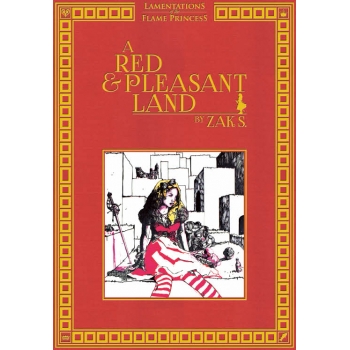
  • This is the nicest, highest quality, rpg book I've ever seen or heard word of. Contenders include the leather bound Cthulhu editions with gold trim or the leather bound Encyclopedia Magicas. It's simply beautiful. An actual artifact.
  • The cover map+encounter table communicates enough setting information to be a complete supplement in itself. You could hand that map to someone along with a copy of your favorite OSR ruleset, and that's a campaign right there.
  • The interior is heavy stock cream pages. This book is like a dessert.
  • There is a little knight on a rocking horse on the how to use this book page, along with the suggestion that it can be used to kill small animals or choke large ones. The time spent on the product is evident.
    • This, I think, is the fundamental difference between corporate work and the aesthetic of the "OSR". Corporate work is deadlined content, sometimes good, sometimes bland, but needing to fill a page count with material. OSR work comes in two styles—labors of love that are worked on till they are finally complete, or things released because we are just tired of working on it for years. Sometimes both in the same product.
      • Clearly, I prefer the second. 
  • Zak Sabbath is obsessed^H^H^H^H^H^H quite fond of the letter V.
  • The logic in the book is fairy tale logic, which is both wonderful and challenging, considering keeping it all in mind is somewhat difficult. Using this book as a campaign setting requires a fair bit of preparation. This is different than Yoon-Suin which also requires preparation, in that you generate the situation ahead of time in Yoon-Suin, whereas Red and Pleasant Land works better if you can remember all the strange rules during play. I would not expect to need to reference Yoon-Suin frequently during a game; I would expect to reference Red and Pleasant Land.
    • There is in fact a note to this effect in the book, suggesting you don't worry about it too much and focus on the important stuff, without letting things degenerate into chaotic randomness.
  • There is a lot of concrete advice over how to run and use the book in actual play.
  • There is an illustrated bestiary running from pages 35 to 83. Also this book is A5, and there are 3-4 monsters a page (including a Jabberwok and Jub Jub)
  • The majority of the book is taken up with two adventure locations. These include strange gravities, tesseracts, puzzles, keys, nightmares and dreams. I would say more, but I don't wish to spoil any of the surprises.
  • There are a slew of optional rules, and all the tables in the book are reprinted for reference in the back. Of particular note are the growing and shrinking rules and the rules for warfare.
  • Though this doesn't detract from my enjoyment of the product, there are a few small graphical and layout errors, and I appear to be missing both players handout 6 and the chess puzzle from the back of the book.
  • The sampled locations, a maze, a battle frozen in time, and a forest containing two thieves are some top-tier one page style dungeons. 
  • The tables are very useful. There's a very good animal table, as well as a useful generate a random quest table.
  • That's the key feature of the majority of the dungeons in the book, They are interesting dream-logic type places to explore. which makes them perfect for weird, fantastic, adventures. Is that what you want? This delivers that, in spades. . . and hearts, and clubs, and diamonds. It's worth the cover price + shipping, even just to strip it for ideas. 
The quality of material coming out lately keeps rising. It's really a new golden age.

I suggest picking it up before it sells out. I missed the last book (Vornhiem) and my wife had to contact dozens of people to eventually get one sent to me from the other side of the world. This one will also sell out.


Hack & Slash 
Follow, Google +, Newsletter, Support, Donate to end Cancer (5 Star Rating) (77$ donated so far!)

On a Useful Review of Yoon-Suin

Matthew Adams
Step one: Buy it.

Step two: Read the review.

Step three: Congratulate yourself on how smart you were for already buying it!


  • Mathew Adams is the best illustrator of the New Wave OSR. And he has extremely stiff competition.
  • Oh, heck, the format. 9x7? Where do I fit that on the shelf? It's simultaneously super annoying, and yet contributes to the weird eastern aesthetic of the setting. Also, keep in mind it's 315 pages. It's larger than a player's handbook of any edition of Dungeons & Dragons.
  • It is the best example I've ever seen of a special snowflake, dying world, setting in print. Not that the world of Yoon-Suin is dying, but it captures better than any other role playing game book the ideal of an impartial and merciless world, completely immune to anything the characters can do to change it. It does this better than the Dying Earth game. An example:
    • "How does one describe the Hundred Kingdoms? Each has its own ruler, its own spirits, its own schools of fakirs, its own enemies, its own intrigues, its own allies, its own particular cruelties. It is in ever sense varied. And yet in that very variety there is unity. Though the people living in each city-state abide by their own laws and customs and often war viciously against their neighbors in the name of their ancient rights, at the end of each day the same farmers return home to eat flat bread and curry and suck on hookah pipes while they watch the sun set; at each road-side passers-by pay homage to the same fakirs performing feats of strange and horrible endurance; in the fields groups of devout holy fighters practice with the same tulwars, gurj, barcha and bagh nakh."
    • Does this sound like a bad thing? It isn't. Do you like Lovecraft? Kipling? The old pulps about foreign and lost lands? This isn't a game about heros, it's a game about exploring a mysterious and unknowable realm, far from our own.  
  • The special snowflake book of Yoon-Suin is a toolkit to create your own special snowflake Yoon-Suin. The imperative is explicit on the page of Four Mysteries. Create your own Yoon-Suin.
  • Logistically, what's in here?
    • A new B/X style race/class: Crab-man
    • Dwarves, Humans, Slug-men as races. (Classes as per the variant used.)
    • A large bestiary, 42 pages, unillustrated. 
    • Random tables for campaign creation of the various regions.
  • There are several regions, each contains an extensive section that allows you to generate the contents of that region. 
    • The Yellow City: A good starting point. Engage in intrigues in the city, recovering lost treasures in the overgrown ruins of old town, sell their services to guilds, or takes sides in conflict between differing societies. 
    • The Hundred Kingdoms: A perfect place for campaigns involving war, revolution, exploration, politicking, or exploration.
    • Lamarakh: The flooded lands are good for exploration, travel and trade. Get involved in trade wars, river piracy, or search the jungle for rare creatures or treasures. 
    • Sughd and the Mountains of the Moon: Another setting that works as an introduction to Yoon-Suin  Explore abandoned dwarven citidels, become hired swords, engage in trade and brave the god river, or explore the great cragged wilderness.
I'm breaking out of the dots here, because you have to know.

My mind is blown.

This artifact, one of many I have sitting on my desk, is a labor of wonder. It is as stepping into a very idosyncratic storybook, with step by step instructions on how to have a magical adventure within. It is 300 pages of love, allowing endless adventure.

To David and Matthew: Good on you sirs! Good on you. 

I look forward to visiting again as soon as possible.

Yoon-Suin in .pdf
Yoon-Suin in print


Hack & Slash 
Follow, Google +, Newsletter, Support, Donate to end Cancer (5 Star Rating) (77$ donated so far!)

On a Useful Review of Slumbering Ursine Dunes

You know what this side of the gaming internet is like? On time kickstarters that go above and beyond their goals.

Here's the Slumbering Ursine Dunes and a useful review.


  • My least favorite thing is that it's print on demand and the spine doesn't have the title. That's because I want to see it when I look at the shelf and have it make me feel happy again.
  • This is, effectively, one six mile hex, that goes anywhere in your campaign. 
  • It's a pointcrawl site based adventure with several factions that war in an area of ancient structures and gigantic dunes. That sounds blah, whatever. What it really is (SPOILERS) is
    • WERESHARK!
    • Talking bears!
    • Annoying, tax collecting centaurs!
    • Malevolent Elves!
    • Ancient Ships!
    • Two-headed Giant Vultures!
    • et. al.
  • It's unlike any other product I've read. It's a singular Dungeon Master (+Chris Kutalik of Hill Cantons) talking to you, another Dungeon Master, about how he ran his campaign, and how you should run his campaign based on his experience having done it already. 
  • Chris doesn't present you with a Non-player character. He introduces the character, talks about who they are, how he used him, gives advice and ideas on how to role-play him, and talks about how they fit into the larger picture of the dynamic of the Slumbering Ursine Dunes. 
  • These are actual Non-Player Characters that saw play, so they are brought to life by his descriptions, You can really imagine Jaromir misunderstanding the players so he can intentionally ramble on about some adventure he had once in the past. 
    • This both makes it a pleasure to read and enjoyable to play. You can't wait for the players to meet these non-player characters.
  • In case you missed it above, WAR BEAR B/X CLASS.
  • It's a pointcrawl, and there's an in-game rationale for why it's a point crawl. I feel that you don't need any sort of rationale for a pointcrawl beyond "These are the areas of interest".
  • It isn't  designed for fast and easy use at the table. To use this product you will have to read it once, then re-read it, then prepare some materials before play (such as a larger version of some of the maps. 
    • On the flip side of that coin, it commits no mistakes that many early modules and Dungeon Magazine adventures commit. All fiction/text is concise and evocative, and provides needed, necessary, and entertaining information. No verbiage is wasted on things that will never interface with play. The monster statistics and room descriptions are concise.
  • It contains a number of adventure accoutrements! A rising chaos table, a rumor table, a wandering encounter table, some new spells, some new classes, a table of hirelings for hire, new monsters.
  • The art is really nice, done by David Lewis Johnson who also did some of the pieces for Strange Stars. You can see some of the interior art of Dunes at that link.
  • It is an Interesting adventure. Besides the pointcrawl, there's a golden barge and a glittering spire. The barge may leave or the situation may change based on player action, and the glittering tower has multiple factions and more interesting gameplay then explore/kill/loot.
  • This is the exact right amount of content for a six-mile hex. 
    • So, if you have any sort of travel in your world, picking this up can be a good solution for whenever the players drill down on a coastal hex!
  • The kickstarter hit all its stretch goals and was delivered on time. 
    • You hear that, lying kickstarter starters? The Hydra collective did it right, not like people with 7 unfinished kickstarters, who start more AND run Patreons. The nerve.
  • Slumbering Ursine Dunes is available in Print and .PDF from RPGnow.

Hack & Slash 
Follow, Google +, Newsletter, Support, Donate to end Cancer (5 Star Rating) (47$ donated so far!)

On a Useful Review of Into the Odd

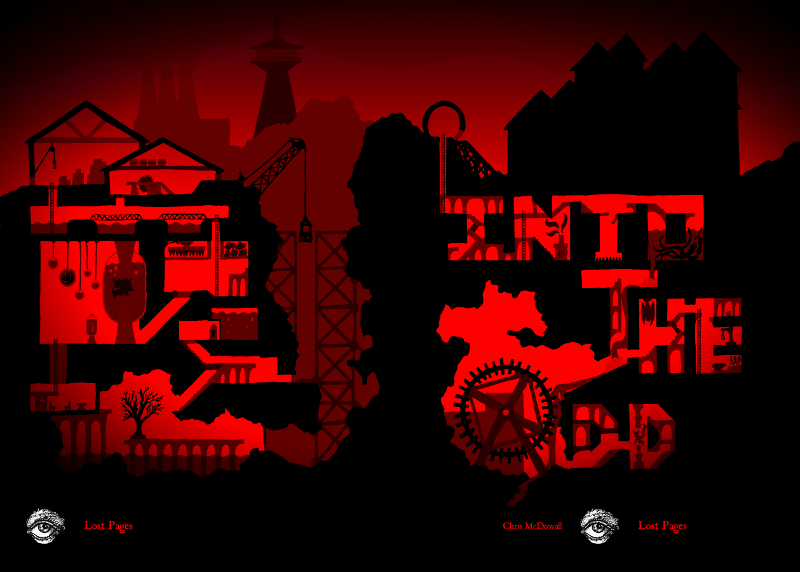
So recently +Chris Mcdowall of SoogaGames released the short, rules light, old school type game called Into the Odd. It's from Lost Pages, +Paolo Greco's publishing imprint, and I've been really in love with everything they've done so far, so I'm giving Into the Odd the old look.


  • It's a rule light, very rule light adventure game where you seek out arcana. 
  • The equipment table contains firearms, telepathy, rockets, and burnt faces. Also a lot more. The setting could be any 17th-20th century locale.
  • 3 statistics exist, Strength, Dexterity, and Willpower. You get 1d6 hit points, and cross reference your highest ability score against your hit points to get your starting equipment. This is a three minute character creation process, useful for getting right into actually playing. 
    • The equipment table is totes impressive yeah? More goodness. Iron Limb, Telepathic link, Hawk, Cigars, Bomb, Glowing Eyes. Good times, good times.
  • Roll under stats on a 1d20 for actions, roll a damage die for attacks and subtract armor. Once out of hit points you start subtracting damage from strength and rolling strength saves to avoid critical damage. 
  • I'm fond of this "When a character dies, the player creates a new character and the Referee finds a way to have them join the group as soon as possible. Here, quickness is required over realism."
  • Full hit points every time a short rest of a few minutes is taken, statistic recovery every time a long rest of 1 week is taken.
  • Leveling increases your hit points and possibly your stats if you roll under them.
  • I think I just typed out all the rules. The rest of the book is . . . odd.
  • There are outlines of arcana, three pages of weirdness that can cause as many problems as they solve. These would be useful in any game. 
  • The default setting is the Odd World, centered around the city of Bastion, surrounded by an abandoned countryside filled with ancient ruins and overgrown woods and a great polar ocean to the north.
  • It contains a 1 page style 4 page dungeon that can be ran with no prep. Rooms are presented with the immediately visible things separated out from what investigation reveals. 
  • It also contains a short hexcrawl (4 pages) and a city! There's a ton of play packed into 10 pages.
  • The remaining pages provide a series of tables for generating inspiration for actions the players might take. Who's this we meet? What'd down this street? What's going on. 
  • It's a fast game, definitely something you can pull out and use with new gamers or children, and a book full of ideas and strangeness for your own games. There's a free .pdf with the basics of the rules, Or for 8$ you can get a boatload of random tables, a hexcrawl, a dungeon and more. It's only 15$ for the print copy, which for a limited time gives you two hard copies of the game, due to an unfortunate misprint. 
  • I feel a bit strange reading this book, because it seems to be fully third wave, internalizing agency, letting rules define setting, and eliminating preparation while maintaining exploration and depth, while encouraging spontaneity and fun. 
  • If you're into weird, mystery, adventures against strange creatures, while seeking weird magics, and want something that plays faster than Call of Cthulhu, this this should be your goto port of call. I can't think of any other system I'd rather run that type of adventure in.

Hack & Slash 
Follow, Google +, Newsletter, Support, Donate to end Cancer (5 Star Rating) (47$ donated so far!)