Tampilkan postingan dengan label magic items. Tampilkan semua postingan

On the Wizards Panopoly: Rules & Talismans

A few months ago +Benjamin Baugh created a post about the accoutrements of wizards on Google+. It's a great idea and I wanted to examine the suggestions in greater depth, both providing more options and ideas, collecting some of the articles written about the items so far, and expanding on the general idea.

The objects presented are talismans, foci, familiars, cabals, raiments, servants, pacts, and sanctums, in order of difficulty of acquirement.

Humans themselves are relatively poor conduits of magical or elemental energy.

The basic conceit of this system is that humans are incapable of safely wielding any magic beyond the first level of power. 

Attempts to cast a second level spell or higher roll 1d6 plus spell level on the following table. If you have exceptional intelligence (13+) you may subtract 1 from the roll. If an effect is rolled more than once a session, move up to the next higher effect on the list.

2. Spell functions normally.
3. Spell functions normally, but magical energies have warped your aura. -2 or disadvantage on all saving throws for 1 session.
4. Spell fails and is lost from memory.
5. Spell functions normally, but magical backlash occurs. Take 1d6 damage per spell level.
6. Spell functions normally, but magical explosion occurs. Take 1d6 damage per spell level in 30 foot radius.
7. Spell fails, but magical explosion as above.
8. Spell nominally fails, wild magical energy is released, roll on wild magic table.
9. Spell fails, and you have attracted the attention of an extraplanar being who has taken offense at your arrogance. It begins hunting you.
10. Spell fails and you suffer an immediate brain aneurysm and die.
11. Spell fails and you are immediately and irrevocably lobotomized.
12. Spell functions normally, but your spirit and personality are annihilated and you are possessed by a demon
13. Spell fails. Magical energies fluxuate out from the caster, instantly slaying the caster and all living creatures and beings within 60 feet.
14. Spell fails. Magical devastation strikes the surrounding lands, in a radius of 1d10 miles + 1d4 miles per spell level.
15. You are instantly erased from existence as if you never lived.

Designer's note: Why bother with the table? 
Clearly, we could just say "No, you can't cast second level spells or above." but there are several good reasons to include such a table. 
Firstly, the entries help define the setting. In the setting above, magic is likely viewed with suspicion, because of the devastation it can cause. If you change and replace entries with polymorphs and mutations, the fear becomes not of devastation, but of corruption of the soul. If anyone could attempt a ninth level spell, and cause magical devastation out to 9-46 miles, that might make the unregulated practice of magic something to pay attention to (e.g. restrict, legislate, or criminalize). 
Secondly, it allows players to make stupid insane risks that really affect the campaign world. You aren't saying no, you are saying "this is the way the world works". 
1d6 with two modifiers (spell level and a one point adjustment for high intelligence) is just about as complicated as you would want to get with something that should only come up very rarely. 

This drawback makes the acquisition of a panoply meaningful (I can cast higher level spells) without immediately increasing the power of the wizard, who is already plenty powerful.

System Adjustments

I'm going to note that in my B/X style games, I use a Bell Curve Magic System where casters have a pool of dice to cast spells and very limited spell lists (no more than 8 spells of each level). In that particular system, only allowing additional dice instead of higher level spells from the panoply works. In 5e style games since nearly every single class is a spellcasting class (Every class excepting the Barbarian class has a spellcasting option and there are three pure spellcasting classes) I'd avoid using such a system. I haven't played enough 5e to know for sure, but so far at level 6, fighting classes seem completely on par with spellcasters.

Rules


  • Attempts to cast magic of a level higher than 1st require a roll on the table above. 
  • This limit can be increased by the acquisition of accoutrements. They may be acquired in any order.
  • Each accoutrement acquired increases the level of spells the caster can cast by one. 
  • No type of accoutrement can be applied more than once, even if you own more than one. Each one only counts towards spell levels you can cast once. 
  • These are generally acquired and lost during play. 
  • If lost or destroyed, that type of thing can't be used again until you have gained a level or a year and a day have passed. 

Talismans 

A small personal object used to concentrate magical power.  You can only have a single talisman, but can make one for yourself with time and tools.   Each spell level invested in a Talisman grants a +1 bonus to saving throws.  -Benjamin Baugh

The first item suggested is a relatively simple one. The talisman allows the caster to cast second level spells, in addition to allowing/requiring them to sacrifice spell spells for a small bonus. What other types of talismans and items can their be? Satyre over on the idle blog Fame & Fortune made a post describing some common minor bonuses available on talismans. These include effects like bonuses to reactions, slow magical healing, a small bonus to stealth, rerolling saves, and protections from a specific type of attack. Any of these would be reasonable bonuses for an item such as a talisman.

Adding in the cost of a spell level for an effect or increased effect (or in the Bell Curve system, assigning a die) seems like an excellent trade off for a "magic item" that isn't really magic. Some other ideas for effects from Talismans include: preservation of youth, a continuous minor protection effect from extraplanar creatures, an immunity against a specific type of effect (poisons, charms, etc.), minor damage reduction, or a small bonus to a specific knowledge or skill.

Drawbacks to talismans can include: A malaise that affects nearby people with ennui and fatigue, a corruption of your aura, an odd smell or scent, minor physical changes (nails of iron, or pupiless eyes, for example), minor psychological effects such as hypo-mania, minor delusions, mild paranoia or phobia, increased anxiety, intrusive thoughts, or unusual visual phenomena.

Another fascinating use of talismans for higher level casters, is as a phylactery or soul storage device, providing a way for the spellcaster to take over another persons body, while leaving their own body in stasis.

Talismans can be created at a cost of 100 gold pieces per level of the spell or per hit die they are expected to contain. It takes 1 week per 100 gold pieces of the cost, and the time to create can be cut in half by doubling the expense.

Note that the spell levels invested at attunement or creation cannot be recovered without the destruction of the talisman. If lost it will require "great struggle" to regain the invested power.

Examples

Talisman of the Domino: This talisman prevents the touch of living things. It requires a third level spell slot to function and costs 300 gold and three weeks to create. Plants and underbrush are shoved aside at the users passing, allowing travel through brambles and briars without hinderance. Attacks and magic spells by the claws and tendrils of living creatures and plants are treated as if the user has a +1 bonus to their armor class. The users skin is affected with a black and white large checkered pattern, with a division down the center of their face, one-half white and one-half black.

Talisman of Magical Warding: This talisman protects the mage from enchantments and spells. It can be created providing a bonus to saving throws versus magic from +1 to +5. It requires an invested spell slot equal to the value of the bonus. A +4 bonus to saves versus magic requires a fourth level spell slot. It costs 100 gold and takes 1 week per spell slot invested. As a side effect, this talisman disrupts your magical aura. If your save bonus is +2 are higher and you are not already subject to spell mishaps/surges you now are. If you are affected by spell mishaps, you roll twice and the Dungeon Master selects the result of the effect.

footnote: my one reservation about this series is that wizards already have enough nice things. I wouldn't implement a system like this, without drawbacks or a similar system and opportunity for fighters specifically (and other classes secondarily) to have options to acquire similar effects.


Hack & Slash 
FollowGoogle +NewsletterSupportDonate to end Cancer (5 Star Rating) (77$ donated so far!)
On Magical Hearts

A selection of unusual magical hearts. These hearts replace your actual heart, and are used by placing over the bare chest of the subject. After an extremely painful minute, they replace the owners actual heart. Only one heart may be used at any time. Often the hearts cause a death effect that prevents raise dead from functioning.

It is a serious thing to consider replacing your heart with magic.

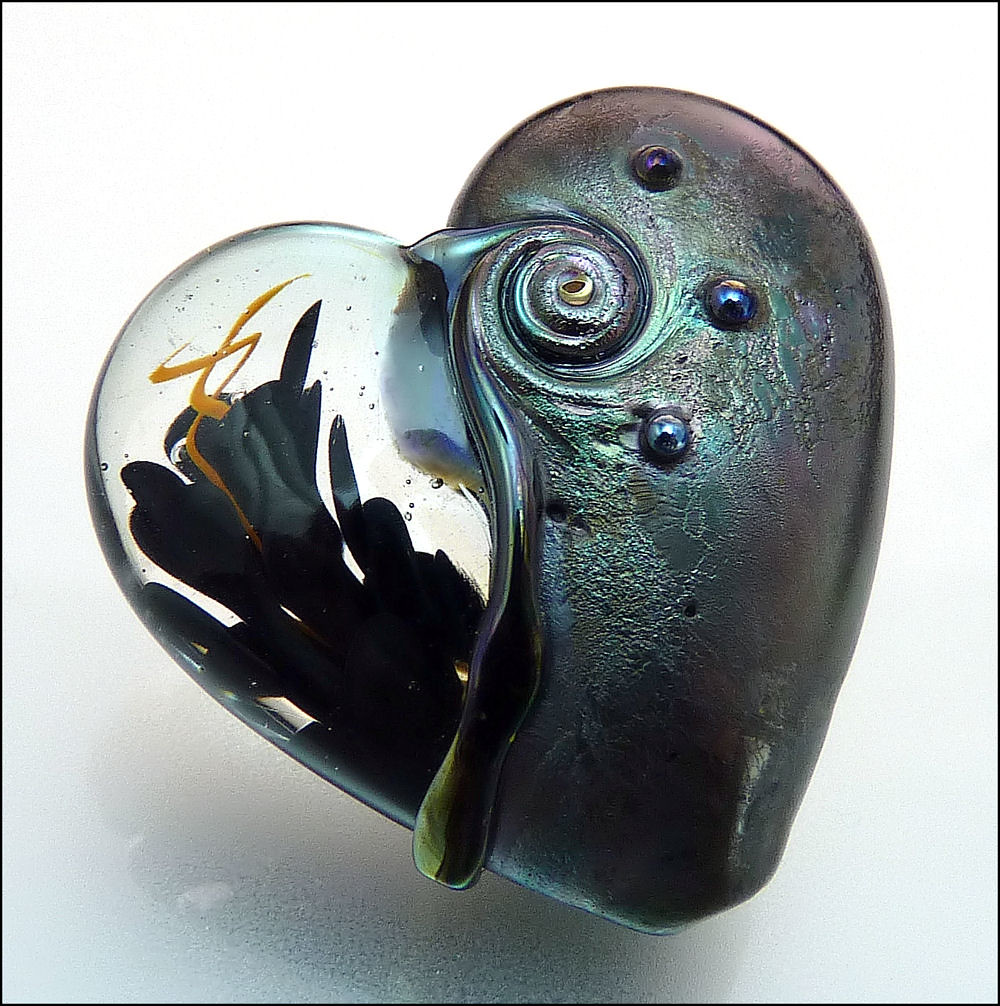
Heart of Glass: This heart is a mixed blessing. The user will automatically fail any saves versus any mind-effecting spells or enchantment effects, but all targets of the users spells must save at -4 (or disadvantage)

Heart of Iron: This heart is a great boon to warriors, but robs them of their essential natures. Anyone possessing this heart gains and additional 2 hit points per hit die and a +4 (or advantage) to saves versus poison or anything affecting the body (including death checks). In addition, the time the wearer can hold their breath is tripled. However, their weight increases by +50%, and over time their alignment shifts towards neutral evil as they slowly lose the ability to empathize with those around them. Their problems and concerns seem more and more meaningless in relation to the users as each day passes, and his own needs seem more and more important. When the bearer dies, their body turns to iron, from which the heart can be extracted.

Heart of Blood: This heart is contained in a crystal glass case. When placed on the chest, the red
liquid inside slowly drains until empty, at which point the crystal case also dissolves into dust, being absorbed into the skin. The user is no longer subject to disease, illness, or any bleeding effects. They receive a +4 bonus (or advantage) on any death spells or effects, and their aging slows to 1/10th it's normal rate. They also regenerate 1 hit point a minute. The heart prevents any sort of protection from scrying for operating. In addition, their blood works as a healing elixir, curing disease and reducing aging by several months when drunk, as well as producing an overwhelmingly positive feeling of well-being. It is also highly, highly addictive, causing addiction after the first use and dependence soon after. The people who are denied this substance will go to any lengths to acquire it. This can be used to control people who become dependent on it, but there are no cases in which it has not been known to backfire. Upon the users demise, the body turns to red liquid, which then fills a crystal heart in the location of their corpse.

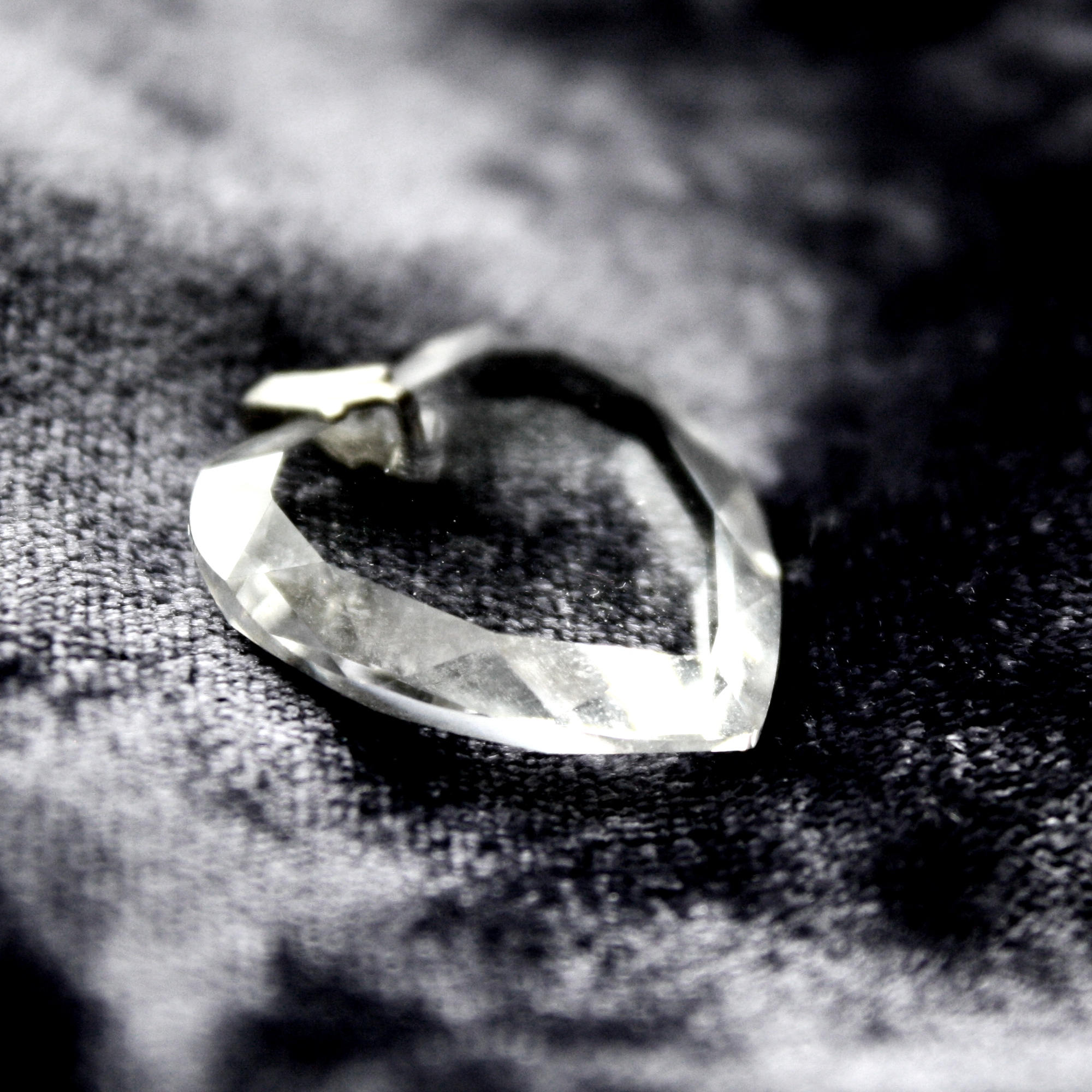
Crystal Heart: This is a heart of reflections and illusions. Any single illusion the caster performs that require concentration to function can be assigned to the heart. For example, an illusionist could cast two spells requiring concentration. Once a day the user can cast Mirror Image. Once a week the user can cast Vanish (Use the heart to create an illusionary double of the caster in reaction to an attack or at will, and turning the caster invisible). Any illusions cast by the caster have their saving throw difficulty class improved by 2 OR provide a -2 penalty to the targets save. The user also gets a +4 (or advantage) bonus on all deception rolls.
The experience of bearing the heart is difficult. Reality seems to fluctuate, and often the user gets glimpses into the shadow and ethereal plane. Often they become paranoid and isolative. They begin to become uncertain about what is real and what is not. When killed the user turns to crystal which crumbles, leaving behind only a crystal heart.

Fire Heart: This heart provides resistance to fire. Any spells you cast ignore the fire resistance of the target, and cause immune targets to be considered resistant. You become vulnerable to cold. Also, you become impassioned. You find it more difficult to stay calm, you mind often fixating on anything upsetting causing you to become angry. You find it difficult not to lash out at people and eventually become more and more chaotic. You must succeed at a DC 10 Constitution check in order to get enough sleep to prepare/regain spells during a long rest. If you cannot cast spells, you gain the ability to cast Fire Bolt at will as a ranged magical attack using Intelligence if you don't have another casting stat, burning hands 3 times and Scorcher once. (Concentration up to 1 minute, 20' line of fire, does 5d8 damage to first target and 3d8 damage to all other targets, Dex save for half). These uses refresh after a long rest (or 8 hours of sleep).

Ice Heart: You become immune to compulsions and mind-affecting effects. You become immune to charm. You have resistance to ice. You are vulnerable to fire. The ambient temperature around you drops by 20 degrees (f). Your alignment shifts towards neutral evil over time as you become less concerned with the welfare of other living beings. You can create and shape ice at will, requiring your focus and giving you a level of fatigue per every significant creation of ice (i.e. 10' x 10' x 10' cube in 1 minute). Going slower or reducing the amount of ice created or used will reduce the fatigue cost.

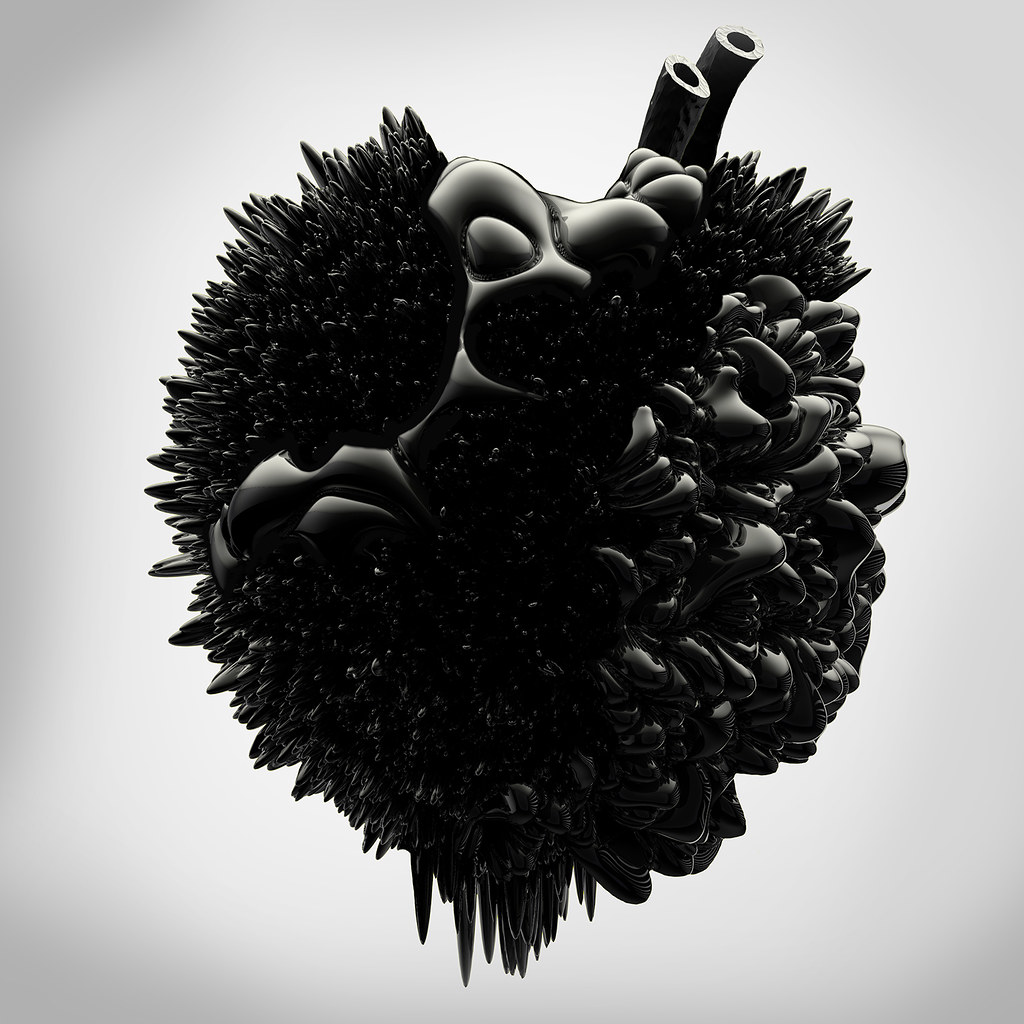
Black Heart:This heart is condensed evil. Once absorbed, the user becomes immune to fear, and their eyes turn red, their hair black, and their veins turn black. Their blood is black and anyone attacking them with a non-reach piercing or slashing weapon must make a DC 10 Dexterity (DC 14 Reflex) save or take 1d6 acid damage. The user gains +2 Strength and Constitution, above normal human limits. Their alignment changes to Chaotic Evil instantly. The user gains Darkvision and rolls intimidation checks with advantage. The user can also spit acidic bile on one target within 10' once per day as a ranged attack. It does 2d8 damage per point of proficiency bonus (2d8 per 4 levels).


Seven magical hearts for your perusal. Note that several of these contain vague effects, such as shifting your alignment over time and powerful effects that are loosely defined. This requires some discussion and agreement between the Dungeon Master and the player about what works best for the game. Allowing a specific use to avoid fatigue of the ice heart (such as using it to ride on a path of ice through the air) should be worked out as specifics between the Dungeon Master and the player. Perhaps one such effect can be gained per level or a few (or one in Pathfinder) could be granted by a feat. Mechanical effects of some of the drawback are left up to individual Dungeon Masters also. A player who's unwilling to portray the change over time as the heart affects them is probably not a good candidate for these magical items.

For other cool magical items, check out the magical item tag!

Hack & Slash 
FollowGoogle +NewsletterSupport

On a Magical Shield

A shield provides protection, but it can do so much more.

+Joel Priddy asked in the OSR community about a set of creative magic shields to go along with our interesting magic weapons.

This is that post!

Arcane Band

This is a golden bracer worn on the forearm. It appears to be covered in some sort of flexible transparent tube, surrounding the entire bracer out to a few millimeters. When worn, a floating disc of translucent purple force surrounds the wearer providing protection as a basic shield. This operates independently of wearer action allowing even those unskilled with shield to receive the armor bonus.


Hypnosis Shield

As an action the shield bearer can activate the shield, turning the black and white spiral on the front. All who fail a save versus paralyzation fall motionless, captivated by the shield. Any who fail the save will take no action other than following the shield-holder at half their movement speed. Any attack against the targets, obvious danger presented to the targets or a successful attack against the shield-holder will snap them out of their reverie.


Throwing Shield

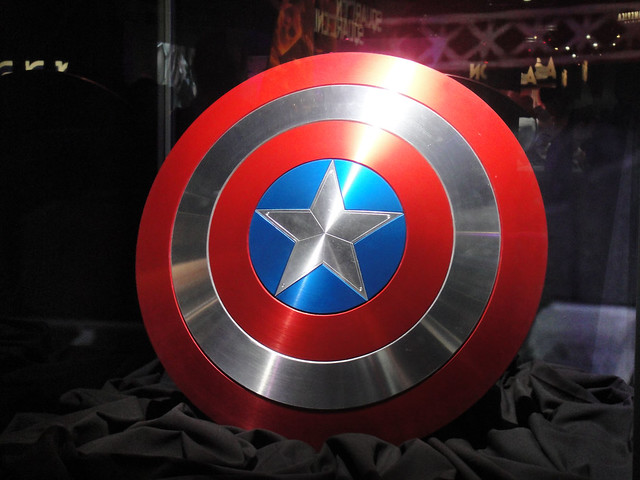
The shield appears to be a regular shield with a series of concentric rings of red and blue surrounding an astral star. On any round in which you miss with your primary melee attack, you can throw your shield at a nearby target, though not at one you are in combat with. On a successful hit, the target takes 1-4 damage and must save versus Paralyzation or be knocked prone. The shield then returns to your arm immediately.


Shield of Terror

This shield has the face of a man. Once a day the face may come alive and yell at the opponents. This can have one of three effects. The yelling can cause an immediate morale check. This carries no cost. The other options are the face can become hideous and terrifying, casting fear at your opponents, but the cost is drained from your life force. You take 1d4 damage for each creature affected by the fear (all targets in a 200 degree arc in front of the shield out to 30') You must also make a save versus death or permanently lose a single hit point. The final ability of the shield is to shout. All targets in a 30 degree cone out to thirty feet take 2d8 points of sonic damage and fragile object must save or be broken. However the user retains a ringing in their ears, causing total deafness for an hour, and a penalty to their hearing of -1 for the space of 24 hours. This affects surprise rolls, listen checks, and can cause spell failure.

No matter which effect is activated by the Shield of Terror, it can only be activated once a day.


Shield of Towers (Coward Shield)

This is a normal small metal shield in the shape of a square. If the wielder kneels, and tries to cover their body with the shield a strange yellow force extends out from the edges of the shield. It produces a barrier slightly larger than a tower shield, providing full cover to the person "cowering" and one additional person. The wielder can take no other action other than "cowering" or the effect disappears.


Shield of Utility

This is a normal large metal shield with the image of a large pillar on the front. When set out in front of the user facing down, it floats within 5' of the wielder about 4' off the ground. It can hold approximately 200 pounds. As the magic user spell floating disc.

Here are the other posts in the series:

Different Magic Swords: A Proposal by JD Jarvis
Evocative +1 Sword Replacements by Gus L.
Weird Swords and Not Swords by Arnold K.
On Magical +1 Swords by -C
Magical +1 Weapons by -C
Magic Weapons Again. Magic Weapons Again? by Arnold K.
More Magic Shields by Jürgen Mayer

some more OSR magic shields:
Three Things: Magical Shields by Satyre

Hack & Slash 
FollowGoogle +NewsletterSupport

On Magical +1 Weapons

It's not only swords that need the +1 love.

Part of a series in the OSR on magical +1 swords that are not +1 swords.
Different Magic Swords: A Proposal by JD Jarvis
Evocative +1 Sword Replacements by Gus L.
Weird Swords and Not Swords by Arnold K.
On Magical +1 Swords by -C

Studded Stunner
This mace is notable because the ball that the rounded metal studs are attached to is invisible. It is also known as Sharak-mok in dwarven low speech, as the weapon is of dwarven make. When striking an opponent, a bright burst of light is released from this invisible ball with what sounds like a clap of thunder, causing all low intelligence and lower creatures to immediately make a morale check. On a critical the target hit by the mace must save versus paralyzation or be stunned for a moment, losing their next action. The mace is quite heavy, doing +1 damage for those who can effectively wield it.

Scythe of Blood
This is an ancient weapon, looking tarnished with use. It appears as a normal scythe, except in the hands of a druid. When held by a druid it appears rich in color and vibrant, rather than an arcane relic. Anyone struck by this weapon when wielded by a druid continues to take a point of damage from bleeding every round. This blood flies through the air and into the scythe which then grants that hit point to the druid. The bleeding and hit point absorption is cumulative. When worn by a druid it is always mistaken for a tool and never a weapon.

Spear of Force
This is a wizard weapon. It consists of no more than a 9" piece of arcane wrought silvered steel cylinder. When the command word is said (Munder-Ca, death lance in the old arcane speech.) a 8' glowing shaft of force with a sharp point springs from the steel. This force is cool to the touch and unbreakable. The tip is quite sharp and any wizard may use this weapon as if he is proficient with it.

Orcish Maul
Yugish the smith of the bloodtooth clan forged this mighty maul. Those who chant the battle cry of death to their enemies deal devastating blows. Each time the player is able to shout the battle cry (TORK! TORK! TORK!) from the moment the damage die leaves their hand till it stops rolling, can add 1 point of damage to the attack. They must yell this quite loudly, and there is a 1% chance per yell that their voice goes out for 2-24 hours.

Dwarven Hammer
This well-balanced hammer has the screaming face of a dwarf at the top, with arms going out to either side, the heads of the weapon dwarven fists. When wielded by a dwarf it is light and agile, granting a +1 to hit and damage, but it may also be thrown to do double damage. The weapon need not be retrieved. There is a 25% chance per melee round that the hammer returns to it's scabbard, a golden ring that the hammer hangs from.

Bow of Brilliance
This shortbow is made from golden wood. It is unstrung. When drawn as a normal bow, it produces a bowstring and arrow made from light. This missile is fired with no bonus from strength to damage. It does normal damage, however it will also affect incorporeal targets and targets only affected by magical weapons.


Hack & Slash

On Magical +1 Swords

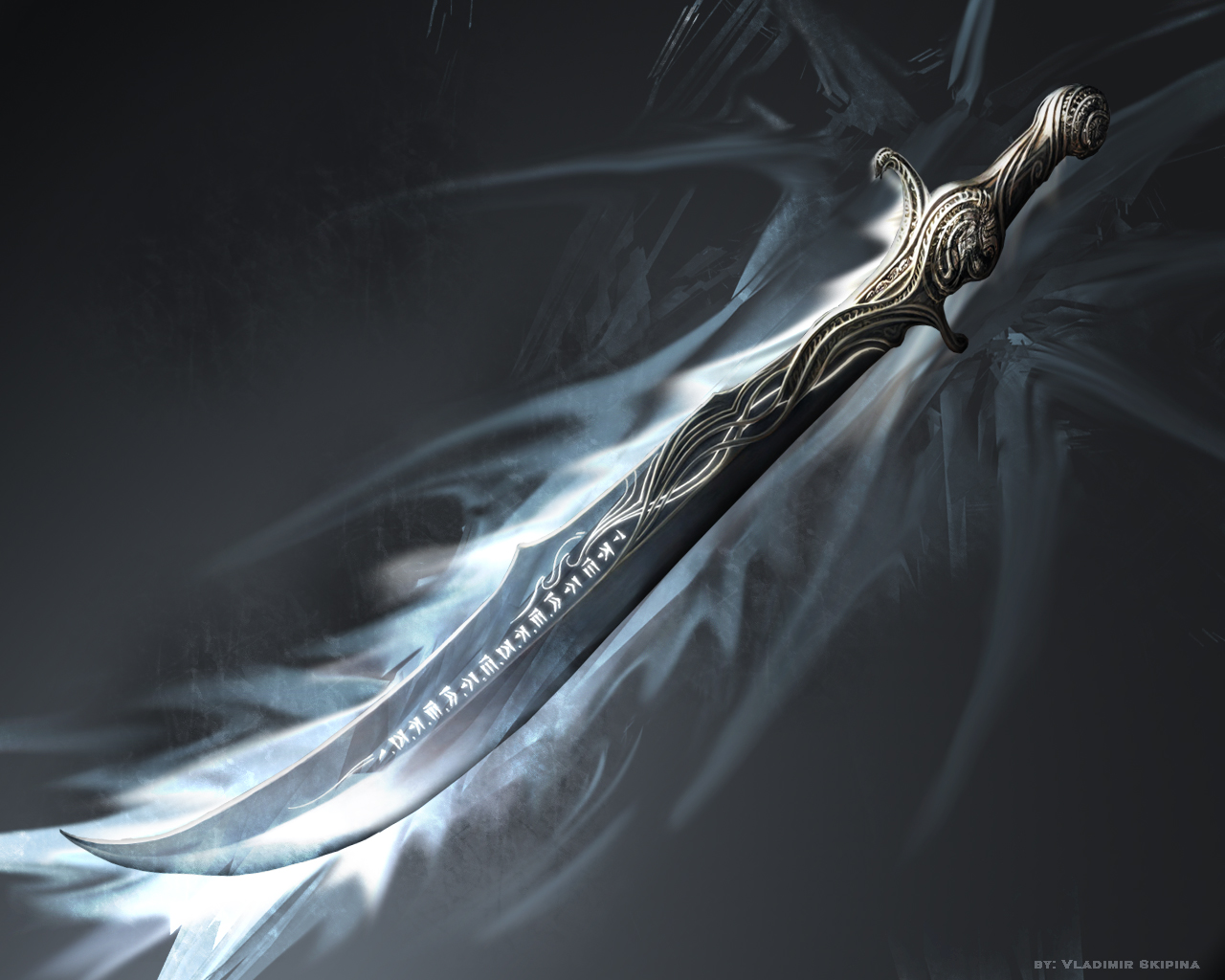
Swords should feel magical.

Part of a series in the OSR on magical +1 swords that are not +1 swords.
Different Magic Swords: A Proposal by JD Jarvis
Evocative +1 Sword Replacements by Gus L.
Weird Swords and Not Swords by Arnold K.

Blackthumb

This shortsword appears to have a metallic green blade that quickly darkens to black as it moves towards the tip. Vegetation and plants near the wielder curl, rot, and wither as he passes by. It can be stuck into earth to salt the soil, and does triple damage versus plants and vegetative creatures. It has a scabbard made of stone and set with a single opal.

Fearflame
This longsword is scorched and blackened. It is unwieldy and heavy making it somewhat difficult to use with one hand. The blade appears to constantly weep some sort of thick viscous substance. This substance with a modicum of effort can be set aflame by taking 1 round. When aflame, the blade does an additional 1d6 points of damage to targets, and on a roll of 6 or if the target is covered in oil, may set the target aflame. The blade is unharmed by this flame, but it provides no protection to the wielder, who takes 1 point of damage per round the sword is aflame, as well as taking 1-6 points of damage from fire on a roll of a '1' to hit in combat.

Alchemist's Friend
This short blade always appears immaculate and new. The round pommel of the sword unscrews. and there is space for up to 3 doses of any alchemical reagent to be placed within the sword. Once placed within the sword, the user may either have these alchemical items be triggered on a successful hit, or, can attack any target they are in melee with the reagent at no danger or penalty. This attack is with the alchemical item itself, usually requiring only a touch attack versus the target, as opposed to having to bypass the armor class of the target (as the attack triggered on a successful hit must do).

Cat's claw
This short blade has a green cast to it's metal. Anyone who wields this weapon for a substantial amount of time finds their pupils becoming more and more vertical. When drawn and held forth, the wielder can see in the dark up to 120'. Also the blade is light and agile. Any hit that exceeds the targets armor class by 4 or more allows the user to immediately attack again once per round. The weapon is too light to take advantage of a high strength, strength provides no to hit or damage bonuses with this weapon, though any bonuses to dexterity do provide a bonus to hit and damage.

Stinkshaft
When wielding the sword, you smell like garbage. The scabbard is some kind of plastic sack filled with filth. Any wound you cause with this sword has an 80% chance of getting a nasty infection. Anyone who engages you in combat must save versus poison become weak and nauseated, receiving a -1 on rolls and armor class each round they engage in combat with you. Leaving the sword behind, attempting to hide the sword, or using perfumes and magic to mask the scent does nothing. This affects all your social interactions providing a substantial penalty.

Temper's edge
This sword pulses red when drawn. The wielder receives a penalty to wisdom and becomes extremely argumentative. They find themselves believing that people are plotting against them, and start developing plants to murder or destroy people and things around them. They don't take action on these feelings, recognizing them as abnormal, but their patience is extremely limited. During any encounter where an opponent is neutral or worse, the bearer must roll a saving throw versus paralysis to avoid attacking. All of that said, once combat begins, the sword glows and pulses red granting both an extra attack and a +2 bonus to damage against all targets.


Further entries to this series should link the earlier entries. . .


Hack & Slash