Tampilkan postingan dengan label thoughts. Tampilkan semua postingan

On the Defining Characteristic of 5th Edition.

It takes a while to figure out what each edition is about.

For example, in Basic/Expert, monster hit dice are d8, without a corresponding increase in player hit dice, causing player death to be exceptionally common. Experience is mainly given for treasure, not slaying monsters. This contributes to characters of higher scores being more survivable, retreating from combat and finding ways around the monsters become what the game is "about".

In 3rd edition, the game was about character builds, trap build options, non-multiclassed caster mastery, 5-foot steps, and killing monsters.

4th edition was about dynamic battlefields, unique opponents, timing and triggering your healing surges, striker dominance yet controller necessity, and tactical challenges.

Well, I think I've finally played enough 5th edition to really find out what the game is about.

The Defining Characteristic of 5th Edition

5th edition is a good edition of Dungeons & Dragons. I've run it for characters up to level 8, and played in several games as a character.

Why is it a good edition?

  • Like all the best editions of Dungeons and Dragons, it doesn't tie you down into a mathematical model. It encourages you to be creative and focused on (and forgive me here, I'll shower afterwards. . .) the fiction. 
  • There are no (or ridiculously few) trap options. Multi-classing works. Spellcasting works. Fighting works. There's a few odd peaks and valleys in the power spike, but there is a far greater equity between classes not seen in a long time. Play what you like!
  • Combats are, in general threatening. Characters are resilient enough to survive while still feeling threatened. 
  • Spells, and their many limitations, allow spellcasters to do great things—but in a very limited way, without overshadowing the other classes.
Which brings us to what 5th edition Dungeons & Dragons is really all about.

The Reaction

Like most versions of Dungeons & Dragons, it isn't until mid to high level play until this becomes apparent. 

The first, and most notable change is in the available combat actions. 

There is no delay action.

You take your turn on your turn. Not only does this speed up play, it specifically limits when characters can do something. The only time you can do something outside of your turn, as a player, is by using your reaction. You have to use your reaction to "delay". Your reaction is also tied into certain abilities that define play.

You can only ever, ever, have one reaction.

This turns mid (and expectedly high) level play into a bluffing game of rock/paper/scissors. All of the following are reactions, and are noted because of their powerful utility. Reactions that do a few points of damage or other minor effects aren't listed. 

Let's look at some reaction abilities in 5th edition, and why they are so game defining:

Class Abilities:
  • Cutting Words (Bard): Reduce an Attack Roll, Ability Check, or Damage Roll, by a bardic die value (d6-d12)
  • Warding Flare (Cleric: Light): Impose disadvantage on an attack roll, Wisdom Modifier times per long rest.
  • Dampen Elements (Cleric: Nature): Grant resistance (1/2 damage) to elements.
  • War God's Blessing (Cleric: War): Grant +10 to an attack.
  • Riposte (Battle Master): Use your reaction to attack, adding a superiority die to damage. Powerful because it doubles the attacks at low levels, and adds and additional 1 to the two per round at mid levels. Drops off in utility as you increase in power.
  • Deflect Missiles (Monk): Not powerful, but very very fun for monk players. They all giggle when using this. I've never seen anyone not spend the ki point to throw the missile back.
  • Uncanny Dodge (Rogue, others): Halve the damage of an attack. (not melee, not missile, not spell, attack)
  • Misty Escape (Warlock:Fey): !! Use your reaction to turn invisible and teleport 60 feet!
  • Projected Ward would go here, but doesn't, because abjurers have much much more important things to do with their reactions.
  • Instinctive Charm (Wizard:Enchantment): Wisdom save (low on brutes) nullifies an attack against you and directs that attack against an enemy.
Feats
  • Defensive Duelist: Add Proficiency bonus to AC.
  • Mage Slayer: Attack Spellcasters casting spells, forcing a saving throw.
  • Sentinel: Attack someone who makes an attack not targeting you, (also can attack when a creature uses the disengage action and negates movement on disengage if the attack hits!)
  • War Caster: Cast a spell instead of a melee attack as an opportunity attack.
Spells
  • Counterspell: COUNTERSPELL. Use a reaction to nullify 3rd level and lower spells. 4th level, you must roll your spellcasting ability, versus 10+spell level. Because it's an ability check, bards even add 1/2 their proficiency bonus to this roll, making them the best counterspellers in the game (outside of Abjuration specialists after level 10.) You can use higher level spell slots to nullify higher level spells. Casters teleporting or flying away? Anyone casting a spell within 60 feet? Nope, nope, nope!
  • Shield: +5 AC till your next turn. Eldritch knight, Plate (+8), Shield (+2), Defense (+1) Means, as long as he has a spell slot, his AC is 26 without magical bonuses. At 3rd level, if they can steal a suit of plate. 
What this means, is, that high level encounters involving tanks and wizards, involve trying to eliminate reactions, bait reactions out, or get within range of creatures to use your reactions. Any encounter where one side is using their reactions to nullify the actions of the other, and the other side isn't has a huge advantage.

What I mean, is that a party that ignores this, and goes against a wizard (who isn't an idiot and took counterspell) and any kind of fighter designed to protect his companions (High AC+Sentinel+Shield) and instead just goes in, a blasting/hitting is going to lose. Reactions will cancel their spells, disarm their opponents, and deflect their attacks. Place the party against two spellcasters with counterspell and watch only one side have spell superiority.

Take a look at this erroneous discussion (correctly answered by Chris Perkins) about if you can counterspell a counterspell. You absolutely can, of course. But to use your own reaction to cast a counterspell, you'd have to stop casting your original spell and lose it. 

Of course, this is addressed directly in the design, with high monster hit points and damage, along with legendary actions, allowing things like dragons to actually have a chance to escape against sentinel/counterspell lockdown tactics. 

Welcome to 5th edition play.


Hack & Slash 
Follow, Google +, Newsletter, Support, Donate to end Cancer (5 Star Rating) (123$ donated so far!)

On Balance in 5th Edition

I've been playing 5th edition for a while now, we are almost through Book 1 of the adventure path "Tyranny of the Dragon Queen". It's not the first adventure path I've played or ran. The experience has clarified my thoughts about adventure paths. I've also gained some insight into how fifth edition plays.

Adventure Path


This is certainly a way to play the game.

I don't like it. A lot of people do. I have to do very little preparation to run it. For 90% of adults that is a huge benefit.

I remember a time when I woke up and decided what to do. Then I got a woman. Then I made a baby. (Making a baby is fun. I recommend it!). I used to do things back then that I don't get to do now. Sleeping. Going to see a movie. Playing a video game. Not complaining, just pointing out one reason why in spite of all their problems, adventure paths are the go to resource for modern adult gamers.

Another thing that ties into the balance issues is the survivability of the characters, and how this allows them to reach a high level, which they enjoy. 5th edition does become more complicated as the characters level. But it does so in one clear step at a time. My wife, who worries herself unnecessarily over math, can handle six levels of choices between raging, reckless attack, frenzy, multiple attacks with a magic weapon that does different damage to different types of creatures, as well as changing out the damage die and hit/damage bonuses for different weapons. Today she expressed a desire to design a more functional character sheet.

But without question, there is a lack of freedom. If you're running the adventure path and not using it as inspiration for a setting or a sandbox, then there are long periods where characters just have to follow the path. If you've ever used a windows personal computer and attempted to get it to stop trying to help you, then you're familiar with the experience of trying to locate and eliminate these dead zones in adventure paths that are anathema to the players.

The point of interest for me, is how fine the line is between simply running a series of modules, versus running a path. The freedom to simply pick the next module, and the change in the  background tile set is enough usually to avoid the dreary tedium of a path.

If one were to look at what's bad about adventure paths and play, it would be this consistent divide between a product designed to produce play versus other priorities, such as an experience or verisimilitude.  This I think is tied closely into the apparently ephemeral definition of railroad.

 I ran the module DCC#45 Malice of the Medusa. Scene one: The  "Adventurer-giver" has five full paragraphs of exposition, and then bursts into fire and attacks the Player Characters. I quote "There is nothing the PCs can do to save him. The fires are magical in nature and are unaffected by water, smothering, or attempts to magically control them." A few minutes later, there's another encounter where no action the players take has any effect at all. I quote: "Forty dervishes is clearly too many for the PCs to defeat, but let the heroes sweat it out for several rounds, and encourage them to desperation. After all, it's in the defense of hopeless causes that epics are made. Then, just as it looks as though the PCs are about to be overrun, a maddening buzz suddenly drowns out the sounds of combat, and the sky is blotted by a rapidly growing black mass. A swarm of locusts descends upon the area, enveloping everything within a square mile." 

To be frank, sending an army of men with swords and bows against 5 players with an average party level of 1.4 is bullshit and the players know it. They know that whatever happens, they can't affect it and they aren't in control of it. They immediately disengage. Even if people quibble over the definition of railroading, we can agree this is the essence of it.

So perhaps it's my ignorance. Are their people out there who are like "Oh, man, it was so cool! I thought we were going to die and then these insects came and killed all the bad guys!"? Is there something of interest in the set-up of "You can't do anything and Deus Ex Machina?" Aren't we as a culture agreed that even done well, it's up there with "It was all a dream"? Do you, personally, know anyone who eats that stuff up in a role-playing game?

Apologies Andrew Hind. Your adventure was so bad my players unanimously quit. It was all like that, by the by.

People like to skip the cutscenes in video games. Sometimes they will watch them once. Why do people try to put cutscenes in role-playing games? Are there people out there who are waiting for the Dungeon Master to finally take control of their character away from them and read to them about what happens?

It's hard to get away from that in an adventure path. It's worse when you try to give the players the illusion of choice, because they just get frustrated waiting for the next thing to happen. The distinction seems particularly acute after just finishing Phandelver sandbox. How many adventure path players across Pathfinder and Dungeons and Dragons 4/5 have played in true sandboxes, as opposed to chokepoint sandboxes and hexcrawls like some Pathfinder Adventure Paths?

If you look closely, you may see the remains of the horse I'm hitting. It comes up, because again, I've subjected myself and my players to an adventure path, for the long haul. With luck, we should finish by the end of the year, perhaps sooner.

An Analysis of Mid-Level Balance in 5th edition


So, as I've already covered, we've been spending a lot of time playing 5th edition so far. I have a group of 3-5 sixth level characters, each with several magic items, the justly earned reward for finishing Phandelver. This places them nearer to the power of characters a level or two higher than they are—pretty far along the hero tier of power.

5th Edition has the weirdest center of balance of any role playing game I've ever played. Encounters either seem completely trivial or overwhelming. Magic items cause huge huge swings in power. The characters seem nearly invulnerable until they suddenly die. Although this sounds exactly like the desired effect, what I'm doing to cause it clearly eludes me.

My group of three 6th level players cut through six giant spiders and 3 ettercaps, a "deadly" encounter by the numbers without taking a scratch. Shouldn't a deadly encounter at least feel a little deadly?

They regularly are able to lock down single large opponents (like adult dragons), who would be literally chopped into paste without legendary actions. But stick a couple of CR 1 ranged attackers behind one half decent meat bag, or any group of attackers, no matter how weak, that grant advantage from pack tactics and the party falls apart. An encounter with 12 CR 1/2 Kobolds is more threatening than an adult dragon.

Part of this is because of the way the characters work. The barbarian has 70+ hit points, and when raging, resistance to melee attacks. This means her real hit point total is greater than 140 due to rounding down. Her 18 AC isn't weak either. The fighter has managed to get somewhere in the range of a 22-24 AC. This is actually very close to what a 5th or 6th level fighter might be able to acquire in Advanced Dungeons & Dragons 1st edition by this level. Fighters being tankish isn't a problem.

Attackers that require strength or constitution saves or melee attacks have practically no effect against the characters. Anything that grants opponents advantage or magical attacks totally tear the group apart. It is very much Rock/Paper/Scissors, and they chose rock, being that 70%+ of the monster manual is made up of scissors.

So the problem I'm faced with is encounter design in the module. Either something in there wipes the floor with them or is slain without incident. Since there is no choice in the path, they will encounter most everything in their way—Which means I'm forced into the position of deciding what's in the encounter. My choices are between: ineffective melee opponents, overwhelming melee opponents, deadly pack creatures, or devastating magical attacks. The last two are even worse if they are combined with the melee creatures. None of these match up to the to the deadliness from the experience chart.

I'm not asking for advice. I'm saying that this is literally forcing me into the position of deciding for the characters how much risk they should be taking on, because in many situations "going forward" is their only choice. They have some say in how they manage to do that. 5th edition is good in that it provides and supports diplomacy and trickery and thinking outside the box in a way that 4th edition specifically discouraged, but the expectation of combat in many situations is still there, especially as a result of failure of the other options. Still, I personally prefer to design monsters and factions naturalistically based on good design principles and let the players decide how to navigate the morass.

Your milage may vary.

Hack & Slash 
Follow, Google +, Newsletter, Support, Donate to end Cancer (5 Star Rating) (104$ donated so far!)

On Über in Gaming

I bought some comics.

I haven't bought comics in a long time, because the books are heavy and take up a lot of space. Comixology to the rescue.

Some interesting tidbits, before I get to the actual gameable content of Über. My vision has made reading actual real comics difficult lately. I had trouble on my recent Sandman re-read, and am having a hell of a time making it through Fire Upon a Velvet Horizon (which I am still reading, slowly but surely).

Guided view is a savior. The panels are huge and presented in a cinematic manner. I can see the damn text. It's like reading a movie. The only paper comics I'll every buy again are those I wish as coffee table books or want to read with my daughter.

I also learned that there was a "Huge Controversy!" over the leading online comic retailer and their decision to remove in-app purchasing on iOS device. The response from the public was astoundingly hostile. This was fascinating for me for several reasons. The decision was really the only option for the company, and yet they completely failed to consider how it would feel to anyone who hadn't been sitting in meetings with them for six months.

I mean, it makes sense. 100% sense. They don't produce content. They are a literal storefront that has to give 30% of their profits to apple if they sell anything via itunes. The decision, based on when it happened and how long these things take, must have been in place long before Amazon finalized their purchase of the company. There really weren't any other choices for them as a merchant.

Their spectacular inability to have anyone even consider what this looks like to a customer outside their ecosystem is also telling. There are fewer people involved in creative projects (books, comics) then in other fields (say, Healthcare or Government) which makes it more obvious that everyone involved is a unprofessional f---up.

Every field is primarily composed of minimally competent people. You have to reach a certain threshold of people involved (i.e. movies) to present the appearance of stability. At this level you can slightly prevent everyone recognizing that no one in the whole world has any damn idea what they are doing. Most people are too dumb and self-centered to notice. No. I mean that literally, the average I.Q. is 100, and half of all people are below that, by definition.

Über

You see that U with the umlaut? That's what I'm talking about when I say professionalism.

First, Über is good. It holds a place in my mind as a structural description of a real weapon. It rests, solid, and unmoving. The reality it presents has weight in my mind. The conceit is that Germany didn't lose World War II, but got a superhuman program running in time to stop the allied advance.

It's written by one Kieron Gillian. He writes a page or two at the end of every issue. I find it notable that until the runaway success of his comic, he had a day job. I think people are pretty ignorant of the fact that everyone but the very most successful creatives has to work a day job. Vernor Vinge worked as a professor nearly the whole time he was writing books, and he was one of the most popular and influential writers of the last decade. Very, very few creatives aren't supported by a significant other or work a day job. This is why Patreon is such a revolution. (ahem).

The other fact I found interesting is that he spends an awful lot of time vexing about whether it's "moral" to write the story. Is there somewhere in the world a Nazi cheering the fact that germany didn't lose? What would happen if there was?! Can I tell this story? What if someone gets the wrong idea?

First, I'll say that the portrayal of the principles is brilliant, accurate, and complex. Hitler is crazy. Gobbels is craven and arrogant and apocalyptic by turns. Churchill is a functioning alcoholic. War is presented as senseless, massively violent, and surreal. As an artist (in the sense of creator, Caanan White draws the comic), Kieron glorified nothing and no one.

And yet, at the end of every chapter, there he is, spending 1,000+ words trying to defend his representation of World War II.

Look. If someone out there is a Nazi, and they cheer because the germans developed an Übermensch in some comic, then that person is an idiot because they are a fsking nazi. Fascism is the worst.

The Worst.

Übermensch


Where does this leave us for our role-playing game? Somewhere pretty awesome.

So alien crystals react with 1 in 5000 people to produce a superhuman. A superhuman basically has two slots. A standard activation produces a Hero with improved height, strength, toughness, speed and endurance, along with a halo effect that functions as an energy weapon. They discover during the course of their research that the activation can be tweaked. Both glasses can be filled with halo focused energy, producing a normal strength human with a vastly more powerful halo, or both can be filled with strength, producing a vastly more strong, tough, and large unit with limited to no halo energy.

There are also more rare individuals (called Battleships) that contain 24 activations, and there are only 5 so far in the entire comic. Later they discover people with 6 and 12 activations (called cruisers and destroyers). We aren't concerned with that right now.

The three types of troops, The Panzermensch with one activation of each, the Blitzmenschen with two energy activations and the Tank men with two physical activations. These form a rock-paper-scissors relationship within the story. The Panzermensch can destroy the non-physically enhanced Blitzmenschen, the Tank men can tear apart the Panzermench, but the Blitzmenschen can blast a Tankman to shreds.

You can, of course, introduce these strange red crystals, a pile of dead owlbears, and one very angry super owlbear to your players for a great encounter, or use the introduction of this to change the dynamic of your campaign. Much like magical drow weaponry, it is useful as a tool that can power up your opponents, but give nothing of benefit to your players.

Panzermensch: 

  • Double the hit dice of the creature (for all purposes, including to hit). 
  • Grant AC 4 or +4 to AC, whichever is better. 
  • Grant +2 hit points per hit die. 
  • Gain DR 2/—
  • Evasion: Target takes 1/2 damage from a successful spell or attack (such as a halo blast, lightning bolt, or fireball) and no damage on a successful save.
  • The dice of the targets melee attack are doubled, and it gains a +2 bonus to hit and damage.
  • Increase speed by +50%
  • At will the creature can activate a halo. While active, the creature can make a 6d8 energy attack against any targets within 30 feet. They can split this attack between as many targets as they wish, assigning as many dice as they wish to any target, not to exceed 6d8. Save for half damage.


Blitzmenschen:

  • Gains no physical enhancements. 
  • At will, the creature can activate a halo. While active, the creature can make a 24d10 energy attack against any target in line of sight. They can split this attack between as many targets as they wish, assigning as many dice as they wish to any target, not to exceed 24d10 total. Save for half damage.


Tank Men

  • Quadruple the hit dice of the creature (for all purposes, including to hit).
  • Grant AC -2 or +8 to AC, whichever is better.
  • Grant +6 hit points per hit die.
  • Gain DR 4/—
  • Double land speed.
  • The dice of the targets melee attack are quadrupled and it gains a +4 bonus to hit and damage.
  • At will the creature can active a halo. While active, the creature can make a 3d6 energy attack against any target in melee range.


Any target who has an active halo, and suffers a called shot to the eye (-10 to hit head AC) must save versus death or die. After the first turn (10 rounds) of activation, the halo has a 1% cumulative chance per minute while active of rupturing and killing the user. This can only be reset by a full 12 hours of rest.


Hack & Slash 
Follow, Google +, Newsletter, Support, Donate to end Cancer (5 Star Rating) (104$ donated so far!)

On Blogs Versus Books

There is hardly any new content in the Hack & Slash Compendium: Blog Collection II, yet it took over a month and nearly 500$ to create.

It wouldn't be worth it, if I didn't need the compendium. I used the treasure pdf when designing dungeons. But over the years, I've made additions to it, and used Abulafia to automate it. The original document wasn't enough. I've added to my own personal copy.

I also put a lot of content up here on the blog, a 50 item series on interesting treasure, discussion of hoard types, etc. Blogs aren't the best format for reference. It's not only a collection for utility, but also prosperity. Although I don't think my blog will disappear or I'll suddenly be without electricity or internet access at some future date, it is even less likely someone will come into my house and destroy the books on my shelves and lulu will shut down, and my blog will be shut down, and all my digital devices die.

If that does happen, I'll probably have bigger worries than generating treasure.

But that's not enough. Tom's article on who you meet when leaving the dungeon is the best implementation of the baroque Gygaxian tax force that's ever been written. How could I publish a treatise on treasure and economies without including it? Arnold, who's the most creative writer in the OSR had just written the single best list of 100 minor magic items I've ever read (and I've read about a dozen of them since I started gaming). John wrote an article on an unspoken tradition that has been part of our history that I felt needed to be recorded.

I feel, and I could be wrong here, that each of them would have let me publish their work for free. That's not right. So I paid them. 5 cents a word. Apparently that's better then a lot of professional publishers pay (he said, stroking his own mane).

Arnold wrote a lot of words. c_c

Paying people when releasing pay what you want is a risk. I honestly don't know if I'll make any money on this project, but losing money is ok too because I don't mind so much come tax time. All the revenue generated will be going to future projects, because the point isn't profit. Objectivists and wall street accountants everywhere are losing their minds.

Picking the articles, contacting everyone, getting them paid, that all took some time. But that's not the whole of it.

This book goes down on my permanent record. I recently read a self-published book by a young author who died (at 33) that is filled with grammar errors. He was intelligent and college educated, yet anyone who reads his work will think—well, I'm concerned about my permanent record. In history.

So blog articles are editable. They are edited once after I write them and usually again shortly after they are posted. Then, I am lucky enough to have thousands of readers who point out obvious errors. But that's still not enough. There are a lot of extra words. I frequently mis-use then/than. Incorrect but correctly spelled words slip past the spell check. The the slips by the the editor, because brain error correction.

After selecting then editing the articles once again, that stuff has to be laid out.

I want to be clear here. I am doing nothing unusual or innovative with my layout. It is a book, organized into three sections. Still layout took 7 days. I have a full time job, but that's half a day of layout on each of my days off (the other half was spent writing blog posts) and then a few hours I could get in every morning.

This next part sounds crazy, but it went really fast this time because my wife was hospitalized. Because I had to work, Pawpaw (my wife's mother) took our daughter and my wife was alternately at the hospital or staying with her family for their assistance. I could provide little child-care assistance while at work or sleeping and she needed the help. So I had several days in a row where I didn't get have family time, or spend time with my daughter.

On the other hand, I got an awful lot of layout done.

Even the simplest layout takes time. Every page has to be gone through. Individual pieces and blocks of text need to be adjusted. You have to consider the final page count. I was shooting for 64. The final book is 100+.

At work, I used my spare time to do the art for the cover. Ink on bristol.

Once it was laid out, I printed it out again and gave it another edit. Came back and made more changes, and then set it up on lulu and ordered print proofs.

It was a good thing I did. On my print proofs, I forgot to texture the compendium II covers in the same way the compendium I covers were textured. I also made an error on the spine with the publisher logo and author name, putting it far enough down that it got cut off. It was my first time printing with spine text, so I wasn't surprised.

Once lulu printed and shipped me the books (paying for printing and shipping again), then I was able to check everything out. And like any good publisher, opening the book you just printed makes every error you've made stick out like a sore thumb. Another round of edits at my day job, and I was ready to spend the entire work-day yesterday fixing those errors and getting the copies put up on RPGnow and Lulu.

Throw some articles in a .pdf, I said. Do it once a month, I said.

Yes, technically this makes me a liar to my Patreons. I am clearly not doing a Compendium every month. But then again, I've messaged them telling them about this, and the general response was themed blog collections that are nicer and take longer are more appreciated. Also, I always try to do something extra for them, from bonus backgrounds in the first one to offering a coil bound version at cost for the second one. They always get them at cost.

It's not like I have seven unfullfilled kickstarters and am spending all my free time attacking people online. I'm ok with me.

It's a lot of work, but there's something really nice about seeing books on a shelf that are yours. I look at Fire on the Velvet Horizon, Yoon-Suin, Strange Stars, Slumbering Ursine Dunes, A Red and Pleasant Land, and The Mad Monks of Kwantoom, and I know that other people are having that same sense of satisfaction. (Also it doesn't hurt that this is my second release to reach #1 on hottest titles on rpg.now).

So, I hope this explains some things. I hope you find the compendium useful or inspiring. I certainly get a lot of use out of it. I'm going to write articles for a week or two, figure out what I want to compendium next and get in touch with some artists and writers over the next several days to start work on Ecology.

Hope everyone checks it out!

Print Copy, Perfect Bound at Lulu
.pdf Copy, at RPG.now
Print Copy, Coil Bound at Lulu (Patreon Only)


Hack & Slash 
Follow, Google +, Newsletter, Support, Donate to end Cancer (5 Star Rating) (77$ donated so far!)


On A New Year

I've got a life filled with news.


  • I just turned in a 397 page manuscript. So, there's that. Sometime this year is the answer. More information coming soon is the other answer. I wrote it twice and laid it out once and am glad to be done. It frees up my time to work on lapsed projects here. Expect a return to form on the blog, now that I've got more time
  • Patreon works. Better than self-publishing. Better than Kickstarter, (and kickstarter works a fair sight better than many people give it credit for).
    • The Alexandrian is one of the best gaming theory blogs around. Since starting the Patron Campaign, we've gotten 17 posts so far just this year. That's the output of the entire blog last year from January to June! And good posts too; We're in a revival of gaming, but the real work of discovery is just beginning. Take his posts on an in-depth examination of what exactly constants a citycrawl and why a good one hasn't really be done yet. Patreon for the Alexandrian
    • The comic about philosophers playing D&D is now being produces regularly instead of erratically. Instead of not being made consistently, it now is. Patreon for Existential Comics
    • Take my blog for example. 145 posts were written that otherwise wouldn't have been. Over 1,000$ was funneled back into the gaming community, supporting artists, writers, and creators. More cool things are around then were before. Patreon for Hack & Slash

Patreon isn't a temporary thing, or a passing fad. It is effectively the new method of supporting the creative class, and does so in a way that produces free product for everyone!


  • My 32 year-old wife has cancer. Fuck Cancer*. In the spirit of Fuck Cancer, 10% of Patreon Proceeds are going to be donated to the Cancer Research Institute. This institute has a 95.76/100 rating on Charity Navigator Ratings. My wife has breast cancer, but breast cancer receives a much greater proportion of funding then incidence. People like boobs. The Cancer Research Institute is trying to eliminate cancer as a problem.. If you want to help, donate to the Cancer Research Institute. If you want to help us, become a patron of the blog. 


Normally, I'd use this week to have a pledge drive week. I'm not going to do that. I think I produce useful stuff. If you think that's worth supporting, then do it. I am going to tell you what that sort of support is going to produce this year, that would not exist otherwise, without the giving, caring, group of supporters taking action to make the world a place they like a little bit more.
On the to do list, this year:

  • Perdition: Role Playing in Hell
  • Ecology: Monstrous creative monsters.
  • Blog Compendium: Cities & Villages
  • Blog Compendium: Treasures, Weird & Magical
  • Blog Compendium: Character Portraits
  • Blog Compendium: Hoard of the Dragon Queen Collection
  • Numenhalla: The God Halls Megadungeon
  • Continuing work on the multi-level rumors content
  • More Tricks and Traps
  • Reviews of great content & products
  • an index for my Hoard of the Dragon Queen Reviews. 
  • More Hack & Slash TV with interviews, commentary, and discussion!


So that's what we're working towards this year! Come be a part of the team that supports it! Benefit from it even if you are not.

*I don't swear on this blog and try to keep it family friendly, but, seriously, FUCK CANCER. 

On the Popularity of Games

Which Role Playing Game is the best role playing Game?

Wait, no.

Which is the most popular?

The truth is, we live in relative darkness about what games are being sold and what games are being played. To date, our best resource has been ICv2 which just tells us the top few best selling games through the retail channels.

This has allowed an awful lot of us to live in ignorance.  Didn't release a supplement this month? Nobody is playing your game!

What's more, is that the people in charge of the companies have no motivation to dispel any illusions the players have.

And it's not really a mud-slinging type industry—After all, products that focus on "fixing" things and are built around not having "problems" other gaming systems have don't do well. Or so I believe, and who's to tell me otherwise?

The Orr Group, that's who.

Who are the Orr Group? They are the Roll20 programmers who consumed Tabletop Forge when several people quit the project. (A slight exaggeration, Joshua Owen approached Roll20.) They provide a Virtual Table Top interface for people playing on-line games.

Now people don't like to have their illusions shattered. Anyone who doesn't like these numbers or facts will just come up with excuses about how it doesn't count home games, or people playing games on G+ online might not be using these pieces of software.

Well that's true. it's also true that those people don't understand statistics and sampling data either. After all, I play B/X so I don't need Roll20, so I'm not counted.

Let's look at the numbers we get for the third quarter of 2014.

THE ORR GROUP INDUSTRY REPORT is an overview of tabletop gaming ruleset popularity based on usage data from Roll20 Virtual Tabletop. Third Quarter results are as follows: Based on a sample size of approximately 25,000 games and 15,000 players.
Notes on how information is gathered:
  • “Games” = % of games where the Game Master said “this is what we’re playing.”
  • “Players” = % of players who were active in the quarter and filled in the “this is what I enjoy playing” field on their profile.
  • Percentages will total more than 100% because each player/game can have more than one game type designated. This is extremely common for players and rare for the games.
  • This only takes into account games/players which were active (e.g. game was played, player played at least one game) during the 3rd Quarter of 2014.
  • This is meant to be a representative sample, as it only takes into account games and players who filled out relevant fields on their game page/profile. There was significantly more than 25k games and 15k players who played in this quarter, but many do not fill out these fields.
  • The list of available games to select were curated by Roll20’s staff based on previous freeform survey results, and will be changing in the future.
Notes on Roll20 / THE ORR GROUP:
Roll20 began as an effort to keep developers and The Orr Group founders Riley Dutton, Nolan T. Jones, and Richard Zayas in touch via long distance gaming. Since launching via Kickstarter in April of 2012, Roll20 has attracted more than 600,000 users as a free service. The program continues to be funded by subscribers who receive features that assist advanced gameplay.

Did it match your expectations? Was the Popularity of the games played related to your internal narrative of which games are popular and which games are not?

Does it matter if more people are playing 1st edition than whatever game you are playing that isn't Dungeons and Dragons?

Hack & Slash 
Follow, Google +, Newsletter, Support

On the Arrow of Time

Eggs do not unbreak themselves. 

Or do they?

There is the anticipation and dread or excitement before a game, the heady excitement of play, the exhausted denouement.

Those are pale words to describe what sitting down to game is like. It's a good human experience. You are often learning new things, solving new problems, and being presented with these multi-dimensional situations, something the OSR has really pushed for -- factions, elements in play that give you new resources.

Decoding

The game is about decoding what the Dungeon Master says. This drives much of the discussion in the blogosphere. Is boxed text good or bad? (p.s. it's bad). Railroad or sandbox? How do you respect player agency? What's a good format for presenting information? 

The thing is, that isn't the game. What the Dungeon Master says is only part of a game. Everything that occurs at the table has value. The players speculate wildly, the Dungeon Master emphasizes the important points, the players refocus on the solving the current problem, choices are made. Play is more than just decoding what a person says. 

It turns out, it's even more interesting than that!

Entropy

Until recently, humanity labored under the assumption that eventual all energy would be dissipated throughout a dying universe as we moved forward in time, doomed to universal equilibrium, the universe grinding to a halt. 

This view, of time moving inexorably forward, created a lot of problems for people trying to solve how the universe worked. Why does it flow one way? Why doesn't it flow in reverse? 

It turns out, we may have been misunderstanding the problem. 

The idea is, energy doesn't dissipate. 

The idea is, objects in proximity become entangled and become more like each other. 

So when you put a cup of coffee in the room, the cup doesn't cool off because of high energy atoms flying into the larger room. The high energy atoms are becoming entangled with the atoms in the room, sharing information and becoming more alike! The longer the cup of coffee sits in the room, the more entangled with the room it becomes. 

All objects are constantly being entangled with the experiences, places, ideas, and objects they are being exposed to. You don't remember the future, because you form memories by becoming correlated with your surroundings. When you read a book, your brain becomes entangled with the new information and then you can recall it from that point forward.

The universe isn't cooling and dying. It is all becoming one.

Gaming

We really are all fractured creatures, again seeking to become whole. Which is what makes breaking the egg of gaming really special.

When you sit around a (possibly virtual) table with your friends, playing Dungeons and Dragons, something amazing is happening. You are becoming entangled with something new -- something that doesn't exist. 

And when that happens, when you take someone's setting, you are taking an object their experiences, ideas, and internal impulses have somehow produced and through the magic of contextualizing information under pressure it becomes a real thing where nothing had been before. 

That setting idea that has become entangled with you, making you more like it, is now becoming entangled with several minds at once. 

This idea is not a real thing. And yet, as you become entangled with it as a group, it becomes real. It is a part of you and you a part of it. It is guided and organic. It changes, thrives, lives and dies.


You are Dungeon Master, their guide in the realm of Dungeons & Dragons in a very real sense. The world during play is not a winding down of spent energy in the universe as you sit at the table, exhausting that rather healthy vegetable tray that shows up every week. 

You are literally becoming entangled with a place that never was. A new realm is given life, and is real as anything that exists. In fact, it is made more and more real the more that it is experienced; it becomes more and more a part of the universe as the idea spreads. 

And eventually, at the end of time, when the universe is again whole, something new will exist where nothing existed before. The breaking apart and reforming of all that was will be more than it was originally. The egg will be unbroken. 

Game on!

On a Collection of Box Text Feelings

Don't pay too much attention to this post: I'm only using it to note every time I run across a condemnation of boxed text.

I don't do this to be negative, but instead in the hopes that we as an industry of adventure publishers can improve, and in support of those that are already focused on new and better methods of adventure and information design. It will be updated as I find new comments.

This is not the post to comment in reply to these arguments. Feel free to add your own condemnations in the comments. If you wish to argue for the non-existent virtues of boxed text, please do so here at "On the Definitive Inadequacy of Boxed Text". Off-topic comments will be deleted.

Note that if you conflate 'providing separate easily accessible information to the DM about the room' with 'boxed text' that's part of the problem.

===

"Count my vote against boxed scripts in adventures. I never like being treated as if I can't think up my own words. Besides, when I DM a prewritten adventure, I always customize the descriptions to fit what the PCs are doing. If they dash into a room without looking, they don't care about the loose thread on the curtain. If it is important, they don't deserve to know about it unless they look. As for being able to set up a scripted module faster, the DM should read the text either way. Otherwise, (s)he will be just as fooled by the player by hidden traps" - Thomas M. Kane, Maine, Dungeon #21

"During the 1e days, we saw the advent of “boxed” or “read-aloud” text. I tend to blame this on the tournament usage of the original published adventures – the goal being to standardize the game experience for each play group, regardless of the DM.
Standardize it did. Players around the world fell asleep, looked off into space, and generally felt their brains leak out of their ears." - Dyson Logos

"I have two major problems with boxed text: First of all the quality of it isn't always all that great, and reading text aloud usually makes the text sound even worse. And second my source material tends to be in English, while I play my campaign in French, with several players who don't speak English well or at all. So I'm forced to paraphrase the boxed text in my own words in a different language, which might either improve or decrease the quality of it. But that is still the easier part of handling information.

The more difficult part is handling all sorts of background information: The haunted wizard tower was built by the wizard Alonso 200 years ago and is deserted since one of his summoning spells went wrong. Okay, and now what do you do with this information? Tell it to players as a voice from the off? Engrave it on a plaque at the entrance to the tower? I don't think so!" -Tobold

"F&*( the boxed text!" - a prominent OSR mapper.

"I have a confession to make: I dislike boxed text.  I don’t like writing it.  Editing boxed text is painful.  I don’t even like having to read it aloud to my players as a DM. . .Unfortunately, the number of things that can go wrong with boxed text often far outweighs the positives" -Shawn Merwin from Critical Hits

"No! Not all adventures should be boxed. As you say, many DMs resent being told what to say." - Steve Smith, California, Dungeon #19

"A1 does suffer from the whole boxed text syndrome, though. Boxed text . . .[i]s completely unnecessary to give me information in the box that I can get by looking at the map (where the doors are, etc.)." - Rhynn

"What I actually saw was much more dramatic than my hypothesis. If you’re the DM, you get two sentences. Period. Beyond that, your players are stacking dice, talking to each other, or staring off into space. Time after time, players were missing the actual data in the boxed text – basic stuff, like room dimensions, how many doors exit the room, and number of monsters. Over the course of four days, I saw otherwise smart players get stymied because they missed a salient fact within boxed text. I saw otherwise engaging DMs read through boxed text, then get frustrated because they wound up repeating and paraphrasing all the information in it anyway – often in the middle of the action." David Noonan/Jesse Decker, Undercover at Gencon

"I have a pet theory that the boxed readaloud text for most RPG adventures is a waste of words." - David Noonan

"I hate it because it forces you to read flavor text that is not your own. Everyone has their own style and every clique of people have their own way of describing things.." - Lord Nikon 

"I personally really don't like the idea of reading anything to the players from the text. The module should talk to the DM, not the players through the DM, if you get what I mean. Explain things, tell the facts, crack a joke, but let the DM handle the presentation to the players. I would also feel like a right , if I tried reading boxed text out loud at a game table..." - SBLaxman

"On the other hand, I definitely don't read boxed text, and in fact much prefer using modules that do not include this unnecessary and harmful boondoggle. The ideal module text is sparse and to the point, giving the GM maximum facts and flavour with minimal time spent in reading prose." -Eero Tuovinen

"I despise boxed text. Most modules are far too wordy. I prefer the terseness of, for example, Judges Guild's Tegel Manor." -Geoffrey

"I hate boxed text. My eyes glaze over when I listen OR read it. I start to think about succubi art. I groan. I LOATHE it." - Bryce, Tenfootpole.org

"I hate boxed text in an adventure. I know a lot of you do. Others don't. But there's something special a writer can do with boxed text that's worse than pulling toenails." - Roger, Roles, Rules, and Rolls.

"Descriptive text (or boxed text in published adventures), the information given to the PCs before an encounter begins, is too prosaic. (Writers love to write, after all.)" -Troy E. Taylor

"My players' eyes start glazing over when boxed text gets read out!" -DeathandDrek

"I don't care if it's a TSR module or OSR module; I don't care who wrote it, or what ideas it has. I will not run a module that contains programmed text meant to be read aloud by the referee. I'm no longer going to buy or support modules that I know contain read-aloud text from OSR publishers. It's a holdover from tournament modules, which aren't fit for campaign use, and should not be used as a model for designing adventures today.
Read-aloud text should never have been a part of an exploration game. The whole concept of D&D is that player characters are discovering what is in a previously unknown environment through their characters' actions. Either read-aloud text is made of clues about the room, in which case it has to be listened to carefully and parsed line-by-line by players, or it doesn't and it is just a waste of time. If I'm running a module, I need a concise description of the room that I can convey to the players as their characters explore it. All clues should be in the room description, not some in the boxed text and others buried in the other description paragraph.
This is a foot-down issue for me. It's 2014! Stop making modules with boxed text." - Wayne Rossi, A Note to OSR Adventure Designers

====

Some of these go on to equivocate, "Well, it's not terrible, but. . ." which misses the point about the responsibility of information design. If something superior were used (Stonehell, Vornhiem) no one bemoans the lack of boxed text. No one.


Bonus! A collection of the Worst Boxed Text Ever!

On Normalizing the Fantastic

So I was watching the excellent, under-rated John Carter the other day.

It is a fantastic, strange movie. You know what gets only a single descriptive phrase?

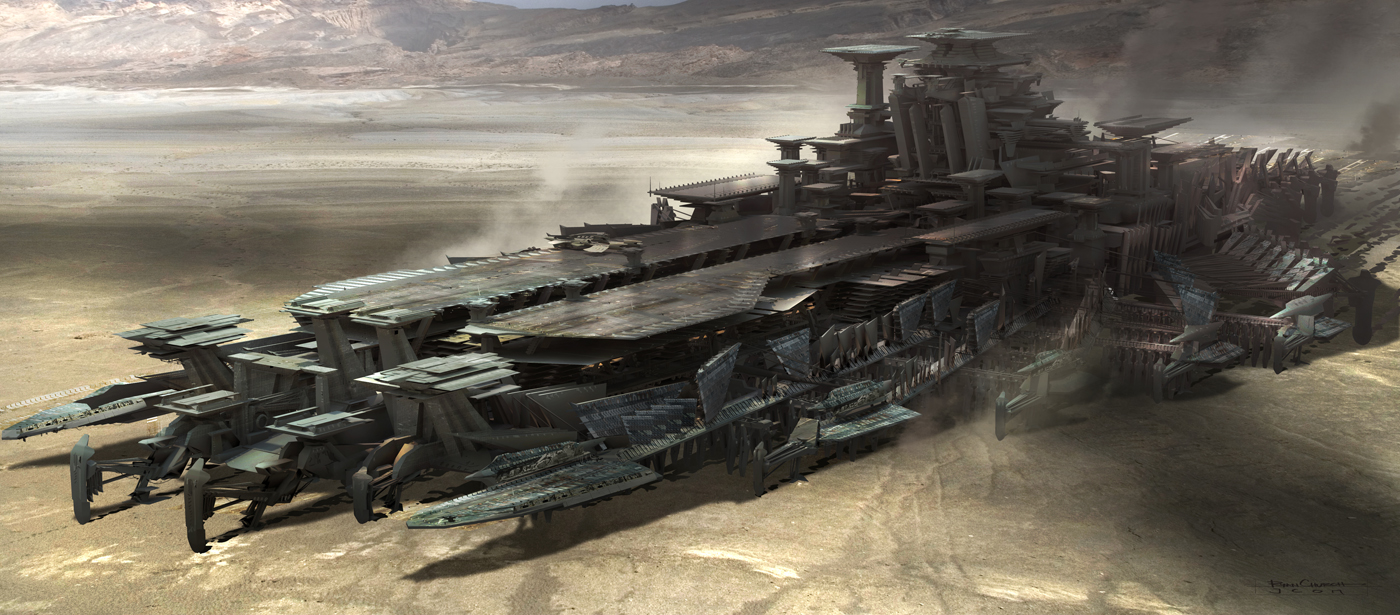
The mobile city of Zodanga

Oh, by the way, our city walks. That's all.

It is this "Normalization of the Fantastic" that makes adventure into high adventure. All too often we focus on the dull and pedantic laboring under the mistaken belief that somehow adding truly fantastic elements reduces their splendor.

If that weren't the entire point, we might be in trouble!

It's high adventure because of the fantastic environment. The adventurers live in a world where the cloud castles strafe the land and a 'giant' giant sits by the sea. These fantastic things are normal to the characters that inhabit the world. We spend all this time on monsters and magic items to have plain 'ole medieval cities, societies, castles and dungeons.

I think this is from two great fears as creators of games.

First is the fear of complexity. We feel that to introduce a fantastic element, we must suddenly do a great deal of work.

Second is the fear of the rational modern mind. We feel that if we can't explain or understand something thoroughly we won't be able to explain it to our players.

The Easy Route to High Adventure

The first fear is complexity. I've found, through years of play that this concern has always been greatly overstated. There are dozens of pages of articles in early dragon magazines talking about the power of guns to unbalance your game. But really, it's not that different from a bow or wand. The rules for any new item can be as complex or as simple as you want. 

The angst over rules for a waterfall that falls up is just that. Angst. You have water rules. You have falling rules. What else do you need? Most games contain the building blocks of whatever you need to handle things as unique and complex as you wish. 

What's more, is even most of that effort is wasted. If you just put a giant stone face the size of a mountain that weeps boulders and rocks in your game, you probably won't ever need any rules for it at all, much less any that are so complicated they can't be handled immediately during play. If you know it's ok to stop the game for a moment and say "I'm not sure, give me a second to think about how I should handle this." then even very difficult issues are solved simply.

The second fear is of the endless advantage a player with a rational modern mind can derive. The key to handling this is to remember that the worlds we describe aren't driven by physics and science. Once you go down that road, every giant collapses and suffocates under his own weight. When players start trying to use the scientific method and experimentation to take undue advantage of a situation, that's the time for them to encounter the fantastic reality they are exploring. 

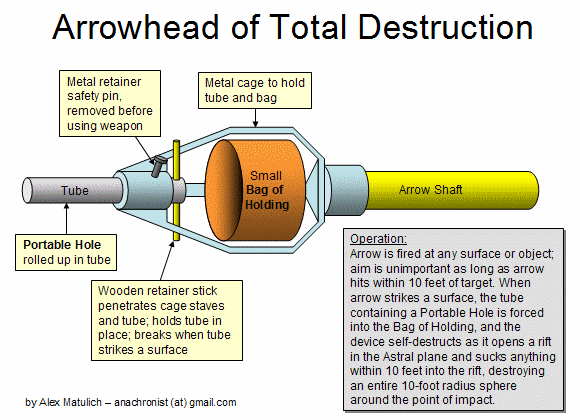
This doesn't mean, of course, that if they show interest you should shut them down. It just means that when they start trying to make black hole artillery to conquer the world because they can manufacture bags of holding and portable holes that it's totally possible to address this with applied, logical, and natural consequences. Why hasn't anyone done it before? Because the gods kidnap you. Because manufacturing astral equipment changes your 'smell' making you attractive to astral creatures, because the land itself begins to decay, or is sentient and takes revenge, because if the objects are in motion they repel each other. 

Because fantasy. 

The Balance

The suggestions above aren't about stymieing the players. If they show enthusiasm about an idea, that's the time to put in the thought about the way a fantastic thing works and ways that it can be non-disruptive to the game. But after years of play, I have very rarely found fantastic elements to be disruptive. This type of engagement is wonderful and can produce very interesting games. If they want to find out how something works to take advantage of it, they just told you what quest they want to do! You couldn't ask for a better opportunity.

It isn't our world and things don't work the same. Very few people today understand exactly how capacitance screens work and certainly not how to repair them -- in a fantasy world influenced by magic and with no global communication system, everything is rumor, darkness, and practically unknowable. Your characters are specialists of a different sort. Specialists in survival, seeking the easy route to money, not the long arduous one of research in a lab. 

On the Fear of Play

Why isn't Dungeons and Dragons more popular?

I play a lot of games and not with gamers. I force people I already get along with to play all kinds of games. Over the last 30 years of doing this, I've discovered that many people not only don't like to play games, but find the experience uncomfortable to terrifying.

My pre-existing relationships with these people allowed me the latitude to delve into why this was the case. I didn't go into the situation to try and change minds, but just to listen and discover what they felt about the experience. Here are some of the things that I was told.

  • "There was so much information involved in learning the game I was overwhelmed."
  • "I felt like I was studying for a test."
  • "Once the game started everyone was mean to each other."
  • "I got angry because I hate losing."
  • "I didn't want to play, because if I won (so and so) would lose."
  • "When we started negotiating, I couldn't trust anybody and it was horrible."
Of course, to a gamer, the above things are reasons we like games. Information gives us a feeling of discovery of new systems and worlds. Mastering the game brings us joy. Shit talking in a reasonable way* is a way to have fun with your friends. Losing a game is when we learn to play better. Winning is something that comes around to everyone sooner or later. And negotiating is a thrill because it's you gaming with your friends, not just moving pieces around on a board.

The Internal Difference


But people are genuinely different from each other. 

I am often put into situations where I am forced to engage in violent physical conflict with people. I've been bit by humans twice in the last two years. Even though I am very skilled at deescalating these physical confrontations, they still occur. And when they do, I find I enjoy the experience. 

This isn't true before the confrontation. I have the same instinct for self-preservation as everyone and I do whatever is in my power to avoid having these violent confrontations. But the fact is that they are often unavoidable from the point at which I become involved. Sometimes in the case of psychosis or organic disorders it's unavoidable from any point. Knowing it's coming or before the conflict begins is very stressful for me.

I have seen many, many people quit after having such a confrontation, or take months to choose to return to work. But after over 100 of these events, I find that contrary to being stressed about the experience, I enjoy it while it is occurring, and feel fantastic afterwords. Their internal experience of the event for different people is physically, chemically, and psychologically different.

This sounds truistic. Other people are actually very different from you. They hold different baseline assumptions. They place importance on different things. Especially if you pull away everything you know, and the right and wrong of things, and ignorance, and low self-esteem -- the pure unadulterated essence of who that person is and how they internally feel is different than you.

They really like scream-o, maybe more than you like Zeppelin. 

The Thing About Games

Some people don't like confrontation. Others don't like losing. Some don't like being put in situations where they might disagree in public. Some people are concerned about having their performance judged by their peers. 

It's my personal belief that a lot of these causes revolve around esteem and issues of confidence and maturity. And in a lot of cases that can be true. 

But it isn't true in all cases. 

Even very confident, mature, people can find an experience like bidding for a piece of property unpleasant. Not because they are concerned about what someone might think if they lose, but because they simply find the process of competing with friends internally unpleasant. It is not to their taste. 

De gustibus non est disputandum 

The Thing about Role Playing Games and Dungeons & Dragons

This leads to two related issues to tabletop gamers. 

Communication

When I tell someone we are going to be playing a wargame, they know what the experience I'm relating is. When I tell someone we are going to be playing a minature skirmish game, they know what the experience I'm relating is. When I tell someone we're going to be playing a turn-based computer game, they know what the experience I'm relating is.

When I tell someone we're playing a role-playing game?

Well, there are certain people who expect to sit down to play a game. There are others who sit down and expect to experience drama. And there are some people who do something in-between. 

None of these is better or worse than another**. None is a right or wrong way to play. Some people enjoy one and some people enjoy the other. 

But how do I know which one I'm going to get?

Pre-Game Anxiety

Have you ever run a game? Have you ever felt prepared beforehand? 

I play tabletop games somewhere between 10-20 hours every week. For 4 to 10 of those hours, I'm the Dungeon Master. I've been doing this for over 25 years of my life. 

To this day I still get nervous before a game. 

Doesn't everyone have this anxiety? Our current in-person Sunday morning dungeon master almost quit after the first session because she was so stressed about preparing for the game. 

You know what you need for every game of Dungeons & Dragons? 

The End Result

Gaming is popular and cyclical. In times of recession and low personal and financial autonomy, they are more popular because of their value per dollar. Gaming is here to stay.

But the reality is, there's no new innovation that's going to raise gaming to the profitability of movies or video games. Dungeons and Dragons requires a Dungeon Master and Board Games require conflict and winning and losing. 

Acknowledging these factors and recognizing that they occur can make gaming a more pleasant experience for everyone! Knowing that I feel anxious and unprepared as I sit in front of 500 rooms across 127 pages of +Numenhalla means that I address the feeling as "that thing that happens before a game", instead of getting wrapped up in all the little concerns and worries. Telling someone that it's ok to lose, because you're going to play another three rounds of Dominion makes it easier to deal with that feeling.

Getting past these things and spending time actually playing is really the point, isn't it?


* e.g. "The Irkutsk-Yakutsk connection will take you down this time!" or "Beware House Stark, for we control the barren frozen north", not hate speech or abuse.

** This pretty clearly super explicitly has nothing to do with being able to objectively critique these systems and make judgement calls about how they actually function in play. Hey, hey, RAW 4th edition, you aren't gonna die, how you like your easy mode? Here's the secret. Maybe you super-enjoy your easy mode and their isn't anything wrong with that. We can still talk objectively about the design and what it's attempting to appeal to. 


Hack & Slash  Follow, Google +, Newsletter, Support
Want to make sure you don't miss any of the great releases coming this year from Hack & Slash? Sign up for the Newsletter!
Hack & Slash Insider


On Wands, Dues Redux

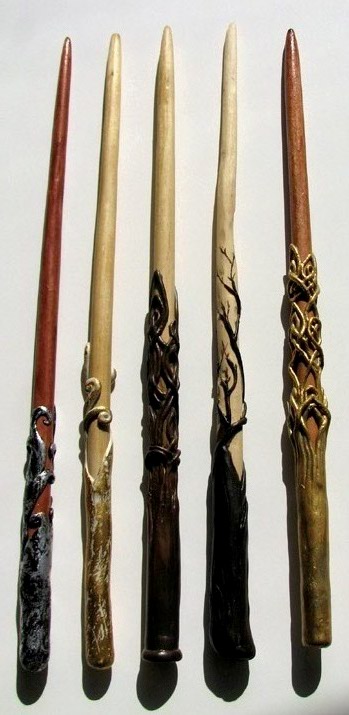
I've talked about wands before, and also, about wand charges.

It has come to my attention that 100 charges (or rather 80 + 1d20 - 1 charges) is insane.

What was the chain of logic for wand and staff charges. 200 charges for a staff in OD&D? 1d10 charges in basic, 2d10 charges in expert, and then Advanced comes along and wands have 100 charges? I'm curious about how the thought processes behind charges evolved; anyone have any insight into how these choices were made.

Obviously we can solve the problem, and wands should have the charges we think they should have -- numerous options are in the articles linked above. I'm interested in a bit of history into how this happened -- who though 100 or 200 charges was a good idea?

That said, here are some more interesting quirks of wands:
  • The wand has a counter that counts down the number of charges left in the wand, but the counter is wrong.
  • The wand has no spell of its own, but if a certain spell is cast through the wand, the wand alters the spell to have a different effect.
    • Wand of Shooting Stars, when magic missile is cast through this wand, it fires one missile of the damage total of the number of missiles available. After striking the first target for this damage, the missile streaks to a second target doing one die less damage. A wizard with 3 missiles hits one target for 3d4+3 damage, a second target for 2d4+2 and a third target for 1d4+1.
  • Trapped wands often have keywords on them that disintegrate the wand or even cause it to detonate harming the wielder. 
  • The wand has a random effect, each time it is used. The effect isn't truly random, but is based on some variable that the players might become aware of (Day/Night, Aboveground/Belowground, N/S/E/W, etc.)
  • The wand is unusual in some way, made from living insects, solid light, coherent sound, The wand is actually a sword or a shield. etc.
  • The wand is represented in some fashion that communicates it's charges. Every time it is used a piece falls of, a strip is peeled away, it becomes shorter like a pencil in a sharpener.


Hack & Slash
Follow, Google +, Newsletter, Support

On the OSR versus TSR eras.

There's a lot of dislike in the world for things like old school play and retro-clones.

One of the most common ways this dislike comes into play is when someone mentions the creativity of the current OSR compared to material that has been published by TSR/Wizards of the Coast.

Rather than make any sort of claims, I wanted to take a minute to share my experience.

Earlier this week, I was working on designing one of the contested areas inside Numenhalla. It is effectively a sewer, and I knew several things about it. I knew that part of the level is flooded, that it had a non-functioning water pump that if fixed could unflood the section of the dungeon and several other things which I won't mention because dozens of my players read this blog.

So, before I start on any sort of design, I look at what came before. We have decades of material from TSR and nearly as much accumulated information from years and years of the OSR blogosphere. This is a common practice among writers known as research.

What I find is interesting and fairly consistent with my experience is this.

I looked for sewer/water adventures in Dungeon Magazine and found three things:
1) An adventure about a merchant who lost 10 dinosaur eggs in the sewer. The adventure consisted of a random encounter table (all attack on sight) and miles and miles of sewers to be explored until all 10 dinosaurs were killed or recovered or winter arrived.
2) A short introduction adventure where players chase a vampire chasing a target through 4 very simple sewer encounter areas (Hidden entrance, bat swarms, black pudding, secret shaft to surface)
3) A plot by a were-rat to take over a small town with a three room sewer dungeon containing were-rats.

In Dragon Magazine, I find a few articles.
1) Issues 326 contains "Down the Drain" exploring the history of sewers and how they might appear in a fantasy setting. It contains such gems as "The earliest sewers began as storm drains" and "Maybe no one knows why sewers exist. . . Players and the DM might think the mystery worth investigating -- or not". Also: "Disease and poverty run rampant [in the sewers], and many of the inhabitants turn to crime to survive".
2) Issue 238 contains 4 sewer monsters in 4 pages: Necromantic sludge, plague moth, albino crocodile, and water cat.

I mean, that's all ok, I guess.

What Happened Next

I type in Sewer.

This article pops up on the first page: Sewer Tables That I meant to do awhile a go by Scrap Princess

Just a random sample includes:
cults ("The Bell Drowners. They drown bells. The music of a efficiently drowned bell is rather unsettling |ultrasonic abilities"),
Thief gangs ("Snatch and grabbers , ride trained climbing goats"),
Alchemical Horrors ("A symbiotic second skin. Now lurching around looking for someone to attach to. Not a good idea."),
Lost places,
Enigmas ("Statues hanging from chains around their feet, so the head remains in sewage")
critters ("Sewer Manatee"), and
Predators ("Murder Weasel").

I mean, it's 685 words that somehow manage to be more immediately useful and helpful then the thousands and thousands of words published over the course of years by TSR.

And lest you think this solely has to do with the savant nature of the prodigy that is Scrap Princess, other articles that popped up on OSR search include this three article series from Hereticwerks on interesting things found in the sewers.

A comment on table I "One of the best things about this table is how it avoids the obvious. Even ordinary things here are extraordinary in some way, or at the very least a great lead-in to an encounter or an adventure. It feeds naturally into your worlds, and references all kinds of material, but could easily be used in any weird sewer. Imagination and practicality"

So what's the conclusion one should draw here?

I know that sounds facetious, but I ask it with some seriousness. Are players more interested in saying at the end of an adventure "Yep, that was completely logical!" instead of enjoying the mystery of swimming mirrors? Is that what sells and we're just an odd group wanting to focus on the strange? Should we be instead be writing articles about how "sewers are built from bricks" and "Waste and rainwater fill the sewers"?

I'm not sure today's post really has a point other than read Monster Manual Sewn from Pants and use OSRsearch.blogspot.com.


Hack & Slash