Tampilkan postingan dengan label rules. Tampilkan semua postingan

On Über in Gaming

I bought some comics.

I haven't bought comics in a long time, because the books are heavy and take up a lot of space. Comixology to the rescue.

Some interesting tidbits, before I get to the actual gameable content of Über. My vision has made reading actual real comics difficult lately. I had trouble on my recent Sandman re-read, and am having a hell of a time making it through Fire Upon a Velvet Horizon (which I am still reading, slowly but surely).

Guided view is a savior. The panels are huge and presented in a cinematic manner. I can see the damn text. It's like reading a movie. The only paper comics I'll every buy again are those I wish as coffee table books or want to read with my daughter.

I also learned that there was a "Huge Controversy!" over the leading online comic retailer and their decision to remove in-app purchasing on iOS device. The response from the public was astoundingly hostile. This was fascinating for me for several reasons. The decision was really the only option for the company, and yet they completely failed to consider how it would feel to anyone who hadn't been sitting in meetings with them for six months.

I mean, it makes sense. 100% sense. They don't produce content. They are a literal storefront that has to give 30% of their profits to apple if they sell anything via itunes. The decision, based on when it happened and how long these things take, must have been in place long before Amazon finalized their purchase of the company. There really weren't any other choices for them as a merchant.

Their spectacular inability to have anyone even consider what this looks like to a customer outside their ecosystem is also telling. There are fewer people involved in creative projects (books, comics) then in other fields (say, Healthcare or Government) which makes it more obvious that everyone involved is a unprofessional f---up.

Every field is primarily composed of minimally competent people. You have to reach a certain threshold of people involved (i.e. movies) to present the appearance of stability. At this level you can slightly prevent everyone recognizing that no one in the whole world has any damn idea what they are doing. Most people are too dumb and self-centered to notice. No. I mean that literally, the average I.Q. is 100, and half of all people are below that, by definition.

Über

You see that U with the umlaut? That's what I'm talking about when I say professionalism.

First, Über is good. It holds a place in my mind as a structural description of a real weapon. It rests, solid, and unmoving. The reality it presents has weight in my mind. The conceit is that Germany didn't lose World War II, but got a superhuman program running in time to stop the allied advance.

It's written by one Kieron Gillian. He writes a page or two at the end of every issue. I find it notable that until the runaway success of his comic, he had a day job. I think people are pretty ignorant of the fact that everyone but the very most successful creatives has to work a day job. Vernor Vinge worked as a professor nearly the whole time he was writing books, and he was one of the most popular and influential writers of the last decade. Very, very few creatives aren't supported by a significant other or work a day job. This is why Patreon is such a revolution. (ahem).

The other fact I found interesting is that he spends an awful lot of time vexing about whether it's "moral" to write the story. Is there somewhere in the world a Nazi cheering the fact that germany didn't lose? What would happen if there was?! Can I tell this story? What if someone gets the wrong idea?

First, I'll say that the portrayal of the principles is brilliant, accurate, and complex. Hitler is crazy. Gobbels is craven and arrogant and apocalyptic by turns. Churchill is a functioning alcoholic. War is presented as senseless, massively violent, and surreal. As an artist (in the sense of creator, Caanan White draws the comic), Kieron glorified nothing and no one.

And yet, at the end of every chapter, there he is, spending 1,000+ words trying to defend his representation of World War II.

Look. If someone out there is a Nazi, and they cheer because the germans developed an Übermensch in some comic, then that person is an idiot because they are a fsking nazi. Fascism is the worst.

The Worst.

Übermensch


Where does this leave us for our role-playing game? Somewhere pretty awesome.

So alien crystals react with 1 in 5000 people to produce a superhuman. A superhuman basically has two slots. A standard activation produces a Hero with improved height, strength, toughness, speed and endurance, along with a halo effect that functions as an energy weapon. They discover during the course of their research that the activation can be tweaked. Both glasses can be filled with halo focused energy, producing a normal strength human with a vastly more powerful halo, or both can be filled with strength, producing a vastly more strong, tough, and large unit with limited to no halo energy.

There are also more rare individuals (called Battleships) that contain 24 activations, and there are only 5 so far in the entire comic. Later they discover people with 6 and 12 activations (called cruisers and destroyers). We aren't concerned with that right now.

The three types of troops, The Panzermensch with one activation of each, the Blitzmenschen with two energy activations and the Tank men with two physical activations. These form a rock-paper-scissors relationship within the story. The Panzermensch can destroy the non-physically enhanced Blitzmenschen, the Tank men can tear apart the Panzermench, but the Blitzmenschen can blast a Tankman to shreds.

You can, of course, introduce these strange red crystals, a pile of dead owlbears, and one very angry super owlbear to your players for a great encounter, or use the introduction of this to change the dynamic of your campaign. Much like magical drow weaponry, it is useful as a tool that can power up your opponents, but give nothing of benefit to your players.

Panzermensch: 

  • Double the hit dice of the creature (for all purposes, including to hit). 
  • Grant AC 4 or +4 to AC, whichever is better. 
  • Grant +2 hit points per hit die. 
  • Gain DR 2/—
  • Evasion: Target takes 1/2 damage from a successful spell or attack (such as a halo blast, lightning bolt, or fireball) and no damage on a successful save.
  • The dice of the targets melee attack are doubled, and it gains a +2 bonus to hit and damage.
  • Increase speed by +50%
  • At will the creature can activate a halo. While active, the creature can make a 6d8 energy attack against any targets within 30 feet. They can split this attack between as many targets as they wish, assigning as many dice as they wish to any target, not to exceed 6d8. Save for half damage.


Blitzmenschen:

  • Gains no physical enhancements. 
  • At will, the creature can activate a halo. While active, the creature can make a 24d10 energy attack against any target in line of sight. They can split this attack between as many targets as they wish, assigning as many dice as they wish to any target, not to exceed 24d10 total. Save for half damage.


Tank Men

  • Quadruple the hit dice of the creature (for all purposes, including to hit).
  • Grant AC -2 or +8 to AC, whichever is better.
  • Grant +6 hit points per hit die.
  • Gain DR 4/—
  • Double land speed.
  • The dice of the targets melee attack are quadrupled and it gains a +4 bonus to hit and damage.
  • At will the creature can active a halo. While active, the creature can make a 3d6 energy attack against any target in melee range.


Any target who has an active halo, and suffers a called shot to the eye (-10 to hit head AC) must save versus death or die. After the first turn (10 rounds) of activation, the halo has a 1% cumulative chance per minute while active of rupturing and killing the user. This can only be reset by a full 12 hours of rest.


Hack & Slash 
Follow, Google +, Newsletter, Support, Donate to end Cancer (5 Star Rating) (104$ donated so far!)

On Interesting Treasure, Accomplished

I've been thinking about treasure for a long time. Almost as long as I've been gaming.

It all started with Dungeon™, the board game. I didn't play the wizard to play the wizard. I played the wizard because he was the only dude who was going to come back with the diamond. I loved finding boots of speed in a level one room. I stared at the pictures on each item, imagining what it would be like to hold or have such a thing.

Here is what I have learned about treasure in my 30 some odd years of gaming:

Players don't care.


An example of me handing out treasure:
DM:"You open the steel coffer by clicking open the last pin on the Clip Chest Deadpin lock, and find a pile of mixed coins, so—"
P1:"We start counting out the mixed coins."
DM:"Do you want to do that? It will take a turn."
P1: "Yes."
DM:"Ok, you find 10,971 silver pieces, and 27 platinum pieces, A white marble gameset, 13 badger pelts, A granite helm with an inverted 5 point star diamond inserted in the top, A pewter girdle engraved with concentric circles, and a shiny black sheepskin leather suit of armor."
P1:"We cast detect magic"
DM:"The leather armor glows, it's magical."
P1:"How much are the items worth?"
DM:"The helm is worth 6,529 gp, The girdle is worth 3,656 gp, The gameset is worth 2,400 gp,  and the beaver pelts are worth 3 gp each."
P1:"Ok, no one needs leather armor so we go back to town and sell it all."

I just wasted everyone's time. I could have just said, you find 15,856 gp in assorted treasure. Players often don't even want to keep the magic items, if they aren't immediately useful.

Now, there's caveats of course. Treasure in different situation serves different purposes. Treasure, like the above, from Numenhalla, matters to the players as far as portability and how they are going to manage to extract it from the megadungeon.

But what matters to the players are the gold pieces they get for experience and what services they can buy to buff their character. In Pathfinder, what matters is what magic items you can craft or buy. In 1st edition, what matters is how much you have for experience, and in 1st & 5th, what matters is what in-world purpose you can use the money for. Players are concerned with what the treasure can do for them mechanically.

The treasure itself? Unless it's magical and somehow useful it is just unimportant.

I think I've finally found the answer to how to make treasure interesting.

Real Interesting Treasure

The reason treasure isn't interesting is pretty obvious, now that I've been thinking about it for 30 years, but it took discovering out what players found exciting to see it.

I worked hard to find a good balance on what players could do with gold besides buy magic items in both my megadungeon games and old school style play. I've gotten a lot of feedback that these systems are super successful. Players are excited when they get treasure, because they can turn it into things and effects that they want. What players get excited about are opportunities to improve their characters. This doesn't just mean mechanically, but it does mean something concretely. It could be building a fortified castle, or buying a lordship, or getting questions answered by a sage.

Treasure is important to the degree to which it can do something for them, rather than as an end, in and of itself.

I'm interested in the treasure itself, for reasons unknown. Nostalgia, perhaps? Maybe because the idea of treasure is awesome and generates a certain internal feeling. It's lost art, hooks into the world, an aesthetic item of beauty itself.  Unsurprisingly, I'm also interested in treasure that makes players interested in the treasure itself.

Set Pieces

The problem with treasure as it stands is that there is no feature of the treasure that is interesting to the player, beyond its value, magical status, and weight. But other features also hold intrinsic value; The culture that made this mask, what is engraved on this helm, what this statue represents. What I'm proposing is that beyond gold, beyond "trade goods", that there's interesting treasure, and this interesting treasure is divided into sets. And when you collect a set, your benefit increases.

It can't be as simple as it simply being worth more as a set—that simply takes the reward and makes players wait for it. That's not interesting, that's annoying. What we are looking for is to generate interest in the actual treasure.

The first step in doing this is to not assume that the characters all know and trust each other as well as the players. In older games (and the relevant Appendix N fiction) characters would often be known by and associated with the items that they carry. Elric didn't hand out Stormbringer just because he wasn't going on this mission. The items recovered by the character are a large part of the definition of that character. A modern iteration of this is the idea of attunement in 5th edition. Items are a part of the character.

This core assumption is important in making set items work. Each player is in competition with each other player. They must all have their own separate resources, such as gold. We are going to reinforce this mechanically, because without this, it isn't interesting. it instead becomes just like handing out a magic item, because the players will be working together to (trivially) find the most effective result.

How it Works

Here's how it works. There's gold, There's Trade goods, There's Experience, There's Magic Items, There's Consumables/Craftables, and finally, there are Set Items.

A set item would be something like:
"A troll doll stitched from hydra skin, with round black opals for eyes, worth 120 gp."
 It would arbitrarily belong to the sets:
"[Troll doll trio]"
"[Four Dolls stitched from different fabric types]"
"[Three items using opals as decoration]"
"[A dozen Native/Primitive art items]"

When selecting treasure, divide gold according to shares, and then divide magic items and set items. Set items are picked at the same time as magic items.

Once selected as a players magic item pick, they have several options.

  • Set items may be sold for their gold piece value and the player gains experience equal to that gold. 
  • Or the player may sell the item to other players at whatever cost they can extort, and gain experience equal to that gold total. 
  • If a player sells an item for the listed gold piece value to a merchant, the merchant will resell the item in one week for 2d4 times the base price, and if there is a player who wants it, they can buy it from the merchant.
  • OR the set item may be kept, and the set collected. Once a set is collected, the player doesn't have to sell the items, and they get the experience point value for the items as if they did. 


What's more is the multiplier.

If a player in a group completes a group of set items, they get a multiple of the total gold piece value of the set in bonus experience, with one caveat.

This bonus experience is deducted from the other player's earned experience in play.

Example 


Let's look at some basic set items:
[5 different gemstones worth 100 gp or more]: When this set is complete, gain 1.5x the value of the set in experience.
[3 different gemstones worth 1,000 pieces or more]: When this set is complete, gain 1.8x the value of the set in experience and the friendship of a jewel crafter who can increase the value of your raw gemstones by 10%-60% by cutting them.

Frank the cleric has a 1,200 gold piece pearl, and while adventuring finds a 225 gold piece ruby and a 800 gp sapphire. Later he finds a 102 gp rock crystal, and a 200 gp ruby, and a 2,650 gold piece emerald.

He has enough to complete the first set right now with a ruby left over, but doing so would prevent him from completing his second set. Because the sets specify different gemstones, Frank can't use both rubies to complete the first set.

We can see why he might want to wait, but let's say Frank wants to go ahead and level, because he's close. So he turns in the first set. He gets a total of:
Pearl 1,200 gp
+ Ruby 225 gp
+ Sapphire 800 gp
+ Rock Crystal 102 gp
+ Emerald 2,650 gp
For a grand total of 4,977 experience, PLUS another 2,488 experience due to the multiplier right now. This experience is deducted from the experience earned in the future by the rest of the party, but not the player turning in the set. Or alternately, this total could be divided by the number of other players and subtracted from everyone else's experience point total for ease of record-keeping. They wouldn't lose levels, but their experience total required for the next level would be higher.

Suddenly, it seems like players will be very interested in the type and features of non-monetary treasure!

Rules


  • Interesting items belong to a public list of sets.
  • The public list contains the bonuses for acquiring a complete set. 
  • Individual items may be sold and experience gained for the amount they sold for.
    • They may be sold to merchants for the listed value, or to other players for whatever you can extort from them.
  • Only the original owner of the item (the person who picked it at treasure distribution) may gain experience points for items sold this way. There is no benefit to cyclically selling the item back and forth within the group.
  • Merchants will buy the item at the listed price and resell it in one week at 2d4 times that amount.
  • When sets are collected and turned in, the collector receives experience equal to their total value, plus the bonus multiplier, plus any bonus effects.
  • The experience granted by the multiplier is subtracted from the other players experience point totals. This does not cause a loss of levels, but does increase the experience point requirements.
  • If a set is completed and experience received, and it is sold or lost, the character loses the experience gained from the set (though if sold, they do receive the base gold piece value, plus the multiplier value.)
    • In our example, selling those gems for 7,465 gold when they are actually worth 4,977 gp might be something a player wishes to do, even at the expense of losing the experience


Further ideas

What we have above is very basic. There are some further twists that might make it even more exciting.
Rumor, Class, and Race Bonuses: Each player receives a personalized version of the set list, with bonuses that are available from each set only for their specific race or class. Or when selecting rumors, the player may receive a rumor that provides them (and only them) with an additional bonus to collecting the set. The worth of a set might not be equal to an elf wizard or a dwarven fighter. Alternately, this information could be public. Each set should have different effects for multiple classes and races to encourage players to compete against each other for them.
Turning in set restrictions: This places restrictions on turning in sets—whenever you turn in a set it removes (or uses) your next treasure pick. So either you give up your first pick of the next treasure haul, or during the pick process, you use your pick to turn in one of your sets.
Restricted Set List: Provide a limited generic list (5 gems, etc.), and as interesting treasure is found, provide information about the sets it belongs to, to the players. This can be a gradual way to gain knowledge of the setting.

FAQ


Should I design the sets based on what characters my players choose to play?
My opinion is no. I'd design most of them before the campaign starts. But I encourage multiple characters per player and sometimes have tables with up to 20 or 30 rotating players. Your milage may vary.

Pitting the players against each other? Losing experience? Have you gone mad?
Set collecting as a game mechanic is neither thematic or interesting on it's own. It's only interesting when there's hidden knowledge (poker), competition for similar resources with a penalty for not getting them (rummy) or a cost to collecting the set (ticket to ride).

I think the above addresses that problem in a way that keeps it interesting, since in the long run, it all comes out in the wash. (don't tell the players).

Wait, doesn't this just make sets unusual magic items you have to wait for? Or alternately treasure you have to wait for?

It would, if each item only fit one set, and the players weren't in competition for them. Because any given item can fit more than one set, it means there are multiple choices all down the line. This prevents it from just being a multi-part magic item.

How will they tell what is a set item and what isn't? How do they know what items are in the set?

You tell them. Or you give them a handout.

This sounds like a lot of work.

Tune in tomorrow.


Hack & Slash 
Follow, Google +, Newsletter, Support, Donate to end Cancer (5 Star Rating)

On What to Do With a Dragon Corpse

I am a terrible dungeon master. 

Spoilers for Phandelver follow.

So, my players were about to leave Thundertree, when they decided to look around to find a certain missing amulet. While they found the amulet, they also found a strangely attired group of humanoids.

Failing their stealth roll, they were invited in for tea and a strongly worded offer.

Thull explained how the dragon cult helped his sick grandmother out and provided for his every need. He explained that they quite successfully recruited dragons, he himself having never heard of a dragon refusing an offer of the dragon cult. And he strongly suggested that the players that had been spotted and invited in join, because he'd much rather be their friends than have to offer them to the dragon also.

This plan lasted about as long as you would expect. The players agreed and the cultists got to walk outside of the door before the rest of the party attacked.

The bard put dissonant whispers in the mind of the leader, who fled screaming.

Obviously the murder of several dozen cultists is not the quietest activity, especially not when one of them has taken psychic damage and is screaming as loudly as he can in draconic, (which iirc, no one in the party can speak).

Shortly, the ground shakes as Venomfang roars, quite upset about having being woken from his slumber.

The raging reckless frenzied barbarian, tired of the shrieking madness of the cult leader, runs up to him and splits him in twain.

The Dragon climbs to the top of the tower and flies towards the party, landing right in front of the dead cult leader and the barbarian standing over his corpse.

It is the secret quest of the raging reckless frenzied barbarian to slay Venomfang.

Venomfang (Hostile) says "WHO DARES DISTURB THE SLUMBER OF THE MIGHTY AND POWERFUL VENOMFANG?!"

The bard, being the bard, attempts to talk Venomfang down. She says "Oh, great and mighty dragon, we come only to bask in awe of your mighty form." Using the updated 5th edition modifications to the "On the Non-Player Character" social system, she rolls for the Honor action and gets a 26, changing his mood from hostile to neutral.

Then it is the raging reckless frenzied barbarian's turn to act. She, of course, attacks twice. Combat is joined.

So the thing is, it doesn't matter how powerful your dragon is. When you lose initiative against six players, you're going to have a bad time.

By the time I actually got to act, I had already lost nearly 100 hit points. The dragon took flight, and breathed on as many targets as he could. At this point, only being the barbarian and the 1/2 orc monk. I did 56 points of damage. You'd think this would be deadly to a 1st level monk and a 3rd level barbarian. They both save. 28 hit points leaves the barbarian with 10, and the monk, being a half-orc, is not killed outright, so remains standing with 1 hit point.

How upset is Venomfang at this point?

Not nearly as upset as he is as he fails his saving throw against Tasha's Hideous Laughter when he's 30 feet in the air.

So, the point of todays post is, 


What can you do with a dragon corpse.


Essences

There is very little value in fighting monsters, except for the value of the monster itself. ACKS using something similar to value monsters called "Monster parts" that's defined as having a value in gold equal to the experience point value of the monster, arbitrarily assigning each unit a weight of 5 stone for 300 gold.

Essences are simpler in that you can acquire 1 per hit die of the creature you kill. They are worth 100 gold towards crafting a relevant item or spell research, or may be sold for half price to recoup some value. In a system that is essentially on a silver standard such as Lamentations of the Flame Princes or 5th edition, then this value is reduced to 100 silver.

This is what I use, and it is awesome.

Dragons, being magical creatures, can provide up to 3 times the normal essence as a more mundane creature. That means a 16 hit die creature like Venomfang can produce up to 48 essences. You may extract essence from the blood, the flesh, and the brain. Note that this is an all or nothing affair. You can either have the corpse, or you can reduce it to essence. Turn the flesh into essence, no dragon armor for you.

This means totally breaking down the dragons corpse grants 480 gold, which is just in line for the amount of treasure handed out in Phandlever and Hoard of the Dragon Queen.

Armor

Dragon Hide makes excellent scale mail armor. It can also be used to craft a shield. It cannot be used to make other kinds of armor, select the rationale for such a decisions from the following list: verisimilitude, balance, simplicity.

A medium dragon produces 1 hide-unit of armor. A large dragon produces 3 hide-units of armor. A huge dragon produces 5 hide-units of armor. A unit of armor produces a medium sized shield, helm, or mantle (cloak). Two hide-units produce a medium sized suit of scale mail armor.

This is assuming the dragon was slain in normal melee combat. If the party takes care to do as little damage to the hide as possible (blunt weapons, sleep spells), then add 1 hide unit to a medium dragon, 2 to a large, and 3 to a huge dragon. If the party is particularly vicious in their attack on the dragon (arrows, many sword blows, violent spells), feel free to reduce the hide-unit values appropriately.

Dragon hide armor is resistant to the element the dragon breathes, and is easily enchantable. This can work however your rules system manages, but generally I reduce the costs to enchant dragon hide armor, helms, shields and cloaks, by half.

Dragon hide is consumed if the flesh of the dragon is converted into essence.

Note that good or evil, no dragon looks favorably upon someone wearing their skin.

Blood

The blood is a deadly poison if ingested, causing death if eaten or swallowed on a failed saving throw versus poison at -4, (or a DC 15 Constitution save, or DC 18 Fortitude save, depending on your system.) It has no poison effect via contact, inhaled or injury, although it is strongly corrosive against most metals and rocks, causing them to become brittle and prone to breakage over time (weeks).
If you bathe in the blood (requiring 40 gallons for a medium creature, half that for a small creature) you are cured of any diseases, any poisons are neutralized, and you gain 1d12 years of life, as a potion of longevity. After a single bath, the blood is useless for any other purpose.
There are 2 gallons of blood in a medium dragon, 10 gallons in a large dragon, and 500 gallons in a huge dragon.
Blood sells for the same price it breaks down into if transmuted into essence, 50 gold pieces per hit die. The Dragon blood is consumed if the dragon blood is broken down into essence.

Bones

Dragon bones, horns, teeth, and claws, can be used to create staves, wands, rods, weapons and trinkets. A medium dragon produces 4 bone-units, a large dragon produces 16 bone-units, and a huge dragon produces 256 bone-units.

Why don't I include stats for a gargantuan dragon? Because get out of here. If you're killing a CR 24 gargantuan dragon, you don't need to be scavenging it for parts, leave that for the mortals.

As with other dragon parts, these reduce the cost of enchantment of items by half.
A wand or trinket (amulet, etc.) or small weapon costs 1 bone unit.
A rod or medium weapon costs 2 bone units.
A staff or large weapon costs 4 bone units.
A single bone unit can produce 10 arrows or bolts.

The dragon bones are consumed if the dragon bones are broken down into essences.

Brain

It is possible to consume a dragon brain to gain great power. It is also possible to die horribly. Make a saving throw versus poison when eating the brain or regurgitate the brain, ruining it and losing all benefit. (Constitution DC 10 save for medium, DC 15 save for large, DC 20 save for huge, or DC 10 + Dragon's hit die Fortitude save).
On a success, violent changes occur inside your body. Make a system shock roll or die. (Constitution DC 3 for medium, DC 5 for large, or DC 10 for huge, or DC 2 + 1/2 dragons hit die Fortitude save). If you live roll 2d8 on the following table:
2 You believe you are the dead dragon. Act accordingly.
3 You gain 1 hit point per hit die permanently.
4 You gain 1 point of Strength and Constitution. This can exceed your normal maximum.
5 You gain the ability to smell gold (As Treasure Finding, once a day)
6 You gain magic/spell resistance of 10% (SR of 5 + Character level, or advantage on all saves versus spells)
7 You gain 1,000 experience points times your level.
8 Gain 1 point of intelligence and 1 point of wisdom. This can exceed your normal maximum.
9 Gain 1-4 points of intelligence. This can exceed your normal maximum.
10 Gain 2 points of wisdom. This can exceed your normal maximum.
11 You gain 1d10 x 500 experience points.
12 You gain the ability to cast charm person 3 times a day.
13 You gain 1 point of Dexterity and Constitution. This can exceed your normal maximum.
14 Your eyes glow red, and you gain a 10 foot aura of dragon fear activatable at will.
15 Your skin becomes tough and resilient to damage. Gain a +2 bonus to armor class (+2 natural armor).
16 Gain immunity to the dragons breath weapon type.

The dragon's brain is consumed if the dragon's flesh is broken down into essence.

Eyes

The dragons eyes may be swallowed. This follows the same procedure for swallowing the brain above.  If successful, the eyes replace (painfully) the eaters natural eyes, granting them dragon sight. This has several effects.

The eyes bulge unnaturally, extruding from the face. The orbs are the color of the dragon with vertical pupils. You gain Blindsight out to 15 feet, and darkvision out to 30 feet per size of the dragon, i.e. Medium is 15/30, Large is 30/60, and Huge is 45/90. Also, roll percentiles:
01-10 see into ethereal plane
11-30 see invisibility
31-70 no additional effect
71-90 detect magic
91-00 true seeing

The dragon's eyes are consumed if the dragon's flesh is broken down into essence.

Gallstones

There is a chance that a dragon has magical stones in it's kidneys, gall bladder, or gut. 1d4+1 stones may be found. There is a 40% chance of a medium dragon, an 80% chance for a large dragon, and a 20% for a huge dragon to have 2d4+2 (huge dragons always have 1d4+1 stones). These are Ioun stones and their effects are generated randomly.

The dragon's stones are consumed if the dragon's blood is broken down into essence.

Heart

Eating the heart of a dragon has different effects depending on the size of the dragon.

Eating the heart of a medium dragon affects the eater as if they were  under the effects of a haste spell. There are two servings of the heart.

Eating the heart of a large dragon affects the eater as if they were under the effects of a haste spell and a heroism potion (of the appropriate class). There are 4 servings of the heart.

Eating the heart of a huge dragon affects the eater as if they were under the effects of a haste spell, a super-heroism potion, and and the spell aid cast by a 15th level cleric. There are 8 servings of this heart.

In any case a system shock roll (Constitution DC 3 for medium, DC 5 for large, or DC 10 for huge, or DC 2 + 1/2 dragons hit die Fortitude save) must be made after the effect ends to avoid dying.

The dragon's heart is consumed if the dragon's blood is broken down into essence.

Tongue

A character may sever their own tongue, and attach a dead dragon's tongue in it's place. This process is dangerous due to the bleeding risk, but rarely fatal. The person attaching the tongue must succeed at a DC 7 Healing check (DC 20 Medicine check, DC 25 Heal check) on a success, roll on the following table:
1 Saving throw difficulty of your spells increased by 1.
2 Blindsight 10 foot radius.
3 ability to detect poison in a 5 foot radius.
4 verbal charisma based skills (persuasion, charisma, bluff) increased by 2 points.

On a failed healing/medicine check, the attachment was botched, and you speak with a lisp or slur. This causes you to fail casting spells with a verbal component 1 in 5 times (20% spell failure chance).

The dragon's tongue is consumed if the dragon's flesh is broken down into essence.


This conversion and these rules are heavily inspired by Hackmaster 4th edition, which just goes to show you what you've been missing.

Hack & Slash 
Follow, Google +, Newsletter, Support

On Locks and Keys: Redux

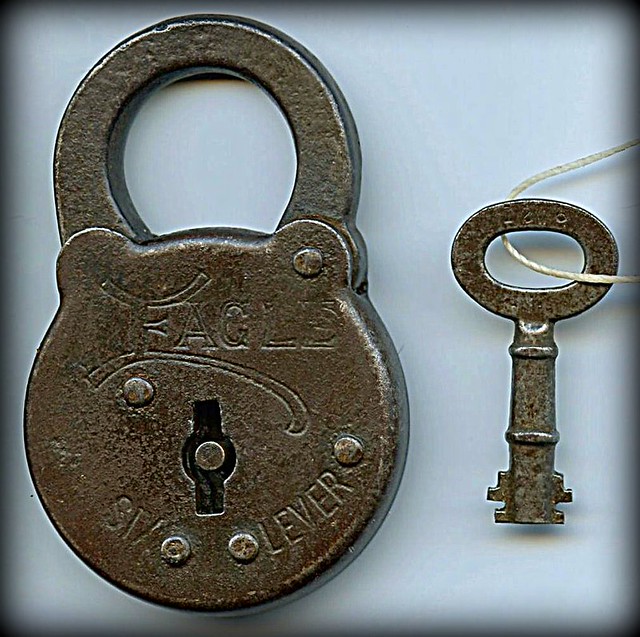
So for the past year or so, we've been playing with the BURP lock system in Numenhalla.

After extensive playtesting, we've found it to be somewhat unsatisfactory.

BURP Lockpicking

In short, a lock has a number of pins. Each pin has an action that will set it, allowing you to go to the next pin. If you guess an adjacent option the pin gets stiff. If you guess an option farther distant, the pin jams.

The actions are, Bump, Undulate, Rake, and Probe.

Pro's:
If you have a Dragon Shadow Double Pin brand lock (BBUU), and the players record the sequence, then the next time they run into a Dragon Shadow Double Pin, then they already know how to get past it.
You can have related locks (Like a Dragon Shadow Triple Pin (BBBUUU)) allowing players to use their previous collected "Lockpick spellbook" to assist with future locks.

Con's:
The process of selecting which pin is completely random and uninfluenced by player skill.

Why? There is always a "Best Option" and when there is more than one choice, there's no information to use to decide which is best, making the choice random. Since all the player choices are random, you could essentially just calculate a percentage chance of success and roll the dice to save time!
You could calculate a percentage chance of success and roll the dice to save time!

I wonder where I've seen that before?

A new solution

What we're looking for is a minigame that involves player choice and considers character skill. Mastermind seems like an excellent option (for example), but it isn't a mini-game. It's really a whole game, and would occur far too frequently in a megadungeon environment with many locked doors.

So here's my new solution!

Yahtzee locks
Locks have a set number of pins. The number of these pins is unknown to the lockpicker.
Players receive a pool of D6's. They may roll these dice once and turn in the dice in to pick a certain number of pins.

For example, if you turn in a single pair, let's say two 4's on the dice, that will set a single pin. If you turn in a set of triples, you set two pins. A full house (a pair, and triples) will set four pins.

If you have a lockpicking skill, at certain thresholds/levels/whatever, you gain the ability to reroll any number of the dice you wish, once, twice, or more. If you have a reroll and your dice come up 1,2,2,3,4,4 you could choose to reroll the two's and three's to go for more fours, or reroll the 3 to get a full house. The 1 would be pulled from your die pool.

Again, the player decides when to turn in dice to set pins and they don't know how many pins the lock has.

Anytime you roll a 1, that dice is removed from your pool for this lock. You start each new lock with a fresh pool of dice. If you fail to set all the pins, you jam the lock and it will no longer open.

Viola! Meaningful player choice, a reason to track locks, and something that takes into account player skill.

Here is the table:
Dice Set Number of Pins set
Doubles 1
Triples 2
Four of a Kind 5
Five of a Kind 8
Small Straight (4 in a row) 5
Large Straight (5 in a row) 8
Full House 4


  • Characters get a number of dice (1d6) equal to 1/2 their level (minimum 1) in their lockpick die pool.
  • Thieves/Experts get a number of dice (1d6) equal to their level + 1 in their lockpick die pool.
  • Characters get a number of bonus dice equal to their AC bonus from Dexterity added to their pool.
  • You need lockpicks to pick a lock
  • Masterwork or excellent lockpicks allow a free reroll.
  • For percentile editions, every 20% you get in your lockpicking you get an additional 2 dice and an additional reroll.
  • For Skills, the middle road: Untrained devices just grants you your dice as listed above. For each level (Skilled/Expert/Master) you gain +2 dice and a free reroll. So a master in devices would have +6 dice and could reroll 3 times. (Note that experts still get their 1 free mulligan per level, which can apply to any single die rolled in this pool)


How many pins does a lock have? Generally a number of pins equal to 1d6 per dungeon level.

Hack & Slash 
Follow, Google +, Newsletter, Support

On Falling Damage

Often, I find that things I've known forever are quite unknown to other people.

What's the proper intended amount of damage from falling in D&D?

It's a difficult thing to model, because people have died from falling over, or they have survived falls of over 10,000 meters.

In Dragon magazine #69, Gary Gygax says,

The correct procedure for determining falling damage in the AD&D game system is to roll 1d6 per 10’ fallen, cumulative. Since a falling body accelerates quickly, the damage mounts geometrically: 2d6 for the second 10 feet fallen, 3d6 for the third 10 feet, etc. The maximum of 20d6 is therefore reached after a fall of approximately 60 feet for most characters. A thief-acrobat can often fall further distances, but the same 20d6 maximum should be applied. The rationale behind this system will be discussed in the next issue (#70) of DRAGON™ Magazine.
The follow up is written by Frank Mentzer, who says:

Gary has always used a geometrically increasing system for falling damage in AD&D games; the trouble arose because that system simply never made it into the rule books. When the AD&D Players Handbook was being assembled, a brief section on falling damage was included: a mere 7½ lines that offers more advice on broken bones and sprains than on falling damage. As we now understand the event, the section was not included in the first draft, and the editors requested a brief insert on this frequently referred-to topic. So Gary hastily wrote a sentence describing damage as “1d6 per 10’ for each 10’ fallen.” Someone removed the “per 10’” as being (so it was thought) redundant, and off we went. That section was later quoted in passing in the Aerial Adventures section of the Dungeon Masters Guide, thereby becoming further entrenched in our game procedures.
The main point of current controversy seems to be the simple fact that everyone has been using “1d6 for each 10’ fallen” for years, and the social inertia of Custom is still being cited as a reason to override common sense. 
 Which is a pretty accurate summation of the social factors at work.

I also use cumulative sum for falling damage, and the looks on my players faces are just worth it. The reason Gygax might have considered the thief-acrobat and monk more viable then most players found them, is that they completely eliminated a source of death in his campaigns. Being immune or protected from falling was a serious advantage.

Falling damage in my games, combined with my critical table, it almost always insures that a player character is alive but seriously injured from a fall, which I think is a pretty good outcome for creating dramatic tension. I am finding it difficult to have anyone actually fall into a pit trap sadly. . .
Gygax might have considered the thief-acrobat and monk more viable then most players found them

I'm not the only one to discuss falling damage recently, +Patrick has some great comments about a working system on his blog. The key factors for falling damage are the it's possible to survive and walk away unharmed, even from terminal velocities, but it's much more likely you will end up crushed to a pulp.

For early versions of D&D, cumulative sum works great. But for late edition D&D by mid level hit points really start to climb. Fighters with no constitution bonus have 55 hit points (on average) by level 11. The 70 average damage of terminal velocity seems fine for that (20d6).

But when you start getting into 4d6 drop the lowest, or the introduction of the barbarian, that same fighter with a constitution bonus of 16 has 85.5 hit points, with over 100 if their Constitution is 18.

Although I like the falling system introduced in Patricks post, I know during play that I would pretty much have to look the chart up every time. For more modern games with higher hit point totals, I would simply switch the cumulative sum dice to d10's or d12's, keeping the simple system, but putting falling damage back into the range of threat for characters of every level.


Hack & Slash 
Follow, Google +, Newsletter, Support

On a Guide to Illusions: Spell Types

A FLAILSNAILS and Campaign guide


Illusionists are the most powerful class in the game bar-none, but you won't play them because your Dungeon Master will screw you.

Well, it's 2014, and it's past time for illusions to be screwing over players and dungeon masters. It's powerful, but it's not nearly powerful enough to unbalance a campaign, any more than any other kind of wizard. Illusionists have their power limited by locality. An illusion has to be seen, after all, to be believed. And in order to be one, you're giving up the fireball/teleport/ real ultimate power path of the traditional mage.

Shouldn't you actually be good at illusions?

The cardinal rule of the illusionist is this: An Illusionist can be more flexible, but not more powerful than a Magic-User of his level.

An illusionist can be more flexible than an equivalent mage of his level, but should never be more powerful than a mage of his level. You have literally hundreds of spells to use as guidelines for power levels. What the illusionist gains in battlefield control and target influence, they give up in utility and raw damage. ("I can summon an illusionary ladder you can't climb?")

An Overview of Illusionist Magic 


Figments
Example Spells: Phantasmal Force, Audible Glamer, Spectral Force
These use light and force to trick the senses. They may create sensations of light, heat, sound, ot ysdyr. However, they are not real. It is very much like a hologram. They are images and cannot be touched. They cannot change the nature of something -- A real sound cannot be altered, though a figment could make noise.

In order to produce a figment you must be familiar with the creature, object, sound or whatever you are producing. Familiar means you've experienced it with the sense you're trying to trick in real life.

Being unreal, means that they cannot damage creatures, support weight, feed people, or various other effects. This does not mean people cannot believe they are hurt, but any damage they think they have taken is simply subdual damage.

Glamour
Example Spells: Change Self, Invisibility
Glamours use light and force to affect an object, making it somehow look, feel, or taste differently. Otherwise it works as a figment that appears to change the nature of an object. Like figments, they are not real. It changes appearance and sensation only.

Patterns
Example Spells: Color Spray, Hypnotic Pattern
Patterns create visual displays of light and color, but these directly affect the mind. Belief is a non-factor in these spells -- they are handled much like charms.

Phantasm
Example Spells: Fear, Phantasmal Killer
A phantasm creates an illusion that exists only in the mind of a target. It is a magical effect targeting their mind and is not perceivable to anyone in the real world, other than by the effects it has.

Shadow
Example Spells: Shadow Monsters, Shadow Magic
These spells are not entirely illusions, but are partially real! They have real effects just like normal magic user spells, as noted in their description.

Concentrating: Some spells last as long as you concentrate on them. This prevents you from casting spells or making attacks [Standard Actions], but allows you to move or take other actions [Move Actions].

Adjudicating Illusions (Figments and Glamours)


Most illusions are simple to adjudicate. Shadow spells, phantasms, patterns, and more traditional magics all have their results spelled out in the spell.

But the pièce de résistance of the illusionist is the Figment and the Glamour: The spells most open to creativity and most likely to be shut down by the Dungeon Master. What is a fair way to adjudicate these spells? (Figments below refers to figments and glamours in every case). Super simple guidelines and rules follow:

Figments look real: Any creature (player or monster) that can perceive a figment or glamour receives no saving throw and believes that it's real and acts accordingly. If a player casts a phantasmal force of a 20' x 20' pit that's 20' deep in a room, and then a bunch of hobgoblins enter the room, each hobgoblin will treat the pit as if it is real.

Figments can't do real damage: If one of those hobgoblins is knocked into the "pit", that hobgoblin would receive a saving throw versus spells to disbelieve the illusion. On a successful save they would disbelieve the illusion. On a failed save, they would take 2d6 subdual damage from the "fall" and then realize after that the pit was an illusion, because even though they can see it, they are still clearly lying on the 'floor' level.

Figments continue to exist after being disbelieved: All the other hobgoblins see the hobgoblin "fall" and just hit the floor, they don't need a saving throw to disbelieve. At this point, every hobgoblin can clearly tell that the pit is an illusion. The figment is still visible as a translucent outline to those that know it is false.

Often people might descend into arguments like "The hobgoblins were fighting! They wouldn't see!" or trying to get very specific about the fictional reality. The important fact is we are playing a game. Figment spells are usually low level (generally 1-3) and exist primarily for the purpose of battlefield influence and control or trickery. Generally they are not expected to last much beyond their first interaction. The trick is in creating a situation where their influence won't be tested and will continue to assist the party.

Figments and Glamours inhibit behavior: If the figment is believed, then the subject will act as if the figment is real. If there is some question about taking a risk versus an illusion a morale roll is a good method for adjudicating the subject behavior. This is especially useful because this method means that undead and constructs are generally unlikely to let illusions modify their behavior.

Figments are not mind control: If a figment does not successfully duplicate the effects of its representation, then it is disbelieved without a saving throw. I can use Phantasmal Force to create the illusion of a wall of fire across the room, but anyone approaching within 10' will instantly disbelieve the illusion because there is no thermal component. Creating an illusion of a pit falling open in front of a monster with no sound? Instant disbelief for everyone in hearing range of the pit. Pits don't fall open with a clatter or bang.

Figments can trick the target: You can create an illusion of a wall over a hallway, and unless touched the illusion will be believed. If your illusion of fire is a Spectral Force, then getting close enough to feel the heat forces a save, not automatic disbelief. On a failed save, passing through the fire causes subdual damage from the imagined pain. If you fail a save versus a figment, you believe it, until you are provided new evidence to the contrary or told that it's an illusion, both forcing new saves.

Figments are expected follow normal rules: A Spectral Force of a fire subject to a deluge of water will be automatically disbelieved if the fire continues to burn.

Figments cannot duplicate spells: You cannot create a figment of a 'fireball', for several reasons -- primarily because fireball is instantaneous, consisting of heat and force (which figments cannot produce). Figments and glamours produce primarily images, along with sounds, smells and temperature changes. The illusionists ability to mimic magic user spells are covered by the shadow spells. Attempting to use a Figment to do so will fail.

Interacting with Figments provides a save: Whenever you have an opportunity or chance to interact with a figment a saving throw is made. This saving throw may be modified by a number of factors, but is usually only modified from -4 to +4. Factors that may modify a save include:


  • +1 for every hit die the subject has higher than the level of the illusionist
  • -1 for every level the illusionist is higher than the subject
  • +4 (or more) if the illusionist is not familiar at all with the image produced by his illusion
  • -1 to -4 for the degree of familiarity the illusionist has with the image produced by the illusion 
  • No modifier at all if the illusion is familiar (i.e. has seen or studied for a turn) the subject of the figment. 
  • Situational modifiers that may increase or decrease the likely-hood that the illusion is believed. 
  • Dumb or gullible creatures are more likely to believe illusions. Smart, genius, canny, or skeptical individuals may be less likely to believe illusions, though they are not immune. (reference wisdom defense bonus)

Illusionists are skilled at producing figments: This means that, in general, reasons that the DM might think of that the illusion won't work outright are also things that the illusionist is aware of. The illusionist is assumed to be skilled. When the illusion is being described, the players and DM should discuss any obvious problems or issues with the illusion. The object is not to 'trick', stymie, or remove the power of the illusionist -- the goal is to understand what is being produced so it can be adjudicated fairly.

These should provide clear guidelines for adjudicating illusions fairly.


Hack & Slash
Follow, Google +, Newsletter, Support