Tampilkan postingan dengan label monsters. Tampilkan semua postingan

On Hoard of the Dragon Queen Resources Part I

Here are the first two resources I'm posting for use in the campaign. They are more fleshed out and detailed versions of the illustrations and statistics I used in my game.


Dragons Dogs (Reskinned Kobolds)


Quadrupedal Dinosaur like reptiles, with an arched back, and long legs. From the side they appear triangle shaped. Their heads extend on long necks from the upper middle of their front back. They can stand on two legs, using their claws to set devious traps and manipulate tools. When they do so, their serpentine long necks swivel to either side of their body. They can spit caustic acid.
Dragon dogs are formed when a dragon egg is broken open, and the many small worms are fed to humans. From 20-200 can gestate in each human, eating them from the inside out and killing the host when they are born. Each dragon egg produces approximately 1,000 dragon dogs. Other mammals such as cows or dogs can be used as hosts, but tend to produce dumber and less useful dragon dogs.
Medium Dragon, Lawful Evil
AC 12 (Dexterity)
Hit Points 5 (2d6-2)
Speed 30 ft.
Stats: -2'/+2'/-1' | -1/-2'/-1;
Senses: Darkvision, PP 8,
Languages: Common, Draconic,
CR 1/4 (50 XP)
Pack Tactics: Dragon dogs have advantage on attack rolls if an ally of theirs is in combat.
Actions
Bite +4/1d4+2
Acid Spit +4/1d4+2 (30/120)

Cobalt Cultist

Cultists that follow the word of the blue dragon head of Tiamat. Fascinated with electricity, they are armed with lightning rods. Cobalt cultists are usually human or dragonborn. Many have metal bolted on their bodies or deformities.
Medium humanoid (any race), any non-good alignment
Armor Class 12 (leather armor)
Hit Points 9 (2d8)
Speed 30 ft.
Stats: +0'/+1/+0 | +0/+0'/+0
Skills: Deception +2, Religion +2
Senses: PP 10
Languages any one language (usually Common)
CR 1/8 (25 XP)
Dark Devotion: The cultist has advantage on saving throws
against being charmed or frightened.
Actions
Lightning Rod. Melee Weapon Attack: +3 to hit, reach 5 ft., one
creature. Hit: 2 (1d4) bludgeoning damage, +2 electric damage. This weapon attacks with advantage against armored opponents.

Hack & Slash 
Follow, Google +, Newsletter, Support, Donate to end Cancer (5 Star Rating) (123$ donated so far!)

On a Useful Review of Fire on the Velvet Horizon

I got this.

I haven't finished it yet. Is that because it's bad?

No. It's dense.

Let's unpack that for a second.

The Aeskithetes (Ay-Skith-es-ts)


  • They have strong bodies that look like twisting melting wax.
  • They have slim whiplike tentacles that cover their body that they can barely control. The more powerful the Aeskithetes, the calmer the tentacles.
  • They are hideous to look upon, and hate the reaction this engenders in others, so they wear masks.
  • Their home world, time runs much more quickly so they collect beauty and works of art to send back to their homeworld for a generation of children they will never know. 
  • They are impossibly strong and can vomit bile.
  • The reason they can stay in our world is that they constantly chant a song that allows them to stay.
  • Their home world is a humans skin.


No. It doesn't have stats. It doesn't need stats. This isn't a monster. It's an adventure wrapped up in a bizarre mind-screw. What can you do with this? So many things. There's over 100 pages in this book, and they are all like that.

There's the boa constrictor that is called "boa constructor" and has arms for teeth, eventually growing large enough to perform impossibly miraculous crafts. There are the bog elves that live under the lake a shiny mirror for a floor, darkness and shadow in the sky above; there are dark hunched ladies who hunt in mirrors.

The Aeskithetes could be traders, enigmatic and well respected. You could find masks before ever finding them. A party could be trapped in the world of their own skin or someone else's. They could be sent to make a treaty with them. It's just one monster, it's just one page.

What I want to know, is why not having an armor class listed is a problem for anyone.

I read a lot of fiction, and the creativity here is on par with some of the masters. Gene Wolfe displays this kind of creativity in his novels. Borges describes the type of hells these creatures inhabit in passing. McCarthy has the type of poetic turn that takes your mind from where it is and puts it somewhere you are not. This is what the book does. Some quotes:

"The first order clad in closely arranged bone, a chainmail of the skeletons of fish and eels. The second type wear scale woven from the overlapping beaks of storks and cranes."

"Before the process begins all would-be Brainstormers are careful to inform their lackeys and servants that the levels of Elixir must be carefully and continually adjusted to avoid disaster. Once the first dose is taken and the halo of electricity begins, the Brainstormer reacts to anyone trying to adjust or alter the syringes in any way by screaming madly, firing bolts of electricity and sometimes sucking them up in a tornado."

"The Dreamons are the shepherds of the Wings. They guard the vast and churning flocks, keeping them back from the borders of our understanding. There is no shortage of inspiration out beyond the walls of space and time; there is enough to burn the heart of the world and drive every living being insane with the hunger to create."

He's not just talking about a monster to fight. He's talking about himself. He's talking about you, and your adventurer. He's talking about sin and valor and lies and truth.

This a book filled with monsters of the classic sense—creatures that reflect the dis-ease within our own psyche, the way in which we ourselves are monsters. He then uses the damage in our own selves to confront the heroes we imagine ourselves to be.

But it's just a book of monsters, right?

Video Trailer for Fire on the Velvet Horizon
Fire on the Velvet Horizon in Paperback

Hack & Slash 
Follow, Google +, Newsletter, Support, Donate to end Cancer (5 Star Rating) (123$ donated so far!)

On Über in Gaming

I bought some comics.

I haven't bought comics in a long time, because the books are heavy and take up a lot of space. Comixology to the rescue.

Some interesting tidbits, before I get to the actual gameable content of Über. My vision has made reading actual real comics difficult lately. I had trouble on my recent Sandman re-read, and am having a hell of a time making it through Fire Upon a Velvet Horizon (which I am still reading, slowly but surely).

Guided view is a savior. The panels are huge and presented in a cinematic manner. I can see the damn text. It's like reading a movie. The only paper comics I'll every buy again are those I wish as coffee table books or want to read with my daughter.

I also learned that there was a "Huge Controversy!" over the leading online comic retailer and their decision to remove in-app purchasing on iOS device. The response from the public was astoundingly hostile. This was fascinating for me for several reasons. The decision was really the only option for the company, and yet they completely failed to consider how it would feel to anyone who hadn't been sitting in meetings with them for six months.

I mean, it makes sense. 100% sense. They don't produce content. They are a literal storefront that has to give 30% of their profits to apple if they sell anything via itunes. The decision, based on when it happened and how long these things take, must have been in place long before Amazon finalized their purchase of the company. There really weren't any other choices for them as a merchant.

Their spectacular inability to have anyone even consider what this looks like to a customer outside their ecosystem is also telling. There are fewer people involved in creative projects (books, comics) then in other fields (say, Healthcare or Government) which makes it more obvious that everyone involved is a unprofessional f---up.

Every field is primarily composed of minimally competent people. You have to reach a certain threshold of people involved (i.e. movies) to present the appearance of stability. At this level you can slightly prevent everyone recognizing that no one in the whole world has any damn idea what they are doing. Most people are too dumb and self-centered to notice. No. I mean that literally, the average I.Q. is 100, and half of all people are below that, by definition.

Über

You see that U with the umlaut? That's what I'm talking about when I say professionalism.

First, Über is good. It holds a place in my mind as a structural description of a real weapon. It rests, solid, and unmoving. The reality it presents has weight in my mind. The conceit is that Germany didn't lose World War II, but got a superhuman program running in time to stop the allied advance.

It's written by one Kieron Gillian. He writes a page or two at the end of every issue. I find it notable that until the runaway success of his comic, he had a day job. I think people are pretty ignorant of the fact that everyone but the very most successful creatives has to work a day job. Vernor Vinge worked as a professor nearly the whole time he was writing books, and he was one of the most popular and influential writers of the last decade. Very, very few creatives aren't supported by a significant other or work a day job. This is why Patreon is such a revolution. (ahem).

The other fact I found interesting is that he spends an awful lot of time vexing about whether it's "moral" to write the story. Is there somewhere in the world a Nazi cheering the fact that germany didn't lose? What would happen if there was?! Can I tell this story? What if someone gets the wrong idea?

First, I'll say that the portrayal of the principles is brilliant, accurate, and complex. Hitler is crazy. Gobbels is craven and arrogant and apocalyptic by turns. Churchill is a functioning alcoholic. War is presented as senseless, massively violent, and surreal. As an artist (in the sense of creator, Caanan White draws the comic), Kieron glorified nothing and no one.

And yet, at the end of every chapter, there he is, spending 1,000+ words trying to defend his representation of World War II.

Look. If someone out there is a Nazi, and they cheer because the germans developed an Übermensch in some comic, then that person is an idiot because they are a fsking nazi. Fascism is the worst.

The Worst.

Übermensch


Where does this leave us for our role-playing game? Somewhere pretty awesome.

So alien crystals react with 1 in 5000 people to produce a superhuman. A superhuman basically has two slots. A standard activation produces a Hero with improved height, strength, toughness, speed and endurance, along with a halo effect that functions as an energy weapon. They discover during the course of their research that the activation can be tweaked. Both glasses can be filled with halo focused energy, producing a normal strength human with a vastly more powerful halo, or both can be filled with strength, producing a vastly more strong, tough, and large unit with limited to no halo energy.

There are also more rare individuals (called Battleships) that contain 24 activations, and there are only 5 so far in the entire comic. Later they discover people with 6 and 12 activations (called cruisers and destroyers). We aren't concerned with that right now.

The three types of troops, The Panzermensch with one activation of each, the Blitzmenschen with two energy activations and the Tank men with two physical activations. These form a rock-paper-scissors relationship within the story. The Panzermensch can destroy the non-physically enhanced Blitzmenschen, the Tank men can tear apart the Panzermench, but the Blitzmenschen can blast a Tankman to shreds.

You can, of course, introduce these strange red crystals, a pile of dead owlbears, and one very angry super owlbear to your players for a great encounter, or use the introduction of this to change the dynamic of your campaign. Much like magical drow weaponry, it is useful as a tool that can power up your opponents, but give nothing of benefit to your players.

Panzermensch: 

  • Double the hit dice of the creature (for all purposes, including to hit). 
  • Grant AC 4 or +4 to AC, whichever is better. 
  • Grant +2 hit points per hit die. 
  • Gain DR 2/—
  • Evasion: Target takes 1/2 damage from a successful spell or attack (such as a halo blast, lightning bolt, or fireball) and no damage on a successful save.
  • The dice of the targets melee attack are doubled, and it gains a +2 bonus to hit and damage.
  • Increase speed by +50%
  • At will the creature can activate a halo. While active, the creature can make a 6d8 energy attack against any targets within 30 feet. They can split this attack between as many targets as they wish, assigning as many dice as they wish to any target, not to exceed 6d8. Save for half damage.


Blitzmenschen:

  • Gains no physical enhancements. 
  • At will, the creature can activate a halo. While active, the creature can make a 24d10 energy attack against any target in line of sight. They can split this attack between as many targets as they wish, assigning as many dice as they wish to any target, not to exceed 24d10 total. Save for half damage.


Tank Men

  • Quadruple the hit dice of the creature (for all purposes, including to hit).
  • Grant AC -2 or +8 to AC, whichever is better.
  • Grant +6 hit points per hit die.
  • Gain DR 4/—
  • Double land speed.
  • The dice of the targets melee attack are quadrupled and it gains a +4 bonus to hit and damage.
  • At will the creature can active a halo. While active, the creature can make a 3d6 energy attack against any target in melee range.


Any target who has an active halo, and suffers a called shot to the eye (-10 to hit head AC) must save versus death or die. After the first turn (10 rounds) of activation, the halo has a 1% cumulative chance per minute while active of rupturing and killing the user. This can only be reset by a full 12 hours of rest.


Hack & Slash 
Follow, Google +, Newsletter, Support, Donate to end Cancer (5 Star Rating) (104$ donated so far!)

On Even More 5th Edition Monster Manual Comments

I've had some time to read over this book and there are even more thoughts that I have. (WARNING, This post contains some adult content!)


  • Why don't the angels have halos?
  • The book has both piercers and dark mantles, their 3.x replacement that supposedly made more sense. That has to be awkward at the christmas party.
  • Here is a list of monsters with ken doll parts that should have visible dongs. I'm leaving demons and angels off this list because they might have ken doll parts.
    •  what Ettin will wear pants? 
    • Fomorian says they wear scraps of cloth or less. The one in the picture has a swank belt!
    • Aarakocra
    • Azer (sculpted from bronze but wears a skirt)
    • Cyclopes
    • Werebear (all these lycanthropies have so many pants and clothes!)
    • Ogre
    • Nothic
      • It's totes important to note here that this is a game targeted at 12 year olds. I mean, I understand the lack of visible dongs. I'm not particularly into visible dongs. I'm just saying that visible dongs are a pretty monsterous thing. I mean, I hate pants and I'm all civilized. If I lived in the monster filled wilderness and I was a giant monster, I wouldn't start my day by looking for my pants.
  • They seriously went overboard with the anthropomorphization. Why does a cloaker or a chasme have a human head? Monsters very rarely seem like alien creatures. You can always locate their eyes and head. Is that intentional? Is it because of this research about locating eyes on creatures? Most of these monsters could be cosplayed by people in suits. Deliberate?
  • Digital motion blur. Uggghhhhhhhh. *stomps foot*
  • The lemur picture is the best
  • A tyrannosaurs is the same CR (8) as a young green dragon, and although it does slightly more damage in melee, it's considerably weaker than the dragon. Conclusion? Dragons are (again) under-rated for their CR.
  • Props to whoever painted the dinosaur pictures, I'm sad they are blocked out.
  • Monte Cook designs a female succubus, and the world loses its mind, Dopplegangers are rapists to reproduce, no one makes a peep. (And they shouldn't)
  • The dryad is stiff and underworked and bland for an impressionistic piece.
  • Two spells a level is still a lot of options for a spellcasting monster.
  • The empyrean and the Ettercap are examples of digital illustration gone wrong (you see that skirt on the Empyrean). Apologies to the artist(s) but you know you'll never see anything like that in a LotFP book.
  • The lycanthropy page runner is excellent.
  • Hags can inspire a whole witch hunting campaign themselves.
  • My, how well dressed are you, you hedonistic reveling Satyr. You look like you're going to a mid-level marketing seminar.
  • Lowering stats from an attack is still a terrible mechanic due to recalculation. (Yes, shadows still drain strength). I thought this was a solved problem with things like negative levels, or even doing things like having weakness points or something.
  • Maybe it's just the fact that my 6 person, level 2.8 party killed Venomfang in two rounds, but all of these monsters seem weak, unless there are a lot of them. The power level seems pretty similar, problems only come in when facing a lot of opponents.
  • A lot of these creatures are weirdly monochromatic. E.g. Wyvern, wraith, stirge, et. al.

I think the art here is more erratic than the art in the Player's Handbook. But it is a large full color book. It's clear (from the art reuse and stuff) that Wizards/Hasbro is looking to control cost. I'd imagine that although large to us, the art budget on this book was more limited than in the past. 

There are a lot of spectacular drawings, and some special recognition is due Christopher Burdett who just is constantly knocking these illustrations out of the park. He can, uh, illustrate my monster manual anytime.

I like more rawness and nudity in my art. Obviously this game for children isn't the place for it, but I don't like pictures of monsters that just look like people in rubber suits. I dislike that most all "monstrous" creatures in the manual are mostly handsome men and women, and the monstrous ones are still basically human shaped. I'm going to post some of my own illustrations to, ahem, illustrate what I mean. 

See? Dongs?
Interesting Female Nudity
Cultists are anti-pants
Don't you know dudes that look like this in real life?

On a Useful Review of the 5th Edition Monster Manual

Review of core books are mind-numbingly imbecilic. If you're playing the game, you're going to buy the core books.

Here's what I think about it and a whole bunch of scans of pages of the manual.


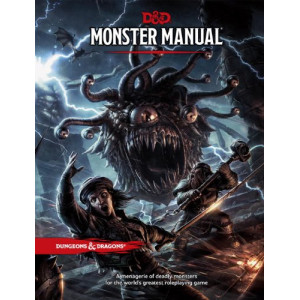
  • Unlike the players handbook, this cover is stunning. It's not fantastic art. But it is attention getting. Also, if you look at the competition, it's pretty easy to say it's the best monster manual cover to date. (1st Edition, 2nd Edition, 3rd Edition, Pathfinder)
  • It has the worst griffon I have ever seen in any product ever. Apologies to the artist.
Derp.
  • Most of the art is really good!
  • I like the watercolor marks behind the monsters.
  • I am sad about the "Page Tear" formatting effect. It looks nice, but it will certainly cause the book to appear dated as time passes. That's actually a major issue with a lot of the art, which is done digitally. Like it's clearly not real paint, and there is a lot to be said for the qualities of real paint!
  • Also, note the birth of the weirdly smooth monster form.
  • This is really what a bestiary should be. Like the monster descriptions are not filled with annoying bullshit. They are filled with legends, adventure ideas, history, and lore. 
  • It reminds me of the other monster manual worth owning.
  • The best art is the side art!
  • No monster creation rules?!
  • It's a weird collection of monsters that skews to low CR encounters. Is that because it's the first
    Look like anyone we know?
    monster collection? Because encounters should be made from multiple low CR creatures instead of large single monsters? Why include the angels? 
  • As noted by other people, there are huge stylistic shifts in the art. Mordrens are magical, weird, steampunk-like Despicable Me minions, whereas undead are Walking Dead Terrors. 
  • There's about 1 million shout-outs to older editions of Dungeons and Dragons. Check this Death Knight guy out →
  • Nice to read a monster manual with Mind Flayers, Beholders and OTHER PRODUCT IDENTITY RETAINED BY WOTC
  • Monsters are pretty simple and easy to run. There are a lot of suggestions on changing things up. There are no monsters with 8 gabillion powers that require a preparatory class in how to use them effectively.
  • Did I mention the monster text is actually really interesting, giving you ideas on how to use the monster, adventures, and ideas? It's a ton of text devoted to things in the book. Like, this is interesting even if you're not playing Dungeons & Dragons.
  • On the other hand, all the advice is, like in the players handbook, how to run a Dungeons & Dragons monster as a Dungeons & Dragons monster. Monsters are their archetypical Dungeons & Dragons selves. It's not fantastic, strange, or new, it's as maxed out Dungeons & Dragons as you can get.
  • There are a number of visual monster redesigns that are pretty interesting, including the cloaker and the piercer. 
  • The preliminary sketches cleaned up and used for backgrounds is a great touch.
  • There is no nudity. :-(
It is a monster manual that any gamer of any edition could sit down and read and be interested in. Like, non-gamers would read it, because it's basically talking about a bunch of cool monster stuff.

So far, everything Wizards of the Coast has actually written and produced for 5th edition (and not farmed out) has been great. Only time will tell if the quality holds up. 

Ed Greenwood is under the impression that there's never going to be another world shaking realms event, so I'm interested in staying alive long enough to see how that's going to turn out. 

Carrion Crawler Redesign.
Definitely something I don't want in my house

Always a good sign when the get the Cockatrice Correct

And gnolls are pretty sweet looking!

The trend towards using real world animal design is nice!
(Also, note the notes scattered throughout the book)

A flaccid piercer impresses me. That takes some guts.

Hack & Slash 
Follow, Google +, Newsletter, Support

On the Visual History of the Illithid

How does the Dungeons and Dragons Monster depiction change through time? There was some question about this recently and it seemed like a quite interesting subject. I'm no art critic, though I do have a Bachelor's Degree in Art, so I'm not completely out of my wheelhouse. Imma just gonna give my opinions. You got different ones? Share 'em! Let's take a look.

Mind Flayer (Illithid)

First image of a Mind Flayer

Monster Manual (1977)
Here we see a number of interesting features, a large head with very wide eyes containing pupils, a high collar rich looking robe, with a skull hanging from the harness.

It's important to note that artistically, everything we're going to be looking at is fundamentally illustrative. These images are designed as tools, rather then their point being a work of art.

Not that they can't be both.


This creature was inspired by the cover of the paperback edition of The Burrowers Beneath by Brian Lumley, a Cthulhu Mythos story. so from the book image below, we get the creature illustrated to the above. 

I find the use of an irregular octogon surrounding the Mind Flayer to be an interesting artifact.  Although several creatures in the monster manual have boarders, most are square. Only two other creatures, the Bugbear and Type V demons have Octogonal borders and both of their borders are more regular. Each pane of the Mind Flayer Border is of a different length, no two matching.

Also, that robe is hella-baggy. Apparently fashion shows in the underdark have the burlap sack-dress as the height of fashion. This explains why drow women usually eschew the dress and just wear the harness.

Rogues Gallery, Erol Otus
This picture from the Rogues Gallery, a book of pre-generated Non-Player Characters contains this image of a mind flayer being attacked by a druid's insect swarm. This image by Otus is uncharacteristically constrained and filled with detailed line-work. One also notes that the pupils have disappeared from the eyes of the mind flayer and the face has taken on a much stronger octopus like feel. It retains the long clawed fingers and the characteristic high collared robe with decorative hems. This book also contains an image of a furry baby umber hulk, as well as statistics (honest un-inflated ones from play) of many classic characters.

This image of a mind flayer from S2, Expedition to the Barrier Peaks Illustration book 1980, continues the pupil-less eyes. This is missing the characteristic high collared robe, trading it in for "futuristic space clothing". Here we see the first definition of the body of the mind flayer, which appears to be a very fit, very thin man who spends a lot of time at the gym doing squats to look good in his spandex future-clothes.

Dragon Magazine #72
D1 Descent into the Depths
This image on the left from 1983 in Dragon Magazine is really interesting because it clearly portrays the mind flayer as having backwards knees like a bird or hoofed creature. The Illithid retains the pupil-less eyes and wears no robe, though still is wearing the skull covered harness. This one also has arcane symbols and spikes on the shoulders as some sort of proto-dungeon punk. The creature is thin, almost skeletal.


Monster Compendium

Second Edition

Once Second Edition is released, there's a bizarre divide in the depiction of the Mind Flayer. With the release of the new monster compendium, there's a depiction of a mind flayer with a beggars robe and some dapper hat with a red tassel. A beak is visible in the middle of his spread tentacles and his eyes appear as round hook like objects. Also, his robe is over a striped dress and he is wearing a pair of zori.

On the other hand, the same year that image was released, Dragon Magazine ran an article on the home world of the mind flayers, called the sunset world. This presents a radically different image of mind flayers then had been previously seen. These creatures look like they are wearing gas mask helmets, and their head and collar resembles some sort of elephantine beast. They lack the requisite skull dangling from the neck, but in spite of all the plants on their homeworld being black, they somehow manage to make those stylish tweed robes.

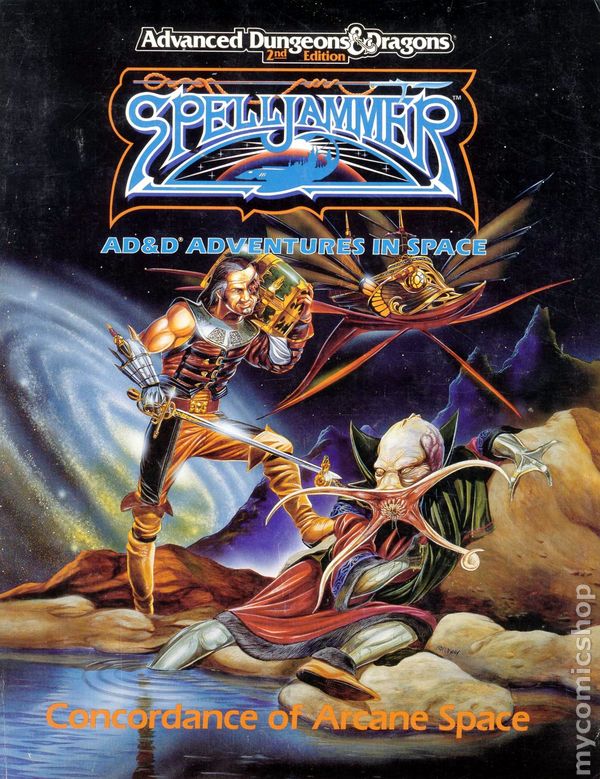
Illithids at this point become both more common and more "cool" due to a certain scimitar wielding elf and his connection with the underdark, and images of these creatures exploded in popularity, from settings such as Spelljammer (1989) to the Illithiad (1998) late in the section edition run. As is common in the second edition run, the fantasy became more "grounded" in the fantastic realism phase of fantasy art, driven primarily from the influence of Elmore's consummate work near the start of the period, Dragonslayers and Proud of it.
Some color, indicating a pale pink skin color.
They continue to have an obsession with garish fashion.

From the Illithiad.
Sweet pants bro.
Fred Fields Illithiad Cover
This piece by Fred Fields, TSR illustrator and Fine artist, is the cover of The Illithiad and keeps the robed aspect, but reinvisons them as Cephelopods hanging off the front of a giant brain. 

The whole composition says brain, from the halo around the brain to the fact that everyone is either pointing to the brain or looking at it. It's at the apex of the triangular composition.

MIND FLAYERS ARE ABOUT BRAINS.

It also makes them look like guys who got beat up in school, which I think is why immediately after you flip the cover they turn back into octopuses on really thin and fit scrawny bodies. (skinny guys fight till they're burger.)
At the point of this publication, there were an explosion of interpretations of illithids. Here's an example by James Crabtree of an expressionistic hulking beast, coming out of some whole to eat you. 

It's nice because both the body and the face appear to be threatening, as in some large hideous brain eating creature, instead of looking like something that's going to talk like the architect from the second matrix movie. This looks like it's going to rip your head off and not move like a bad special effect. The dissonant alien colors (yellow/blue) increase the feeling of unease, and in general form it resembles someone in a deep-see diving uniform, calling back to what an experience in the underdark should be like. 

That said, it isn't very mindflayerish.

This illustration on the left, also from the illithiad  found in a section called "Performance Eating" is lurid like spanking comics of the 20th century. It's roughly done, dehumanizing to the woman and emphasizing the horror and helplessness of some creature that feeds not just on your flesh, but also on your brain!
The illustration also implies the true horror of what the creature is doing, as not only is it sharing the experience of eating the brain with the faceless innumerable illithid audience behind him, but also the thralls who must not only watch but experience the horror of brain eating for themselves. 

Check out my sweet flute

3rd Edition

Moving on to the Dungeon-Punk aesthetic of third edition, we get our new mind flayer design in the Dungeons and Dragons 3.0 Monster Manual.

Apparently this mind flayer has some tailor thralls, because the clothing is starting to fit the actual form of the creature. In true Dungeon-Punk style, we get lots of chains, pointy bits, and bandages on the creature. 

It's at this point in the historical deception that the color blue and purple begins to be strongly associated with Mind Flayers. Compare above to the pinkish skin tones with the blueish-purple used in this picture and the ones following from books like Lords of Madness. 
Lords of Madness Cover and
Interior art by Wayne England
and Ed Cox 

Elder Brain


Note that although these illustrations have become all in full color and a lot more detailed then previous illustrations, there moving in the general form towards being more boring. 

Above, in first and second edition you have examples of strange alien like creatures, bug swarms, lazers and Illithids in space suits, some guy playing a bizzare musical instrument, an illithid in space being disarmed by a treasure carrying pirate.

Once we reach third edition, it's illithid standing and putting a brain in a jar. Illithid standing. Illitihid casting a spell. Here's another example of an "Exciting" fight.

So, there's an "off-kilter" and "exciting" composition in some "dramatic" duel. And by no means is this a critique of Wayne Renyolds—more power to any artist that influences the design of Role-Playing Games for years and becomes the face of the gaming juggernaut that is Pathfinder. 

But you can hear the camera shutter. It's just two dudes that don't like each other. It's not interesting in the sense that it makes me wonder what's happening in the picture and it's not interesting in the sense that I'm interested in the form and depiction of line and color. In the book it fills space and comes across as some sort of static noise. Even the exciting parts of the picture—the tail parts of the Illithid robe and the ponytails of the Gith seem static and uninteresting. 

If you'll indulge me, I'll link two pieces by my favorite illustrator Russ Nicholson to make my point. 
Interesting Combat Pose
Interesting Static Pose


In both of these pieces, there's tension and interest in every line. You can lose yourself in them a bit.

Back to the Mind Flayers.


4th Edition

These guys are starting a band—ARE YOU READY TO ROCK!
In 4th edition, the mind flayers go full purple with their skin color and become anime battlemasters. This pose, in my humble opinion, makes them less threatening than any of the above options, because they are looking to fight me—and I know I can win a fight.
5e Mind Flayer

This 5th edition Mind flayer picture is an improvement, I'd say.


I leave you with "The Virgin of Cthulupe"


Hack & Slash 
Follow, Google +, Newsletter, Support
This post took forever and may be all I have time for this week. If you'd like to join the great group of folks making post like this possible and creating the time to have more things like this pop-up in your feed, visit my Patreon and help me get closer to the goal of a post every day of the week—We're over halfway there!


On Dungeons & Dragons, the Monsters of the Fifth

Early Monday morning Legacy of the Crystal Shard was released containing some stats and encounters for Basic D&D, allowing us to play the actually game using actual monster stats. (There's a note to grab a basic bestiary for some stats from dndnext.com, but it doesn't appear to be available yet)

Introductions

And what an introduction it is. The text on the first page is part and parcel with modern OSR theory and gameplay practice.

Points covered are:

  • Not every encounter is designed to match the parties level, there could be things too tough for them to fight
  • Talk to your players about their expectation that they will win every combat to let them know that they might encounter things they can't kill
  • Use pacing to create exciting gameplay
  • Allow monsters to flee or lose morale rather than having to fight to the death
  • Modify encounters so that the players experience a variety of challenges, instead of always winning or always getting beaten to a pulp

Encounters

There are hints of an encounter building system in the lists of encounters. This appears to be an experience based method of controlling the challenge of various encounters, allowing the DM to build them easily. More information from Mike Mearls on this beta system is here.

In addition to just listing the monsters encountered, each encounter is framed with motives, tactics and interesting events. This is 1000% an improvement over most 1, 2, or 3e era adventures. I can't speak to how much of an influence 4th edition has had on this format (being that I've never run a 4e adventure) but it is similar to my preferred encounter style. Encounters are not always hostile, the consist of different factions, they sometimes are environmental hazards and not monsters, and they consider the experience of the players at the table.

Monsters

Let's look at the Level 1 Goblin

AC 13, 3 hp, Stealthy, 
Mace: +1 to hit, 1d6-1 (2) damage 
Shortbow: +2 to hit 1d6 (3) damage

Nice! Most first level characters are rolling around +4 to +6 to hit (+2 from prof. +3 from stat) meaning on average a roll of 8 or higher will hit (65%). That's an almost certainty with advantage. Nearly any hit will kill one.

However with stealthy and the shortbow they maintain their utility well through level 5. Being the the middle of a combat and having half a dozen unseen goblins unload arrows on you create a virtual duplication of the usefulness of minions. Easy to hit, go down in 1 hit, but really suddenly very dangerous when you're focused on dealing with a pair of ogres.

Now, the Level 3 Orc

AC 13, 11 hp, Relentless (Con save if brought to 0 hp to retain 1 hp, die next round)
Greataxe: +4, reach, 1d12+2 (8) damage
Shortbow: +2, 1d6 (3) damage

Also nice. I like that the armor class is the same, but for low level characters they have enough hit points to need two hits to get to 0 and a hit or waiting a round to kill. Later, when the players are level 5, you only hit slightly more frequently (70%) of the time, but you will drop the orc to 0 hit points in (usually) one hit instead of two. That seems to match tropes in the field quite well! And even higher levels will do more than enough damage for instant death to apply, meaning I can see the lowly orc (with other combatants) maintain it's utility well past level 10. 

That's new!

They also present a significant threat on the ground, being that 8 hit points is a significant portion of a low level characters hit points. By the time the characters are level 3 they are less concerned about groups of orcs, but still, it continues to be non-trivial damage. 

Now let's check out a level 5 Air Elemental one of the most powerful monsters in the packet

AC 13, 45 hp, DR & Immunities
Slam: +5, 2d6+2 (9) damage, DC 11 Strength save or restrained with continuing damage.

The same armor class! Also, it's immune to disease, poison, prone, paralyzed, petrified, poloymorph and sleep, and takes 1/2 damage from lightning, thunder and non-magical weapons. It can damage multiple player characters while removing them from combat. You need (rare) magical weapons to fight it effectively, giving it essentially 90 hp versus parties without certain spells or magical weapons. 

Not all monsters have AC 13. There's a level 3 statue with AC 18.

What it is nice to see is that static shallow curve! Level 3 things that are hard to hit due to armor or toughness have AC 18. Level 12 things that are hard to hit due to armor or toughness will have AC 18. That is extremely appealing. 

The release of this document is a very rapid response that makes the basic packet usable that much earlier for those who are still waiting for their starter set to arrive. All this before the official wide release (7/15 of the starter). 

I am having a great deal of trouble finding fault with this new edition. It's not for me, but I think I'm really happy it's out there. I would have no problem pointing people to get a copy of Dungeons & Dragons and feeling like they would pick it up and have no trouble understanding it and finding it interesting on their own.

Update: Apparently these are older monsters from last year, offered up as a stopgap measure from a retweet by Mike Mearls. The hit point totals are low for the current release of the game, so you might increase them or give yourself a higher experience point budget if you're looking to challenge your players.

Hack & Slash 
Enjoying this series? Follow me on G+ to get updates and even join in my online games!
Follow, Google +, Newsletter, Support.

On the Monsters that Were: Curst


Curst


This monster by Ed Greenwood shows up again in a book called Mythic Races as open content with some changes.

It's interesting, because they are very much a race of Mary/Marty Sues.

Mostly immune to magic, having whatever class levels the DM wishes, 85% magic resistance, immune to mental attacks, fire, cold, and life drain, and effectively immune to death.

You see, they are cursed.

Yes, there is a stipulation that they will act despondently and strangely 1 in 20 rounds. But mostly they are immortal killing machines. Sometimes immortal killing machines infested with rot grubs.

That said, the idea of a deathless opponent, one who you can communicate with, one that you cannot destroy has interest. Especially since they can be created from extant creatures in your campaign with a bestow curse and a wish.
 

Hack & Slash

On the Monsters that Were, Spinescale

Spinescales

2 hit die, armor class 7 'frog mutations' created "unknowingly by the Master Alchemist Vollan."

more. . .

"During his experiments to produce a new acid, certain untreated chemical wastes from his laboratory found their way into the drainage system with eventual contamination of nearby streams and ponds. Fortunately, no other forms of life were affected besides the frogs."

The mutations?
The tough leathery 'outer skin', razor-sharp teeth, and venomous fangs.

Two mechanical things of note: The creature is considered to have one hit die if fighting outside of water. Also, the creature is immune to normal edged weapons and clubs "etc.", having only vulnerable spots being eyes and softer underbelly. 

I'm guessing the game of "where do you attack the monster?" was much more popular back in the day. It's also pretty easy to see why this didn't make the cut. Giant frogs have an armor class of 7, and killer frogs have fangs. (From White Dwarf #2)

Hack & Slash

On the Monsters That Were: Slinger

Slinger


Instead of a description followed by combat stats, you get itemized lists of effects, attacks and the like.

This is a tiny six-inch long reptile with a ten-inch tail.

Apparently, its scales means only its very tinny tiny eyes are vulnerable, and it's immune to all piercing and slashing weapons except crossbows due to their inability to penetrate (including "swords").

Oh, it flings barbed spines, walks on walls with a speed of 20", "always have the advantage in hand-to-hand combat", leaps 10 feet, hit with a 90% chance regardless of armor if within 4", and you know, save or die poison.

Apparently they attack any creature within 50' because they are territorial. And when I say attack, I mean "emits a musk-like scent that will cause the other slingers in the colony to attack".

It gives some advice to adventurers!


  • Don't touch!
  • Stay 50' away and pick them off with a crossbow!
  • Throw a captured creature (or a disliked party member) into the nest and bypass them in the confusion!


Sounds like fun at parties.

It's not all deadliness and immunities though. Slingers are totally susceptible to fire, both natural and magical. Apparently you can "try [your] luck" by wading in in full armor with a mace. "A sound blow from a mack(sic) will not crack the slinger's scales, but will do enough internal damage to kill the slinger." Or, you know, 10% to hit the eyes. Or getting their musk and using it against them to cause them to attack each other.

But you know, 200 gold per live slingers who can be milked for their antidoteless poison, and 50 gp per corpse. And if you kill enough (20-25) you can make 1/2 weight plate from their hides.
From Dragon Magazine #28, Page 50


Hack & Slash